

Re imagining the university
This Teachers’ Day, let us recall a 1949 report written under the leadership of S Radhakrishnan.The time has come, more urgently than ever, to speak of that gravely endangered space of the Indian public university system. It is poised like an elephant hanging over a cliff with only its tail tied to a daisy. Neither is the mind striding around without fear, nor is the head being held high.
Instead, teachers are being attacked for voicing opinions, as in the vicious assault on Sanjay Kumar, assistant professor of sociology at the MG Central University of Bihar. Other teachers are being raided, and their life’s work “seized” merely because of the accident of marriage to the daughter of a renowned, though radical, poet, as was K Satyanarayana of the English and Foreign Languages University, Hyderabad. Yet others are being placed under overzealous police scrutiny (if not being actually arrested) for their critical writings, or association with legitimate rights and civil society groups, as were Nandini Sundar and Archana Prasad, and now a wide range of teacher-intellectuals such as Sudha Bharadwaj or Shoma Sen. All this follows the actual murder of teachers such as HS Sabharwal in 2006 and MM Kalburgi in 2015.
There are, too, those teachers who are being collectively bludgeoned by their own administrations intent on driving the scholarship of teaching and learning into the ground, as has been happening in JNU for the last two-and-a-half years. Delhi University had faced the wrecker’s ball slightly earlier. The intolerance of research, fearless speech, and contrary opinions has reached a crescendo in the past four years — the murderous intent to exterminate all intellectuals was announced by a BJP MLA from Karnataka, Basanagouda Patil Yatnal. And the Higher Education Commission of India proposes to do away altogether with teacher participation in the very institutions by which they will be governed.
Let us, therefore, declare this Teachers’ Day a day of silent reflection, introspection and remembering, of all that the public university may have achieved, its obvious failures, and its portentous future.
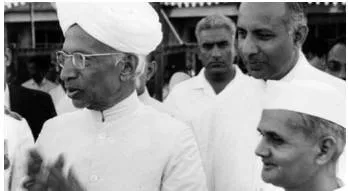
How far we have travelled from the deeply prescient report, written in 1949 with admirable literary flourish, under the leadership of the man whose name is commemorated today, Sarvepalli Radhakrishnan. Written in the first flush of Independence, when world-class institutions such as the IITs and IIMs were not even a twinkling in the nation’s eye, the document was a hard-nosed look at the existing university system, its promises, its failures and its possibilities. Our finest tribute to Radhakrishnan would be to remind ourselves of the breadth of that vision.
In it, universities were described as the “sanctuaries of the inner life of the nation”, as the “organs of civilisation” where “Everything is being brought to the test of reason — venerable theologies, ancient political institutions, time-honoured social arrangements, a thousand things that a generation ago looked as fixed as the hills”. The commission was conscious of the precipitous preoccupations of a new nation: “We must give up,” said the report, “the fatal obsession with the perfection of the past, that greatness is not to be attained in the present, that everything is already worked out and that all that remains for the future ages of the world is pedantic imitation of the past.” Indeed, “Universities are the homes of intellectual adventure.” Recognising, with an appropriate quote from T S Eliot, that information had imperiled knowledge, as much as knowledge had forestalled wisdom, the report reminded us that “we are building a civilisation, not a factory or a workshop”.
“Our ancient teachers, tried to teach subjects and impart wisdom. Their ideal was wisdom (irfan) along with knowledge (urn)”. “Jnanam vijnana-sahitam” was not far behind, but with the choice of those two opening words, the report acknowledged a different composite intellectual heritage from the impoverished intellectual past that is being promoted today.
Just two elements of this fascinating document deserve our attention. At a time when there is mindless pursuit of glory via science and technology (to which five of the six Institutes of Eminence, which have been chosen to blazon our way into international rankings, are devoted), let us hear what this document said: “If we wish to bring about a savage upheaval in our society, a raksasa raj, all that we need to do is to give vocational and technical education and starve the spirit. We will have a number of scientists without conscience, technicians without taste who find a void within themselves, a moral vacuum and a desperate need to substitute something, anything, for their lost endeavour and purpose.” The haste with which JNU has opened a school of engineering, across the road from an equally illustrious institution which has been unable to fill its seats this year, appears to be a fulfillment of this ominous prophesy.
Two, listen to the report on university autonomy: “Higher education is, undoubtedly, an obligation of the State but State aid is not to be confused with State control over academic policies and practices.” Further: “Professional integrity requires that teachers should be as free to speak on controversial issues as any other citizens of a free country.” An atmosphere of freedom is essential for developing this “morality of the mind”. Yet the autonomy that has, ironically, been recently thrust on institutions like JNU has come to mean the freedom to raise fees, bring in faculty at enhanced salaries or start innumerable certificate courses, which convert an admirably autonomous research university into a teaching shop.
The Indian public university, despite the innumerable problems it faces, in no small part due to the compromises made by teachers themselves, has many creditable achievements that were not foreseen even by the Radhakrishnan Report. But it is to its lofty imagination that we must cling when the bonfires are being lit and the macabre dance of anti-intellectualism has begun.












Stay updated with The Hindu Editorial Vocab24 app, your definitive source for breaking news and comprehensive coverage from India and around the globe. Whether it's political developments, business updates, sports highlights, the latest technology trends, or current events, The Hindu brings live, accurate, and reliable news directly to your device.
Don’t fall for sensationalized or fake news shared online. Read and share accurate updates with friends and family through The Hindu Editorial Vocab24 app. Download it today!
News Coverage in The Hindu Editorial Vocab24 App
Breaking News: Receive instant notifications on breaking news stories as they unfold. Stay informed about major events and developments in India and around the world with live blogs, news in shorts videos, and concise articles.
Politics: Get the latest updates on Indian politics, including elections, policy changes, government decisions, and political events that shape the nation.
Business and Economy: Stay ahead in the economic landscape with detailed business news and market analysis. Learn about stock market trends, financial reports, corporate news, and economic developments to make informed investment decisions.
Current Events: Follow stories on social issues, policy changes, global events, and daily current affairs, tailored for UPSC and other competitive exam preparations.
Technology: Keep up with the latest gadgets, innovations, and tech trends. Read expert reviews and analyses in short, concise updates on cutting-edge technology from India and beyond.
Sports: Never miss a moment of your favorite sports. Get live scores, match reports, and expert analysis on cricket, football, tennis, and more.
International News: Stay informed about global events and geopolitical developments, including the Russia-Ukraine war, Israel-Palestine conflict, and other key international stories.
Local News: Stay connected to your community with the latest updates on city events, issues, and local news. Coverage includes hyperlocal updates from cities like Bangalore, Chennai, Delhi, Hyderabad, Mumbai, Kolkata, and more.
Trending Topics: Discover what's trending today with the most talked-about stories and hot topics across India and the world.
Experience journalism that values integrity, accuracy, and reliability. Download The Hindu Editorial Vocab24 app today and stay connected with the world.
Subscribe to our newsletter!







