

Rare earths emerge as a geopolitical lynchpin in the rising china u s rivalry
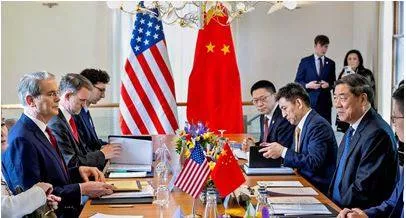
With China dominating the global rare earth supply chain, and tightening grip over exports amid escalating trade and tech tensions, the U.S. is now actively seeking alternative sources and investing in recycling rare earths from used electronics and magnets to reduce its strategic dependence.“They are going to deliver rare earths to us,” U.S. Commerce Secretary Howard Lutnick said in an interview on June 27. “And once they do that, we will take down our countermeasures.” Mr. Lutnick’s remarks came just a day after a White House official confirmed that the U.S. and China had reached “an additional understanding” to implement the Geneva agreement — a May 12 deal that paused new tariffs for 90 days and set a mid-August deadline for further talks.
Soon after, U.S. President Donald Trump announced that Washington had signed an agreement with Beijing. He offered few details but hinted at a possible deal with India in the near future. China also confirmed the agreement. These announcements were the first formal confirmation of a partial breakthrough after months of escalating trade and technology tensions between the world’s two biggest economies.
This came after high-level delegations from both countries met in London on June 9 and 10 for two days of negotiations. The focal point of the talks was one mineral group: rare earth elements (REEs) — a strategic mineral group critical to both economies.
Often described as the “vitamins of the modern economy,” it is a group of 17 chemically similar metallic elements.
These include 15 silvery-white metals called lanthanides, or lanthanoids, plus scandium and yttrium, which are indispensable to a range of civilian and military applications, from electric vehicles and wind turbines to radar systems, precision-guided weapons, and stealth aircraft. REEs are not finished magnets or minerals, but raw elements extracted from complex ores and later processed into specialised materials.
Despite their name, REEs are not geologically scarce, rather, their extraction and processing are expensive, complex, and environmentally hazardous.
The 17 elements include lanthanum, cerium, praseodymium, neodymium, promethium, samarium, europium, gadolinium, terbium, dysprosium, holmium, erbium, thulium, ytterbium, lutetium scandium, and yttrium.
Neodymium and praseodymium are used in powerful magnets that run electric vehicle motors and wind turbines. Europium is used in LED displays. While cerium and lanthanum are employed in catalytic converters, glass polishing, and camera lenses, samarium and dysprosium are essential in high-performance magnets and defence systems. Gadolinium has applications in MRI machines, while other REEs play a role in lasers, batteries, and fibre-optic cables.
REEs are divided into two categories: light rare earths and heavy rare earths. Light REEs are widely used in consumer electronics, batteries, and industrial applications, while heavy REEs are more valuable due to their specialised uses, limited supply, and crucial role in military, nuclear, and high-performance magnet applications.
REEs are typically dispersed in mineral ores, such as bastnäsite and monazite, unlike gold or copper found in pure form. Once mined, they undergo a complex, multi-step process: the ore is crushed, chemically leached, and then separated through solvent extraction to isolate individual elements. These are then refined into metals or oxides.
The choke point
While deposits exist in many parts of the world, China dominates the rare earth supply chain — not because it holds the most reserves, but because it invested early in large-scale refining infrastructure. According to the U.S. Geological Survey (USGS), China accounts for nearly 70% of global REE mining and more than 90% of refining capacity.
The country’s rare-earth journey dates back to 1927, when scientists discovered major deposits in Bayan Obo in Inner Mongolia. Production began in 1957, and over time, deposits have been located across 21 provinces and autonomous regions, from Fujian and Guangdong to Jiangxi and Sichuan.
While rare earths are often discussed in terms of green energy and electronics, their military importance is equally, if not more, critical. Samarium-cobalt magnets, for instance, remain stable at high temperatures and are vital to precision weapons. Dysprosium strengthens magnets used in stealth aircraft. Yttrium and terbium enhance night vision and targeting systems.
This military dependence is precisely why recent export curbs by Beijing rattled Washington.
The London talks resulted in noteworthy progress. However, it did not cover military-grade materials. According to a Reuters report, Beijing has not committed to grant export clearance for some specialised rare-earth magnets that U.S. military suppliers need for fighter jets and missile systems.
Hence, the U.S. is actively seeking alternative resources for rare earth elements.
The Mountain Pass mine in California currently supplies over 10% of the world’s rare-earth raw materials. However, much of the ore still has to be sent to China for processing.
This has prompted a broader outreach beyond U.S. borders.
In Greenland, the vast Kvanefjeld deposit could alone supply up to 15% of global demand for REEs. Its resources, include some of the world’s largest reserves of rare earth, lithium, cobalt, and uranium — all critical to the clean energy transition and modern defence technology.
However, it lacks processing infrastructure.
Greenland’s Minister for Business, Trade and Raw Materials, Naaja Nathanielsen, in a BBC report, said that interest in the territory’s minerals has “absolutely increased within the last five years or so.” And, Mr. Trump also floated the idea of acquiring Greenland, calling it essential “for national security and international security.”
Ukraine, too, holds enormous potential. According to USGS, the country has 5,00,000 tonnes of lithium in its reserves, 20% of global graphite reserves, and significant supplies of neodymium and other high-tech metals.
Other possible locations, according to USGS are: Australia, Brazil, Russia, India, Vietnam, and Canada, as well as African nations such as Madagascar, Tanzania, South Africa, and Burundi.
Parallel to these efforts, the U.S. is also investing in recycling rare earths from used electronics and magnets that could reduce dependence on heavy REEs.
For now, all the talk and frameworks offer a temporary easing of tensions. With military-grade materials still off the table, the deal falls short of a reset. And unless the U.S ramps up investments in rare earth processing infrastructure, China’s dominance will remain not just an economic asset but a powerful geopolitical lever.


Trump announces ceasefire between Lebanon and Israel
Apr 19, 2026

As trade row eases u s clears missile sale to india
Nov 23, 2025





Stay updated with The Hindu Editorial Vocab24 app, your definitive source for breaking news and comprehensive coverage from India and around the globe. Whether it's political developments, business updates, sports highlights, the latest technology trends, or current events, The Hindu brings live, accurate, and reliable news directly to your device.
Don’t fall for sensationalized or fake news shared online. Read and share accurate updates with friends and family through The Hindu Editorial Vocab24 app. Download it today!
News Coverage in The Hindu Editorial Vocab24 App
Breaking News: Receive instant notifications on breaking news stories as they unfold. Stay informed about major events and developments in India and around the world with live blogs, news in shorts videos, and concise articles.
Politics: Get the latest updates on Indian politics, including elections, policy changes, government decisions, and political events that shape the nation.
Business and Economy: Stay ahead in the economic landscape with detailed business news and market analysis. Learn about stock market trends, financial reports, corporate news, and economic developments to make informed investment decisions.
Current Events: Follow stories on social issues, policy changes, global events, and daily current affairs, tailored for UPSC and other competitive exam preparations.
Technology: Keep up with the latest gadgets, innovations, and tech trends. Read expert reviews and analyses in short, concise updates on cutting-edge technology from India and beyond.
Sports: Never miss a moment of your favorite sports. Get live scores, match reports, and expert analysis on cricket, football, tennis, and more.
International News: Stay informed about global events and geopolitical developments, including the Russia-Ukraine war, Israel-Palestine conflict, and other key international stories.
Local News: Stay connected to your community with the latest updates on city events, issues, and local news. Coverage includes hyperlocal updates from cities like Bangalore, Chennai, Delhi, Hyderabad, Mumbai, Kolkata, and more.
Trending Topics: Discover what's trending today with the most talked-about stories and hot topics across India and the world.
Experience journalism that values integrity, accuracy, and reliability. Download The Hindu Editorial Vocab24 app today and stay connected with the world.
Subscribe to our newsletter!







