

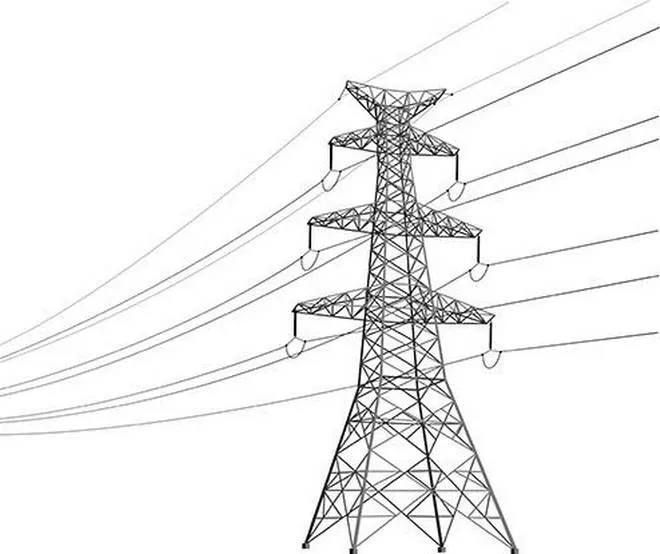
Power problem — on saubhagya scheme
Universal access to electricity has been a familiar and long-standing promise of governments at the Centre. Prime Minister Narendra Modi has signalled he is serious about providing this by owning responsibility for its realisation. Success, however, will require more than just budgetary fund allocation; it will depend largely on addressing structural issues that plague the broken power sector. The Pradhan Mantri Sahaj Bijli Har Ghar Yojana, or the ‘Saubhagya’ scheme, launched by Mr. Modi aims to make electricity accessible to every household by the end of 2018. Under the scheme, expected to cost a little over ₹16,000 crore, poor households that have no access to electricity will be provided electricity connections free of cost. This builds on previous work carried out under the Deen Dayal Upadhyaya Gram Jyoti Yojana launched in 2015, and the Rajiv Gandhi Grameen Vidyutikaran Yojana, launched by the UPA government in 2005, both of which also aimed to provide free electricity connections to the poor. In particular, it hopes to improve electricity access within villages that are already classified as “electrified”, according to the criterion that 10% of households enjoy access to electricity. However, the Saubhagya scheme does very little to address the real problem of affordability. In fact, by failing to account for illegal connections taken by households which find it difficult to afford legal access to power, government data on electricity accessibility understate penetration.A free electricity connection can ease the financial burden on the poor to some degree, but it will not address the recurring burden of power bills. The aim of improving affordability would require that supply be increased drastically to lower the price paid by retail consumers. Paradoxically, amidst the government’s claims that India is a power-surplus nation, the power generation utilities remain vastly under-utilised. The plant load factor (PLF) of coal and lignite-based plants, an indicator of capacity utilisation of power generation units, has dropped consistently over the decade from 77.5% in 2009-10 to 59.88% in 2016-17, according to data from the Central Electricity Authority. This is due to demand for electricity from State distribution companies dropping in tandem with their deteriorating financial status. The Ujwal DISCOM Assurance Yojana (UDAY) , introduced two years ago to restructure the debt of State distribution agencies, has failed to make enough of a difference to this state of affairs. The outcome is not surprising, given that UDAY has failed to address the root problem of populism in the pricing of electricity. In the absence of the freedom to sell at a profitable price, distribution agencies have had very little incentive to demand more electricity from power generators, as evident in the constantly falling PLF. This in turn holds back investment in power generation units. Saubhagya, unfortunately, does very little to address the fundamentals of India’s crippling power problem.



The unilateral vote
Sep 28, 2017
Worrying downgrade — on snow leopard conservation
Sep 26, 2017
Unending slowdown indian economy
Sep 02, 2017
Ray of hope bandh suspended in the darjeeling hills
Sep 01, 2017





Stay updated with The Hindu Editorial Vocab24 app, your definitive source for breaking news and comprehensive coverage from India and around the globe. Whether it's political developments, business updates, sports highlights, the latest technology trends, or current events, The Hindu brings live, accurate, and reliable news directly to your device.
Don’t fall for sensationalized or fake news shared online. Read and share accurate updates with friends and family through The Hindu Editorial Vocab24 app. Download it today!
News Coverage in The Hindu Editorial Vocab24 App
Breaking News: Receive instant notifications on breaking news stories as they unfold. Stay informed about major events and developments in India and around the world with live blogs, news in shorts videos, and concise articles.
Politics: Get the latest updates on Indian politics, including elections, policy changes, government decisions, and political events that shape the nation.
Business and Economy: Stay ahead in the economic landscape with detailed business news and market analysis. Learn about stock market trends, financial reports, corporate news, and economic developments to make informed investment decisions.
Current Events: Follow stories on social issues, policy changes, global events, and daily current affairs, tailored for UPSC and other competitive exam preparations.
Technology: Keep up with the latest gadgets, innovations, and tech trends. Read expert reviews and analyses in short, concise updates on cutting-edge technology from India and beyond.
Sports: Never miss a moment of your favorite sports. Get live scores, match reports, and expert analysis on cricket, football, tennis, and more.
International News: Stay informed about global events and geopolitical developments, including the Russia-Ukraine war, Israel-Palestine conflict, and other key international stories.
Local News: Stay connected to your community with the latest updates on city events, issues, and local news. Coverage includes hyperlocal updates from cities like Bangalore, Chennai, Delhi, Hyderabad, Mumbai, Kolkata, and more.
Trending Topics: Discover what's trending today with the most talked-about stories and hot topics across India and the world.
Experience journalism that values integrity, accuracy, and reliability. Download The Hindu Editorial Vocab24 app today and stay connected with the world.
Subscribe to our newsletter!







