

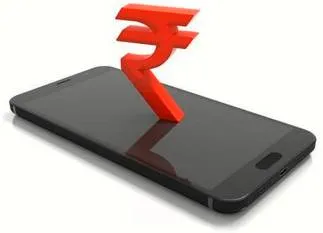
Potholes on the digital payment superhighway
The National Payments Corporation of India must be supported and there has to be a rational structure of pricing.Digital payments have found strong ground, especially in India, increasingly relegating all other modes of payments to the background. It is through a faster system of simultaneous debits and credits that the money value is transferred from one account to the other across banks. It embraces all kinds of operators (including direct benefit transfer by the government) across the country and even internationally, subject to regulatory forbearance. With such versatility and ease of settling financial transactions, the growth of digital payments is going to be phenomenal, supported by banks and Fin-Tech, or financial technology, companies.
Steered by the RBI
There is a long and interesting history behind the evolution of digital payments in India, piloted by the Reserve Bank of India (RBI) and succinctly captured in the Payment Systems in India, published in 1998. A major thrust toward large value payments was effected through the Real Time Gross Settlement System, or RTGS, launched by the RBI in March 2004. The large value payments on stock trading, government bond trading and other customer payments were covered under the RTGS, providing finality of settlement, thereby reducing huge risks such as the Harshad Mehta scam; besides this, it substantially reduced the time taken for settlements. The RBI introduced National Electronic Funds Transfer, or NEFT, and bulk debits and credits to support retail payments around the same time. Now, NEFT is available round the clock and RTGS will follow from December 2020 — only a few countries have achieved this.
Such historical changes brought about by the RBI triggered major changes in the corporate and capital market transactions as well. Today, the Securities and Exchange Board of India (SEBI), the market regulator, is contemplating a T+1 settlement (T is for transaction date) because the underlying consideration of the sale proceeds of the shares get exchanged very fast under the payments system. This is expected to attract more international capital into the Indian market, in turn broadening and deepening the financial market.
An umbrella system
The sterling contribution of this robust payment system, especially retail payments, was seeded and reinforced with the setting up of the National Payments Corporation of India (NPCI) by 10 lead banks at the instance of the RBI in 2009. The idea for this umbrella retail payments institution emerged in the vision document on payments system, 2005-08 released by RBI in 2005. Very few people know about the unwritten history of the background under which this umbrella organisation was mooted. In 2004, a four-member team including this writer visited the Riksbank, the central bank of Sweden, on a study tour. This included a visit to the Bangirocentralen (BGC AB), a not-for-profit organisation owned by eight Swedish banks for providing retail payment and related services. The model appeared as an attractive proposition as payments is basically a public good. Thus the idea of the NPCI as a not-for-profit company has a link from the BGC.
The setting up of such an umbrella organisation to build a super highway for digital payments has a strong appeal which was well-appreciated by Dr. Y.V. Reddy, the then RBI Governor, taking a number of policy decisions to spread digital payments and protect consumer interest. However, there were many within and outside the RBI, including in the Indian Banks’ Association, who had apprehensions about the success of such a model for the NPCI.
Indicators of success
With digital payment being a public good like currency notes, it was necessary that the corporation was fully supported by the RBI and the government as an extended arm of the sovereign. It was also necessary to contain expectations on profits, avoiding gyrations of the stock market along with direct or indirect control by powerful private interests which had the potential to dilute the public good character of the outfit. The NPCI’s success against deeply entranced formidable international players, supported by innovative technology, viz. Unified Payments Interface (UPI) and Immediate Payment Service (IMPS), is well recognised by central banks in many other countries. The Bank for International Settlements’s endorsement of the NPCI model in 2019 is a major accolade. If the NPCI has gained such a rare distinction in just 10 years of its successful and path breaking journey, we should be proud to preserve this precious jewel.
There is a demand from some quarters that the NPCI should be converted into a for-profit company to withstand competition. The shareholders of the NPCI can have windfall gains too. But this will be a retrograde step with huge potential for loss of consumer surplus along with other strategic implications. Instead, like the RBI providing free use of the RTGS and other products, the strategy should be to assist the NPCI financially, either by the RBI or the government, to provide retail payment services at reduced price (in certain priority areas). This may also help support expansion of the payment system network and infrastructure in rural and semi-urban areas in partnership with Fin-Tech companies and banks.
On merchant discount rate
In Budget 2020-21, the government prescribed zero Merchant Discount Rate (MDR), the rate merchants pay to scheme providers, for RuPay and UPI, both NPCI products, to popularise digital payments benefiting both customers and merchants. There is justification in this prescription by the government because depositors implicitly pay around 3% to banks as net interest margin, being the difference between saving and risk free bond rate, for enjoying certain payments services traditionally. When banks enjoy such a huge amount of current account savings account (CASA) deposits, in return, is it not incumbent on them to provide such payment services, costing only a small fraction of such a gain?
For reasons unknown, the government left out other providers of digital payment products from this MDR prescription, which is unjustified and had adverse effects. Taking advantage of this dichotomy, many issuing banks switched to mainly Visa and Master cards for monetary gains. As customers were induced by such supplier banks, it created a kind of indirect market segmentation and cartel formation, though there is hardly any quality difference in payment products. It may be noted that even the European Central Bank imposed a ceiling on MDR for all, protecting consumer interest. It is hoped that the government will take corrective action in the next Budget to ensure a level playing field and to relieve the NPCI from such policy-induced market imperfection.
Settle the pricing
The ideal pricing for digital payments products should be based on an analysis of producer surplus, consumer surplus (i.e. gain or loss of utility due to pricing) and social welfare for which we need cost-volume-price data. A factor which needs to be reckoned is the float funds digital payments allow (cash withdrawal is a drain on the banking system), which is a source of sizeable income for banks. The RBI will do well to study and arrive at a rational structure of pricing including MDR (possibly also penalty on default by customer), given that the digital payment system is like a national superhighway, for which the government has a crucial role to play in protecting consumers against exploitation. This can run into a huge amount when digital payments become all pervasive.
It is not the intention to deny a fair amount of return to payment service providers including Fin-Tech companies. But should this be at the cost of huge loss of consumer surplus? Ideally, it should be a case of win-win for all.

Atiqa records two top-four finishes in WSK Final Cup
Sep 05, 2026









Stay updated with The Hindu Editorial Vocab24 app, your definitive source for breaking news and comprehensive coverage from India and around the globe. Whether it's political developments, business updates, sports highlights, the latest technology trends, or current events, The Hindu brings live, accurate, and reliable news directly to your device.
Don’t fall for sensationalized or fake news shared online. Read and share accurate updates with friends and family through The Hindu Editorial Vocab24 app. Download it today!
News Coverage in The Hindu Editorial Vocab24 App
Breaking News: Receive instant notifications on breaking news stories as they unfold. Stay informed about major events and developments in India and around the world with live blogs, news in shorts videos, and concise articles.
Politics: Get the latest updates on Indian politics, including elections, policy changes, government decisions, and political events that shape the nation.
Business and Economy: Stay ahead in the economic landscape with detailed business news and market analysis. Learn about stock market trends, financial reports, corporate news, and economic developments to make informed investment decisions.
Current Events: Follow stories on social issues, policy changes, global events, and daily current affairs, tailored for UPSC and other competitive exam preparations.
Technology: Keep up with the latest gadgets, innovations, and tech trends. Read expert reviews and analyses in short, concise updates on cutting-edge technology from India and beyond.
Sports: Never miss a moment of your favorite sports. Get live scores, match reports, and expert analysis on cricket, football, tennis, and more.
International News: Stay informed about global events and geopolitical developments, including the Russia-Ukraine war, Israel-Palestine conflict, and other key international stories.
Local News: Stay connected to your community with the latest updates on city events, issues, and local news. Coverage includes hyperlocal updates from cities like Bangalore, Chennai, Delhi, Hyderabad, Mumbai, Kolkata, and more.
Trending Topics: Discover what's trending today with the most talked-about stories and hot topics across India and the world.
Experience journalism that values integrity, accuracy, and reliability. Download The Hindu Editorial Vocab24 app today and stay connected with the world.
Subscribe to our newsletter!







