

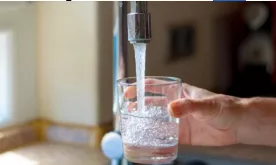
Plastic fibres found in tap water around the world study reveals
Tests show billions of people globally are drinking water contaminated by plastic particles, with 83% of samples found to be polluted.Microplastic contamination has been found in tap water in countries around the world, leading to calls from scientists for urgent research on the implications for health.
Scores of tap water samples from more than a dozen nations were analysed by scientists for an investigation by Orb Media, who shared the findings with the Guardian. Overall, 83% of the samples were contaminated with plastic fibres.
The US had the highest contamination rate, at 94%, with plastic fibres found in tap water sampled at sites including Congress buildings, the US Environmental Protection Agency’s headquarters, and Trump Tower in New York. Lebanon and India had the next highest rates.
European nations including the UK, Germany and France had the lowest contamination rate, but this was still 72%. The average number of fibres found in each 500ml sample ranged from 4.8 in the US to 1.9 in Europe.
The new analyses indicate the ubiquitous extent of microplastic contamination in the global environment. Previous work has been largely focused on plastic pollution in the oceans, which suggests people are eating microplastics via contaminated seafood.
A separate small study in the Republic of Ireland released in June also found microplastic contamination in a handful of tap water and well samples.
Mahon said there were two principal concerns: very small plastic particles and the chemicals or pathogens that microplastics can harbour. “If the fibres are there, it is possible that the nanoparticles are there too that we can’t measure,” she said. “Once they are in the nanometre range they can really penetrate a cell and that means they can penetrate organs, and that would be worrying.” The Orb analyses caught particles of more than 2.5 microns in size, 2,500 times bigger than a nanometre.
Microplastics can attract bacteria found in sewage, Mahon said: “Some studies have shown there are more harmful pathogens on microplastics downstream of wastewater treatment plants.”
Microplastics are also known to contain and absorb toxic chemicals and research on wild animals shows they are released in the body. Prof Richard Thompson, at Plymouth University, UK, told Orb: “It became clear very early on that the plastic would release those chemicals and that actually, the conditions in the gut would facilitate really quite rapid release.” His research has shown microplastics are found in a third of fish caught in the UK.
The scale of global microplastic contamination is only starting to become clear, with studies in Germany finding fibres and fragments in all of the 24 beer brands they tested, as well as in honey and sugar. In Paris in 2015, researchers discovered microplastic falling from the air, which they estimated deposits three to 10 tonnes of fibres on the city each year, and that it was also present in the air in people’s homes.
This research led Frank Kelly, professor of environmental health at King’s College London, to tell a UK parliamentary inquiry in 2016: “If we breathe them in they could potentially deliver chemicals to the lower parts of our lungs and maybe even across into our circulation.” Having seen the Orb data, Kelly told the Guardian that research is urgently needed to determine whether ingesting plastic particles is a health risk.
How microplastics end up in drinking water is for now a mystery, but the atmosphere is one obvious source, with fibres shed by the everyday wear and tear of clothes and carpets. Tumble dryers are another potential source, with almost 80% of US households having dryers that usually vent to the open air.
Plastic fibres may also be flushed into water systems, with a recent study finding that each cycle of a washing machine could release 700,000 fibres into the environment. Rains could also sweep up microplastic pollution, which could explain why the household wells used in Indonesia were found to be contaminated.
In Beirut, Lebanon, the water supply comes from natural springs but 94% of the samples were contaminated. “This research only scratches the surface, but it seems to be a very itchy one,” said Hussam Hawwa, at the environmental consultancy Difaf, which collected samples for Orb. Current standard water treatment systems do not filter out all of the microplastics, Mahon said: “There is nowhere really where you can say these are being trapped 100%. In terms of fibres, the diameter is 10 microns across and it would be very unusual to find that level of filtration in our drinking water systems.”
Bottled water may not provide a microplastic-free alternative to tap water, as the they were also found in a few samples of commercial bottled water tested in the US for Orb.
Almost 300m tonnes of plastic is produced each year and, with just 20% recycled or incinerated, much of it ends up littering the air, land and sea. A report in July found 8.3bn tonnes of plastic has been produced since the 1950s, with the researchers warning that plastic waste has become ubiquitous in the environment.












Stay updated with The Hindu Editorial Vocab24 app, your definitive source for breaking news and comprehensive coverage from India and around the globe. Whether it's political developments, business updates, sports highlights, the latest technology trends, or current events, The Hindu brings live, accurate, and reliable news directly to your device.
Don’t fall for sensationalized or fake news shared online. Read and share accurate updates with friends and family through The Hindu Editorial Vocab24 app. Download it today!
News Coverage in The Hindu Editorial Vocab24 App
Breaking News: Receive instant notifications on breaking news stories as they unfold. Stay informed about major events and developments in India and around the world with live blogs, news in shorts videos, and concise articles.
Politics: Get the latest updates on Indian politics, including elections, policy changes, government decisions, and political events that shape the nation.
Business and Economy: Stay ahead in the economic landscape with detailed business news and market analysis. Learn about stock market trends, financial reports, corporate news, and economic developments to make informed investment decisions.
Current Events: Follow stories on social issues, policy changes, global events, and daily current affairs, tailored for UPSC and other competitive exam preparations.
Technology: Keep up with the latest gadgets, innovations, and tech trends. Read expert reviews and analyses in short, concise updates on cutting-edge technology from India and beyond.
Sports: Never miss a moment of your favorite sports. Get live scores, match reports, and expert analysis on cricket, football, tennis, and more.
International News: Stay informed about global events and geopolitical developments, including the Russia-Ukraine war, Israel-Palestine conflict, and other key international stories.
Local News: Stay connected to your community with the latest updates on city events, issues, and local news. Coverage includes hyperlocal updates from cities like Bangalore, Chennai, Delhi, Hyderabad, Mumbai, Kolkata, and more.
Trending Topics: Discover what's trending today with the most talked-about stories and hot topics across India and the world.
Experience journalism that values integrity, accuracy, and reliability. Download The Hindu Editorial Vocab24 app today and stay connected with the world.
Subscribe to our newsletter!







