

Orb
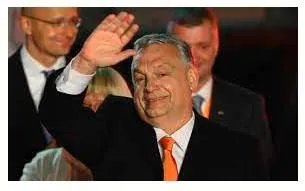
As I stood in a cold, disconsolate crowd in central Budapest late on Sunday night, listening to Hungarian opposition leader Péter Márki-Zay concede defeat in the country’s election, the Twitter feed on my phone filled with images of murdered Ukrainian civilians in the town of Bucha. Some of them had their hands tied behind their backs. Beside one murdered woman lay a keychain with a pendant showing the yellow stars on blue background of the European flag. The Ukrainian horrors are clearly far worse than the Hungarian miseries, but the two are fatefully connected.It is a bitter irony that, just as we learn of some of the worst atrocities in Russian president Vladimir Putin’s war of terror against Ukraine, Putin’s closest ally among EU leaders, Hungarian prime minister Viktor Orbán, is re-elected partly because he turned that very war to his own political benefit. As well as exploiting all the advantages he has already built in to a heavily rigged political system, such as gerrymandered constituencies and overwhelming media dominance, Orbán won by telling Hungarians that he would keep them out of this war – and that their heating bills would stay low due to his sweet gas deals with Putin.
In his victory speech, the Hungarian leader listed the “opponents” he had defeated. They included the international media, Brussels bureaucrats and the Ukrainian president, Volodymyr Zelenskiy, who has criticised him fiercely for his opposition to the weapon supplies and further sanctions that Ukraine desperately needs. So he tells us exactly who his enemies are – and friend Putin has hastened to congratulate him on his famous victory.
If the Hungarian six-party opposition coalition led by Márki-Zay had won, Hungary would have become a staunch western ally in the face of Russian aggression, as other central European countries such as Poland and the Czech Republic are proving to be. “Russians go home!” some youngsters chanted at the very end of that disconsolate opposition wake in Budapest, recalling a slogan from the time of the Soviet invasion of Hungary in 1956. Walking back at midnight across a deserted Heroes Square, I recalled how in that very place in June 1989 I had heard a young, seemingly idealistic Orbán himself call for the withdrawal of Soviet troops from Hungary. Yet now the ageing cynic is flatly refusing to let western arms supplies pass through Hungary in order to help the Ukrainian army send the Russians home. I wonder what he sees when he looks in the mirror.
An opposition government would also have joined the European public prosecutor’s office, enabling the pursuit of well-documented corruption in the use of EU funds. It would have kicked out the International Investment Bank, which the opposition says is closely linked to the Putin regime. And it would have set about the difficult process of turning Hungary back into a proper liberal democracy.
Instead, Orbán’s Fidesz party has once again secured a two-thirds supermajority, enabling it to change the constitution at will. Whatever honeyed assurances it gives in Brussels or Washington, it will continue to consolidate what political scientists describe as an electoral authoritarian regime. Hungary’s political system is now closer to that of non-EU Serbia, which this weekend saw a simultaneous victory for another nationalist electoral authoritarian, President Aleksandar Vučić, than it is to that of a democracy such as France or Portugal. Orbán and Vučić are close allies.
There were significant failings by the opposition. The six parties were not as united as they should have been, and the lead candidate obviously failed to convince the electorate outside Budapest. Overall, the opposition actually lost votes, although it gained some single-member constituencies in the capital. But there is no way in which this was a fair election.
Wherever I went over the last five days, I saw streets and metro carriages plastered with government-funded posters showing an avuncular image of Viktor Orbán beside the slogan “Let’s protect Hungary’s peace and security”. Another ubiquitous poster showed a young mother and child with the slogan “Protect the children”. This advertised a government referendum conducted at the same time as the election, with questions such as “Do you support the promotion of sex reassignment therapy for underage children?” (The referendum did not reach the required 50% of valid votes.) State media relentlessly promoted a pro-Orbán narrative, as they have done for more than a decade, and even spent some time effectively blaming the war in Ukraine on the Ukrainians. Márki-Zay got just five minutes on state television to explain the opposition programme. Facebook was plastered with regime-supporting paid advertising, thus continuing the platform’s ignoble record of helping the enemies of liberal democracy in return for filthy lucre.
Yet having spent lavishly on tax and welfare handouts to win the election, the Orbán government needs EU funds to fill a big hole in its finances. Unless the EU is prepared simply to accept that it now has an authoritarian member state, it should at long last impose rigorous conditionality on the flows of European money that have long been one of the main founts of Orbán’s power. This means continuing to withhold post-Covid recovery grants and loans, since transparency cannot be guaranteed by a regime that is actually built on the corrupt use of EU money. It also means finally triggering the rule-of-law conditionality mechanism that could hold back significant chunks of funding from the EU’s regular budget. (And not being fooled into giving Hungary lots of money for Ukrainian refugees who have in fact already moved on to other countries.)
But here’s the problem. Faced with the latest evidence of the barbaric behaviour of Russian troops in Ukraine, Europe needs to step up its sanctions against Putin. When Orbán returned from back-to-back summits of Nato and the EU in Brussels last month, his government sent an email to all Hungarians who had signed up for a Covid vaccine saying that “proposals were put on the agenda against which Hungary’s interests had to be protected”. His government would never allow weapons supplies to go through Hungary to Ukraine, nor sanctions to be imposed on the 85% of Hungary’s gas and 64% of its oil that comes from Russia. In response to the Bucha atrocities, EU leaders such as French president Emmanuel Macron are now calling for more sanctions, including on Russian oil. Self-styled “realists” may argue that Brussels has to stay soft on Hungary in order to keep Orbán on board for a common front over Ukraine.
Europe should now get tough on both the Russian enemy without and the Hungarian enemy within. But can it and will it do both at once? Here is another dilemma this dark, depressing weekend has presented to a deeply shaken Europe.










Stay updated with The Hindu Editorial Vocab24 app, your definitive source for breaking news and comprehensive coverage from India and around the globe. Whether it's political developments, business updates, sports highlights, the latest technology trends, or current events, The Hindu brings live, accurate, and reliable news directly to your device.
Don’t fall for sensationalized or fake news shared online. Read and share accurate updates with friends and family through The Hindu Editorial Vocab24 app. Download it today!
News Coverage in The Hindu Editorial Vocab24 App
Breaking News: Receive instant notifications on breaking news stories as they unfold. Stay informed about major events and developments in India and around the world with live blogs, news in shorts videos, and concise articles.
Politics: Get the latest updates on Indian politics, including elections, policy changes, government decisions, and political events that shape the nation.
Business and Economy: Stay ahead in the economic landscape with detailed business news and market analysis. Learn about stock market trends, financial reports, corporate news, and economic developments to make informed investment decisions.
Current Events: Follow stories on social issues, policy changes, global events, and daily current affairs, tailored for UPSC and other competitive exam preparations.
Technology: Keep up with the latest gadgets, innovations, and tech trends. Read expert reviews and analyses in short, concise updates on cutting-edge technology from India and beyond.
Sports: Never miss a moment of your favorite sports. Get live scores, match reports, and expert analysis on cricket, football, tennis, and more.
International News: Stay informed about global events and geopolitical developments, including the Russia-Ukraine war, Israel-Palestine conflict, and other key international stories.
Local News: Stay connected to your community with the latest updates on city events, issues, and local news. Coverage includes hyperlocal updates from cities like Bangalore, Chennai, Delhi, Hyderabad, Mumbai, Kolkata, and more.
Trending Topics: Discover what's trending today with the most talked-about stories and hot topics across India and the world.
Experience journalism that values integrity, accuracy, and reliability. Download The Hindu Editorial Vocab24 app today and stay connected with the world.
Subscribe to our newsletter!







