

Opposition’s role it’s not just about parties
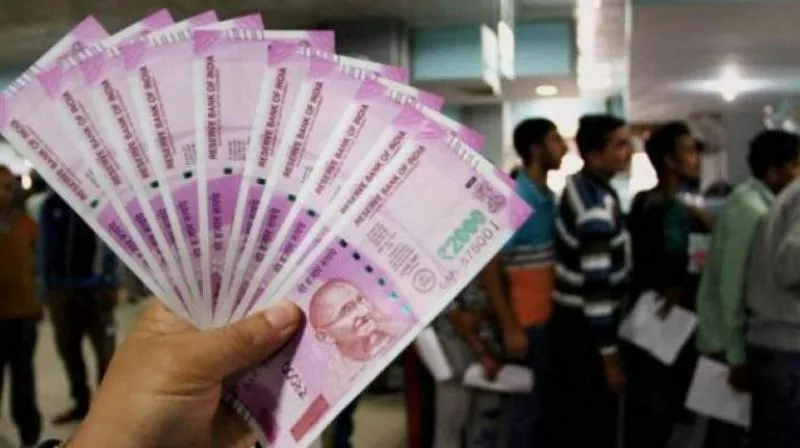
Today, November 8, 2017, is being observed by Opposition parties as a “Black Day” in protest over the demonetisation move exactly a year ago. Nationwide protests are being held on the first anniversary of demonetisation not only to highlight its disastrous effect on the Indian economy, but also as part of an attempt to forge Opposition unity against a bullying government that has little respect for divergent views, and prefers to impose draconian steps like demonetisation and ill-conceived ones like GST on the people without wider consultation.A strong Opposition is essential for the proper functioning of any democracy, and it’s indeed a matter of great concern that due to the lack of numbers, the current Lok Sabha doesn’t even have a recognised Opposition. This, however, is not for the first time. To be a recognised Opposition, a political party needs to have at least 10 per cent of the total number of seats in the Lower House. From 1950 to 1977, there was no recognised Opposition because none of the Opposition parties managed to get the prerequisite number of seats. Similar was the case from 1980 to 1989, during the seventh and eight Lok Sabha, when there was no formal Opposition.
The absence of a recognised Opposition of course doesn’t mean the erosion of the Opposition’s political space or that it has become irrelevant. Various parties individually and collectively raise their voice against the government’s policies and conduct. Just before the 1977 general election, various parties with diverse ideologies and glaring mutual contradictions came together with the single aim of defeating Indira Gandhi and formed the Janata Party. Parties like the Bharatiya Lok Dal of Chaudhury Charan Singh, the Swatantra Party, the Socialist Party of Raj Narain and George Fernandes and the Jan Sangh dissolved their separate identities and formed the new party. It was a historic moment in India’s political history as the new party won the election and formed the first non-Congress government in post-Independent India.
Not just forming alli-ances for elections, parties in the Opposition join hands on specific policy issues to oppose the government. During UPA-1, for example, the BJP and the Left, from opposite ends of the political spectrum, united to oppose the US civil nuclear deal and attack the government. This despite the fact that the Left was earlier supporting the government from outside, and withdrew support over this issue, though the government survived.
Parliament as an institution is collectively responsible for acting as a watchdog over the executive. Though it is becoming rare, there are even instances in the past where members from the treasury benches had opposed and criticised the government. So even in the absence of a political party as the recognised Opposition, there is enough political space within the Indian parliamentary system to accommodate Opposition voices. However, there is no denying that whether in the form of a single party playing the role of major Opposition, or various parties raising their voice over a specific policy issue, the role of a strong Opposition is a mandatory prerequisite for the proper working of parliamentary democracy.
It is ultimately the voice of the people that matters in democracy, and there are several instances where the people’s views have forced the government to drop a proposed law, roll back a policy or enact a new law. Outside the formal political spectrum, activists and the general population have participated in several movements to voice their opinion and protest against certain policies. The Chipko movement and Narmada Bachao Andolan, different ethnocultural and linguistic movements, students’ protests, the agitation for special status and reservations; and many other type of protests that may or may not have the indirect backing of political parties have often surfaced. Unless violent, disruptive and secessionist in nature, these protests are an integral part of democracy. In recent years, the Anna Hazare movement led to the enactment of the Lokpal Act. The widespread protests that followed the horrific Nirbhaya gangrape case in Delhi in December 2012 led to major changes in the criminal law in 2013. Now, even within the narrow Opposition space and a concerted attempt by ruling party circles to suppress dissent, citizens find ways to express their unhappiness through novel protest methods like “award wapasi” led by artistes and intellectuals, and hugely successful events like “Not in My Name” organised and attended by hundreds of ordinary citizens.
The media, the fourth pillar of democracy, is supposed to play an active role as a watchdog and critic of the government. However, instead of standing up for citizens, many media groups and journalists are now acting as agents of the government. Instead of questioning the government, they question the legitimacy of Opposition demands. In this context, the social media has come to play a significant role, offering a platform for political activists and citizens to voice their opinion and criticise the government. That too is not without peril as any vehement critic of the policies and conduct of the ruling side is inevitably trolled, abused, intimated, and sometimes even physically arrested. In November 2016, an RTI activist in Madhya Pradesh landed in jail for criticising demonetisation, Prime Minister Narendra Modi and chief minister Shivraj Singh Chouhan. Just a few days ago, a man was arrested in Tamil Nadu on a BJP leader’s complaint for allegedly criticising Mr Modi in a private chat!
The right to debate, dissent and disagree are among the most basic principles of democracy. There is now a legitimate concern about rising intolerance and the increasingly narrower space for dissent. But Indian democracy is strong and resilient enough to overthrow any autocratic regime that attempts to control and intimidate its critics. One shouldn’t forget that outside the political class, the media or social media space, there is a huge silent majority which doesn’t necessarily or vociferously voice their opinions or criticise the government, but when the time comes to excercise their right to vote, they act decisively.








Stay updated with The Hindu Editorial Vocab24 app, your definitive source for breaking news and comprehensive coverage from India and around the globe. Whether it's political developments, business updates, sports highlights, the latest technology trends, or current events, The Hindu brings live, accurate, and reliable news directly to your device.
Don’t fall for sensationalized or fake news shared online. Read and share accurate updates with friends and family through The Hindu Editorial Vocab24 app. Download it today!
News Coverage in The Hindu Editorial Vocab24 App
Breaking News: Receive instant notifications on breaking news stories as they unfold. Stay informed about major events and developments in India and around the world with live blogs, news in shorts videos, and concise articles.
Politics: Get the latest updates on Indian politics, including elections, policy changes, government decisions, and political events that shape the nation.
Business and Economy: Stay ahead in the economic landscape with detailed business news and market analysis. Learn about stock market trends, financial reports, corporate news, and economic developments to make informed investment decisions.
Current Events: Follow stories on social issues, policy changes, global events, and daily current affairs, tailored for UPSC and other competitive exam preparations.
Technology: Keep up with the latest gadgets, innovations, and tech trends. Read expert reviews and analyses in short, concise updates on cutting-edge technology from India and beyond.
Sports: Never miss a moment of your favorite sports. Get live scores, match reports, and expert analysis on cricket, football, tennis, and more.
International News: Stay informed about global events and geopolitical developments, including the Russia-Ukraine war, Israel-Palestine conflict, and other key international stories.
Local News: Stay connected to your community with the latest updates on city events, issues, and local news. Coverage includes hyperlocal updates from cities like Bangalore, Chennai, Delhi, Hyderabad, Mumbai, Kolkata, and more.
Trending Topics: Discover what's trending today with the most talked-about stories and hot topics across India and the world.
Experience journalism that values integrity, accuracy, and reliability. Download The Hindu Editorial Vocab24 app today and stay connected with the world.
Subscribe to our newsletter!







