


One india two time zones
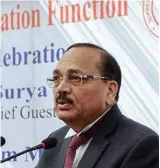
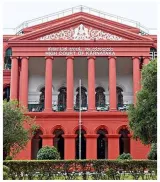
In a two paragraph order delivered by Chief Justice Ajit Singh, the Gauhati High Court has dismissed a public interest litigation filed by Rita Mozumder seeking a direction from the Central government to notify a separate time zone for the Northeast. The court cites a high-level committee study, constituted by the Ministry of Science and Technology, that recognised the difficulties faced by a single time zone in eastern India but concluded that Indian Standard Time (IST) should nonetheless be retained. The issues raised by the petition demanded more than a cursory (त्वरित/सरसरी) order dismissing the petition given the importance of the issue. Legislators, activists, industrialists and ordinary citizens from the Northeast have often complained about the effect of IST on their lives, and pursued the issue of having a separate time zone with the Central government, without much success. The petition arose after repeated rejections by the government. The idea of a standard time zone has become so integral to our lives that we often take it for granted and assume it to be a part of natural phenomena. We tend to forget the complex contestations (प्रतिवाद/विवाद) — including legal ones — that go into its making. The creation of a time zone signals the victory of time over space with geographical areas being brought under a single time zone rather than relying on local solar time. It entails a denial of local time — or a separation of time from space — a very significant fact if you consider what it means to the experience of social and economic lives. In the case of India, the time difference between the westernmost part of India and the easternmost point is approximately two hours, the effect of which is that the sun rises and sets much earlier than it does in the rest of the country. There is a strong case In the Northeast, the sun rises as early as four in the morning and in winter it sets by four in the evening. By the time government offices or educational institutions open, many daylight hours are already lost. In winter this problem gets even more accentuated (जोर देना) and the ecological costs are a disaster with much more electricity having to be consumed. Profs. D.P. Sengupta, and Dilip Ahuja of the National Institute of Advanced Studies claim that advancing IST by half an hour would result in saving 2.7 billion units of electricity every year. None of the other proposals such as the introduction of daylight saving time in India has met with any approval and it is felt that having two time zones would be unsuitable. There is of course a strong political dimension to granting a separate time zone in the Northeast given the region’s long history of self-determination movements. The unstated assumption is that the grant of a different time zone is only the first temporal step towards conceding (स्वीकृति देना) spatial (स्थान-संबंधी) autonomy. This appears to me to be a short-sighted perspective. If socioeconomic development is indeed one of the formulae to combat insurgency (विद्रोह), might it not be worthwhile to consider the disastrous impact that IST has on productivity and efficiency in the region? A few years ago, then Assam Chief Minister Tarun Gogoi, frustrated with the decision of the Centre not to have a separate Northeast time, unilaterally (एकतरफ़ा) decided that Assam would follow ChaiBagaan time. Bagaan time or tea time is a reference to an informal practice followed in tea gardens in Assam which is an hour ahead of IST. It alerts us to the fact that there is indeed a long history of the application of different time zones in India. We find evidence of this in the Constituent Assembly debates. On December 28, 1948, responding to an amendment proposed by Naziruddin Ahmad, Dr. Ambedkar asked him what system of timing he had in mind: “Is it the Greenwich time, the Standard time, Bombay time or Calcutta time?” Ambedkar’s reference to “Bombay time” and “Calcutta time” reminds us of an interesting aberration (पथांतरण /असामान्यता) in the history of IST. It was instituted in 1905 but after it had been adopted, Bombay traders found it difficult to convert to IST. Because the conversion to IST was sought to be effected at a time when there was considerable public resentment over the Tilak sedition (राजद्रोह/विद्रोह) trial, the government found little support for this shift among the people in Bombay. Bombay Time was maintained right up to 1955 with Bombay following its own time zone which was 38 minutes ahead of the rest of the country. Our use of time While the court may have been reticent (मितभाषी/वाक्संयमी) to intervene in what it saw primarily as an executive prerogative (विशेष अधिकर) , it also passed an opportunity to examine a fascinating (आकर्षक) dimension of temporal justice that Indian courts have not had an opportunity to address, but other jurisdictions have had to contend with (Phrasal verb – to fight ) . In the U.S., battles over daylight-saving time regularly went to court and it was not until 1966 with the passing of the Uniform Time Act that they had a uniform national period of daylight-saving time. Todd D. Rakoff in his work on the invisibility of time in structuring the law argues that there is a normative dimension of time that seems to underwrite a number of legal arrangements, and the question of how we, as a society, structure our time is mirrored in the question how we structure our laws. Responding to the various objections raised about a separate time zone, journalist, writer and academic Sanjoy Hazarika raises critical questions and asks us to consider why it is that the development index leans considerably in favour of western India as opposed to the east, and what impact differential time may have on it. This I believe is a question that has a significant impact on the interpretation of ‘life’ in Article 21 of the Constitution. Even if the Gauhati High Court were unwilling to issue a substantive order, it certainly had the discretion (समझ/बुद्धिमानी) to ask for a study on the legal impact of a single time zone on the fundamental rights of people. This is perhaps a question that the Law Commission may find worthy of investigating further. In the meantime, we will have to be content with the tweaking (सुधारना) of local orders changing office timings etc. And, most of east India will continue to feel the vagaries (अनिश्चितताएं) of IST an inconvenience while the further you go to the Northeast, it will be experienced as the caprice (सनक) of the state.Contestation (noun)
The action or process of disputing or arguing. प्रतिवाद/विवाद
Synonyms: Disagreement, Controversy, Disputation, Dissention
Example: Ideological contestations in India are common nowadays.
Concede (verb)
To admit something is true. स्वीकृति देना
Synonyms: Admit, Acknowledge, Accept, Allow, Grant, Recognize
Example: After John beat me at chess five times, I had to concede he was the better player.
Aberration (noun)
A departure from what is normal, usual, or expected, typically an unwelcome one. पथांतरण /असामान्यता
Synonyms: Anomaly, Deviation, Divergence, Oddity, Quirk
Example: Shelley’s angry retort was an aberration from her normally quiet demeanor.
Reticent (adjective)
Inclined to be silent or uncommunicative in speech/ not revealing one's thoughts or feelings readily. मितभाषी/वाक्संयमी
Synonyms: Uncommunicative, Reserved, Quiet, Taciturn
Example: It is okay to be reticent around people you do not know well.
Prerogative (noun)
A right or privilege exclusive to a particular individual or class. विशेष अधिकर
Synonyms: Entitlement, Right, Privilege, Advantage
Example: Just because you are rich does not give you the prerogative to break the law!
Discretion (noun)
The quality of behaving or speaking in such a way as to avoid causing offence or revealing confidential information. समझ/बुद्धिमानी
Synonyms: Discreetness, Common Sense, Gumption, Prudence, Sensibleness, Wisdom
Example: Since there is a storm overhead, the pilot will depart the airport at his own discretion.
Tweak (verb)
Improve by making fine adjustments to it. सुधारना
Synonyms: Adjust, Modify, Alter, Change, Adapt
Example: He just wanted to tweak his original idea a bit before implementation.
Vagary (noun)
An erratic, unpredictable, or extravagant manifestation, action, or notion. अनिश्चितताएं
Synonyms: Quirk, Idiosyncrasy, Peculiarity, Oddity, Eccentricity, Unpredictability
Example: Because gamblers are familiar with the vagary of the gaming tables, they know luck can change in a hand.
Caprice (noun)
A sudden, impulsive, and seemingly unmotivated notion or action. सनक
Synonyms: Whim, Maggot, Megrim, Notion
Example: The last time my uncle drank too much whiskey he engaged in a caprice that ended with him spending over a thousand dollars on complete strangers.
Sedition (noun)
Conduct or speech inciting people to rebel against the authority राजद्रोह/विद्रोह
Synonyms: Agitation, Revolt, Insurrection
Example: The newspaper editor was accused of sedition when he encouraged his fans to rise up against government.








Stay updated with The Hindu Editorial Vocab24 app, your definitive source for breaking news and comprehensive coverage from India and around the globe. Whether it's political developments, business updates, sports highlights, the latest technology trends, or current events, The Hindu brings live, accurate, and reliable news directly to your device.
Don’t fall for sensationalized or fake news shared online. Read and share accurate updates with friends and family through The Hindu Editorial Vocab24 app. Download it today!
News Coverage in The Hindu Editorial Vocab24 App
Breaking News: Receive instant notifications on breaking news stories as they unfold. Stay informed about major events and developments in India and around the world with live blogs, news in shorts videos, and concise articles.
Politics: Get the latest updates on Indian politics, including elections, policy changes, government decisions, and political events that shape the nation.
Business and Economy: Stay ahead in the economic landscape with detailed business news and market analysis. Learn about stock market trends, financial reports, corporate news, and economic developments to make informed investment decisions.
Current Events: Follow stories on social issues, policy changes, global events, and daily current affairs, tailored for UPSC and other competitive exam preparations.
Technology: Keep up with the latest gadgets, innovations, and tech trends. Read expert reviews and analyses in short, concise updates on cutting-edge technology from India and beyond.
Sports: Never miss a moment of your favorite sports. Get live scores, match reports, and expert analysis on cricket, football, tennis, and more.
International News: Stay informed about global events and geopolitical developments, including the Russia-Ukraine war, Israel-Palestine conflict, and other key international stories.
Local News: Stay connected to your community with the latest updates on city events, issues, and local news. Coverage includes hyperlocal updates from cities like Bangalore, Chennai, Delhi, Hyderabad, Mumbai, Kolkata, and more.
Trending Topics: Discover what's trending today with the most talked-about stories and hot topics across India and the world.
Experience journalism that values integrity, accuracy, and reliability. Download The Hindu Editorial Vocab24 app today and stay connected with the world.
Subscribe to our newsletter!







