

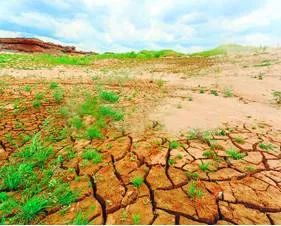
Ominous shadow of climate change
The argument that technological progress can reduce greenhouse gases’ polluting potential to a level that does not matter, does not hold.The Intergovernmental Panel on Climate Change’s (IPCC) latest report, ‘Climate Change 2022: Impacts, Adaptation and Vulnerability’ which was released on February 28, was expected to make grim reading. The United Nations Environment Prog-ramme’s Emissions Gap Report 2021, released in October last year, and providing an overview of the gap in emission levels between what will, and what should, be in 2030 to mitigate the worst effects of climate change, did not offer much cause for optimism; nor did the outcome of the 26th session of the Conference of Parties in the UN Framework Convention on Climate Change in 1995 (COP 26) in Glasgow in November 2021.
The IPCC’s 2022 report, as it so happens, has lived up to expectations. It presents a dismal picture of the environmental scenario as it has been — and is set to be — unfolding. There seems to be not even a dim and flickering light at the end of the tunnel. It rightly states that human-induced climate alteration is causing dangerous and widespread disruption in nature and affecting the lives of billions of people globally, efforts to reduce the risks notwithstanding. Storms, sea-level rise, tsunamis, unusually heavy rainfall, cloudbursts causing devastating flash floods, droughts killing trees and animals and causing forest fires and so on, are posing hazards increasingly adversely affecting people’s health, lives and livelihoods, as well as property and critical infrastructure, including energy and transportation systems. Occurring simultaneously, these weather extremes, the report says, are causing cascading effects that are increasingly difficult to manage. These have exposed millions of people to acute food and water insecurity, especially in Africa, Asia, Central and South America, on Small Islands and in the Arctic, and are conducing to mass migrations.
Given the dismal realities, doomsday prognoses are the rule rather than exceptions when it comes to climate change. The IPCC’s report under discussion does not belong to the second category. It reminds that global warming, reaching 1.5°C in the near-term (2021-2040) would cause “unavoidable increases in multiple climate hazards and present multiple risks to ecosystems and humans. Near-term actions limiting global warming to close to 1.5°C would substantially reduce the projected losses and damages, compared to higher warming levels, but would not totally eliminate them. The chances of this happening are remote. As the Emissions Gap Report 2021 points out, “There is a 50-50 chance that global warming will exceed 1.5°C in the next two decades, and unless there are immediate, rapid and largescale reductions in GHG emissions, limiting warming to 1.5°C or even 2°C by the end of the century will be beyond reach.”
The IPCC’s 2022 report, as it itself points out, is different from its predecessors as it, to use the words from its executive summary, recognises “the interdependence [I would rather have said “mutually aggravating inter-action among”] of climate, ecosystems and biodiversity, and human societies” and integrates knowledge more strongly across the natural, ecological, social and economic sciences than earlier IPCC assessments. Also, it sets its assessment of “climate change impacts and risks as well as adaptation” against “concurrently unfolding non-climatic global trends eg, biodiversity loss, overall unsustainable consumption of natural resources, land and ecosystem degradation, rapid urbanisation, human demographic shifts, social and economic inequalities and a pandemic.”
While all this lends depth and enhanced understanding of the dynamics of climate change, the fact remains that no real progress can be made towards countering it without a drastic reduction in greenhouse gas emissions in the near-term. This would require action on multiple fronts, ranging from a drastic reduction in fossil fuel emissions and use of cooling devices like refrigeration and air-conditioning. It has been argued that technological progress can reduce their polluting potential to a level that does not matter. This does not hold. As David Owen points out in an article titled ‘How the Refrigerator Became an Agent of Climate Catastrophe’ in the New Yorker (January 15, 2022), “Making useful technologies more efficient makes them cheaper, and as they become cheaper we use them more and find more uses for them, just as adding lanes to congested highways makes driving more attractive, not less.”
Owen adds, “The use of cooling technology is growing worldwide. China now accounts for close to half of global air-conditioner purchases and roughly three-quarters of global production; in Dubai, where life during much of the year would be next to impossible without air-conditioning, hotel swimming pools are chilled. According to a report published in 2018 by the International Energy Agency, refrigeration in 2016 accounted for about six per cent of the world’s energy consumption, and space cooling accounted for about eight per cent. In the same report, the IEA predicted that worldwide energy use by air-conditioners would triple by 2050, ‘requiring new electricity capacity equivalent to the combined electricity capacity of the US, the EU and Japan today.’ Energy use by refrigerators is on a similar upward path.”
What would that do to the drastic reduction in the emission of greenhouse gases so desperately needed? The harsh fact is that climate change cannot be reversed unless we change the way we live and the world conducts its business.

Can quad restrain wayward china
May 29, 2022
Concerns over finland sweden joining nato
May 22, 2022
Sustainability road to a better future
May 16, 2022
Aap lays out its goal
May 11, 2022
Shanghai covid crisis a test for xi’s leadership
May 09, 2022
The idea of universal equality
May 06, 2022





Stay updated with The Hindu Editorial Vocab24 app, your definitive source for breaking news and comprehensive coverage from India and around the globe. Whether it's political developments, business updates, sports highlights, the latest technology trends, or current events, The Hindu brings live, accurate, and reliable news directly to your device.
Don’t fall for sensationalized or fake news shared online. Read and share accurate updates with friends and family through The Hindu Editorial Vocab24 app. Download it today!
News Coverage in The Hindu Editorial Vocab24 App
Breaking News: Receive instant notifications on breaking news stories as they unfold. Stay informed about major events and developments in India and around the world with live blogs, news in shorts videos, and concise articles.
Politics: Get the latest updates on Indian politics, including elections, policy changes, government decisions, and political events that shape the nation.
Business and Economy: Stay ahead in the economic landscape with detailed business news and market analysis. Learn about stock market trends, financial reports, corporate news, and economic developments to make informed investment decisions.
Current Events: Follow stories on social issues, policy changes, global events, and daily current affairs, tailored for UPSC and other competitive exam preparations.
Technology: Keep up with the latest gadgets, innovations, and tech trends. Read expert reviews and analyses in short, concise updates on cutting-edge technology from India and beyond.
Sports: Never miss a moment of your favorite sports. Get live scores, match reports, and expert analysis on cricket, football, tennis, and more.
International News: Stay informed about global events and geopolitical developments, including the Russia-Ukraine war, Israel-Palestine conflict, and other key international stories.
Local News: Stay connected to your community with the latest updates on city events, issues, and local news. Coverage includes hyperlocal updates from cities like Bangalore, Chennai, Delhi, Hyderabad, Mumbai, Kolkata, and more.
Trending Topics: Discover what's trending today with the most talked-about stories and hot topics across India and the world.
Experience journalism that values integrity, accuracy, and reliability. Download The Hindu Editorial Vocab24 app today and stay connected with the world.
Subscribe to our newsletter!







