

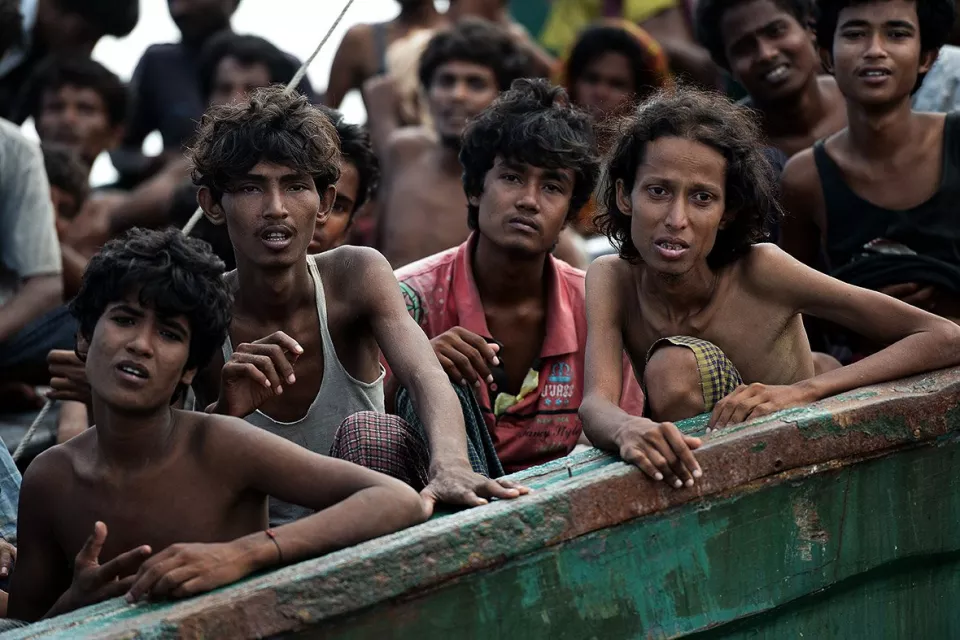
Nowhere people the rohingya crisis
India
took extraordinary care to stay on Myanmar’s right side this week by resisting any show of sympathy to the Rohingya people. On his first bilateral visit to the country, Prime Minister Narendra Modi said he shared the Myanmar government’s concerns about “extremist violence” in Rakhine state, which has seen unprecedented violence over the past fortnight. Meanwhile, at the World Parliamentary Forum on Sustainable Development, Lok Sabha Speaker Sumitra Mahajan abstained from the Bali Declaration because of a reference to “violence in Rakhine state”. New Delhi has traditionally been wary of internationalising the internal affairs of its neighbours; on Myanmar, it has concerns about keeping the country from spinning back into the Chinese orbit. But India must adopt a humane position when dealing with a refugee population that is stateless and has no place to call home. This week, when the matter of Rohingya refugees now in India came up for hearing in the Supreme Court, government counsel refused to guarantee they would not be deported. This was in line with the government’s indication to Parliament last month that all illegal immigrants, including the Rohingya, who number around 40,000, will be deported. The insensitivity of this plan is exposed by the unfolding crisis in Rakhine, where the Rohingya people had been living for generations.
The
Rohingya have been fleeing, mostly on rickety boats, for years now. But this exodus has picked up pace since August 25, when an attack on police posts by an extremist Rohingya group invited sustained reprisal from the army and local Buddhist mobs. The UN estimates that about 270,000 people, more than a quarter of the entire Muslim Rohingya population in Rakhine, have fled since then, mostly to Bangladesh. The Rohingya have been the ultimate nowhere people since 1982, when a Burmese law rendered them stateless, with the government arguing that they are Bengali. Violence has targeted them in phases, most notably beginning in 2012 when inter-religious conflict forced them out in the thousands. In 2014, the Burmese census refused to enumerate the Rohingya, giving them only the option to identify themselves as Bengali. It is an irony that the period of Myanmar’s transition to democracy, that too on Nobel Peace Prize winner Aung San Suu Kyi’s watch, has coincided with the most heartless alienation of the Rohingya. A UN report has called them victims of “crimes against humanity”, while Archbishop Emeritus Desmond Tutu has referred to the violence as “ethnic cleansing”. This backdrop should worry Delhi, not just because its official stance is casting it on the wrong side of the humane position, but also because its deportation plans are perceived as being drawn by the sectarian pulls of domestic politics. And as a regional power, India must answer the question: if it is driving out a stateless people, where does it hope to send them?



Top court quashes FIRs against Gen Z protesters
Sep 04, 2026






Stay updated with The Hindu Editorial Vocab24 app, your definitive source for breaking news and comprehensive coverage from India and around the globe. Whether it's political developments, business updates, sports highlights, the latest technology trends, or current events, The Hindu brings live, accurate, and reliable news directly to your device.
Don’t fall for sensationalized or fake news shared online. Read and share accurate updates with friends and family through The Hindu Editorial Vocab24 app. Download it today!
News Coverage in The Hindu Editorial Vocab24 App
Breaking News: Receive instant notifications on breaking news stories as they unfold. Stay informed about major events and developments in India and around the world with live blogs, news in shorts videos, and concise articles.
Politics: Get the latest updates on Indian politics, including elections, policy changes, government decisions, and political events that shape the nation.
Business and Economy: Stay ahead in the economic landscape with detailed business news and market analysis. Learn about stock market trends, financial reports, corporate news, and economic developments to make informed investment decisions.
Current Events: Follow stories on social issues, policy changes, global events, and daily current affairs, tailored for UPSC and other competitive exam preparations.
Technology: Keep up with the latest gadgets, innovations, and tech trends. Read expert reviews and analyses in short, concise updates on cutting-edge technology from India and beyond.
Sports: Never miss a moment of your favorite sports. Get live scores, match reports, and expert analysis on cricket, football, tennis, and more.
International News: Stay informed about global events and geopolitical developments, including the Russia-Ukraine war, Israel-Palestine conflict, and other key international stories.
Local News: Stay connected to your community with the latest updates on city events, issues, and local news. Coverage includes hyperlocal updates from cities like Bangalore, Chennai, Delhi, Hyderabad, Mumbai, Kolkata, and more.
Trending Topics: Discover what's trending today with the most talked-about stories and hot topics across India and the world.
Experience journalism that values integrity, accuracy, and reliability. Download The Hindu Editorial Vocab24 app today and stay connected with the world.
Subscribe to our newsletter!







