

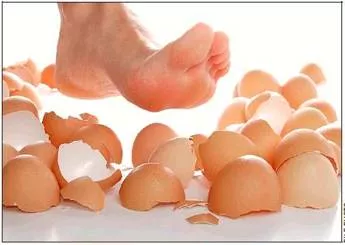
Now kiss and make up
Growing US-India trade tensions unnecessarily threaten a growing strategic relationship.US-India ties are once again on the skids. Prime Minister Narendra Modi will get an opportunity to fix it at the sidelines of the G7 summit in Biarritz, France, this week, and later when he visits the US next month — if he gets a willing partner in US President Donald Trump.
Under Trump, India assumed a prominent position in the US’ Indo-Pacific strategy. But trade issues now threaten to derail the relationship, especially with the removal of the Generalised System of Preferences (GSP) for India, and India’s reciprocal tariffs on the US’ decision to unilaterally impose steel and aluminium tariffs on India. Bilateral trade had more than doubled in value between 2008 and 2018 to over $10 billion. The US is now India’s second largest trading partner and largest export destination, with India having a small trade surplus of around $20 billion. The US is also the largest provider of foreign direct investment (FDI) — around $45 billion — to India, with India investing close to $10 billion in the US.
There are some contentious, but not insoluble, issues in the US-India trade dialogue. In pharmaceuticals, patents and pricing issues remain under discussion. India doesn’t agree with the US on the evergreening of patents. The US is unhappy with India’s price controls on medical products such as stents. But with the Trump government also pushing for lower medicine prices in the US, and India wanting to develop its secondary and tertiary medical system, the potential for collaboration between the two is huge.
Agriculture offers great opportunities, especially after the Bali round. But these remain contentious. There are differences in certification of meat and dairy products. India can export meat to Japan and the EU, but not to the US, as its meat inspection system is different. Likewise, India is able to import dairy products from the EU, Australia and New Zealand. But US suppliers are unable to certify that their products did not originate from animals fed with ruminant products.
Both these contentious issues could be resolved to mutual advantage. As India strives to double farm incomes, it could also benefit hugely from US technology in a range of high-valued agricultural products and agro-processing to unleash a second Green Revolution. Energy — especially liquefied gas — remains another source of collaboration.
No Better? Know Better
Likewise, in telecom and IT, India will become a major market for US companies, but also a major supplier of cheaper back-office solutions. There is also growing cooperation on regulatory standards and approaches. Issues of data protection and visas have surfaced recently. But they should be resolved to make this an area of much greater mutual collaboration between companies of the two countries. India will need to choose between the more business-friendly US, and competing EU’s General Data Protection Regulation (GDPR) approach, which provides stronger data privacy.
India’s ecommerce restrictions are another source of irritation. Companies like Amazon and Walmart have been hurt, not to mention millions of Indian consumers beginning to get their benefits, of an assured quality, delivered at reasonable prices. India should encourage more competition in this area rather than impose restrictions on global ecommerce companies that also provide avenues for Indian companies to enter global value chains.
With Us and Against Us Trump wants to position India as a strategic ally against China. But he curiously puts China and India in the same basket. He has declared that both China and India should not get ‘developing country’ classification at the World Trade Organisation (WTO). He called India an ‘import tariff king’, and threatened India with a Section 301probe.
But while India is the world’s seventh-largest economy, it remains a low middle-income developing country, with a GDP per capita of around $1,800, five times lower than China’s per-capital income. India’s small trade surplus of $20 billion with the US is no comparison to China’s trade surplus of over $400 billion. Ireland and Vietnam have much larger trade surpluses with the US, but don’t draw the same censure.
Moreover, unlike China, India is no security threat, and has also substantially increased its defence purchases from the US to $15 billion, with more orders in the pipeline. The US should pull India on its side in its ‘war’ with China. India, like the US, also has a huge trade deficit with China, and would like to see that imbalance corrected. It must also stop fiddling with its tariffs and keep arguing that they remain within WTO bounds — especially if it wants a more open global trading system. India remains a small player in global trade, and will benefit hugely from greater openness. It must attract more FDI from US companies exiting China by improving its competitiveness, not by closing its doors.
Trump’s approach to trade also raises doubts in India over his strategic security partnership. You can’t shake one hand and get a slap from the other. A US-India free trade agreement (FTA), which seems so far-fetched now, might be a grand goal for Trump and Modi. But that would cement the strategic security partnership between two great democracies.











Stay updated with The Hindu Editorial Vocab24 app, your definitive source for breaking news and comprehensive coverage from India and around the globe. Whether it's political developments, business updates, sports highlights, the latest technology trends, or current events, The Hindu brings live, accurate, and reliable news directly to your device.
Don’t fall for sensationalized or fake news shared online. Read and share accurate updates with friends and family through The Hindu Editorial Vocab24 app. Download it today!
News Coverage in The Hindu Editorial Vocab24 App
Breaking News: Receive instant notifications on breaking news stories as they unfold. Stay informed about major events and developments in India and around the world with live blogs, news in shorts videos, and concise articles.
Politics: Get the latest updates on Indian politics, including elections, policy changes, government decisions, and political events that shape the nation.
Business and Economy: Stay ahead in the economic landscape with detailed business news and market analysis. Learn about stock market trends, financial reports, corporate news, and economic developments to make informed investment decisions.
Current Events: Follow stories on social issues, policy changes, global events, and daily current affairs, tailored for UPSC and other competitive exam preparations.
Technology: Keep up with the latest gadgets, innovations, and tech trends. Read expert reviews and analyses in short, concise updates on cutting-edge technology from India and beyond.
Sports: Never miss a moment of your favorite sports. Get live scores, match reports, and expert analysis on cricket, football, tennis, and more.
International News: Stay informed about global events and geopolitical developments, including the Russia-Ukraine war, Israel-Palestine conflict, and other key international stories.
Local News: Stay connected to your community with the latest updates on city events, issues, and local news. Coverage includes hyperlocal updates from cities like Bangalore, Chennai, Delhi, Hyderabad, Mumbai, Kolkata, and more.
Trending Topics: Discover what's trending today with the most talked-about stories and hot topics across India and the world.
Experience journalism that values integrity, accuracy, and reliability. Download The Hindu Editorial Vocab24 app today and stay connected with the world.
Subscribe to our newsletter!







