

No full stops on bhutan’s exit from the ‘bbin’ agreement
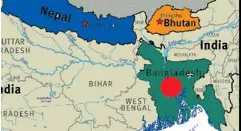
Bhutan’s exit from the ‘BBIN’ agreement should not hold up the road-sharing pact. Bhutan’s announcement that it is unable to proceed with the Motor Vehicles Agreement with Bangladesh, India and Nepal is a road block, and not a dead end, for the regional sub-grouping India had planned for ease of access among the four countries. The sub-grouping, BBIN as it is referred to, was an alternative mooted by the government after Pakistan rejected the MVA at the SAARC summit in Kathmandu in 2014. It seeks to allow trucks and other commercial vehicles to ply on one another’s highways to facilitate trade. Of the other SAARC members, Sri Lanka and the Maldives are not connected by land, and Afghanistan could only be connected if Pakistan was on board. Down to just three countries now after Thimphu’s decision, India, Nepal and Bangladesh will have to decide whether to wait for Bhutan to reconsider or to press ahead with a truncated ‘BIN’ arrangement. The first option will not be easy. The main concern expressed by Bhutanese citizen groups and politicians is over increased vehicular and air pollution in a country that prides itself on ecological consciousness. The upper house of parliament has refused to ratify the MVA that was originally signed by all four BBIN countries in 2015, and the official announcement indicates that Thimphu will not push the agreement ahead of elections in 2018. Despite the setback, New Delhi must persevere with its efforts. To begin with, Bhutan’s objections are environmental, not political, and its government may well change its mind as time goes by. Dry runs have been conducted along the routes, and officials estimate the road links could end up circumventing circuitous shipping routes by up to 1,000 km. Second, Bhutan’s concerns may be assuaged if India considers the inclusion of waterways and riverine channels as a less environmentally damaging substitute. Perhaps, Bhutan’s objections may even spur an overhaul of emission standards for trucks currently plying in India, Nepal and Bangladesh. Above all, the BBIN pact denotes a “can-do” attitude on India’s part, as it shows a willingness to broaden its connectivity canvas with all countries willing to go ahead at present, leaving the door open for those that may opt to join in the future. A similar initiative for the Asian Highway project under the BCIM (Bangladesh-China-India-Myanmar) corridor got a boost this week as the countries moved to upgrade the dialogue to the governmental level. Although India has refused to attend China’s Belt and Road summit on May 14-15, objecting to projects in Pakistan-occupied Kashmir, the BCIM will remain a way of joining the network when India’s concerns are met. Connectivity is the new global currency for growth and prosperity as it secures both trade and energy lines for countries en route, and India must make the most of its geographic advantages.



Top court quashes FIRs against Gen Z protesters
Sep 04, 2026






Stay updated with The Hindu Editorial Vocab24 app, your definitive source for breaking news and comprehensive coverage from India and around the globe. Whether it's political developments, business updates, sports highlights, the latest technology trends, or current events, The Hindu brings live, accurate, and reliable news directly to your device.
Don’t fall for sensationalized or fake news shared online. Read and share accurate updates with friends and family through The Hindu Editorial Vocab24 app. Download it today!
News Coverage in The Hindu Editorial Vocab24 App
Breaking News: Receive instant notifications on breaking news stories as they unfold. Stay informed about major events and developments in India and around the world with live blogs, news in shorts videos, and concise articles.
Politics: Get the latest updates on Indian politics, including elections, policy changes, government decisions, and political events that shape the nation.
Business and Economy: Stay ahead in the economic landscape with detailed business news and market analysis. Learn about stock market trends, financial reports, corporate news, and economic developments to make informed investment decisions.
Current Events: Follow stories on social issues, policy changes, global events, and daily current affairs, tailored for UPSC and other competitive exam preparations.
Technology: Keep up with the latest gadgets, innovations, and tech trends. Read expert reviews and analyses in short, concise updates on cutting-edge technology from India and beyond.
Sports: Never miss a moment of your favorite sports. Get live scores, match reports, and expert analysis on cricket, football, tennis, and more.
International News: Stay informed about global events and geopolitical developments, including the Russia-Ukraine war, Israel-Palestine conflict, and other key international stories.
Local News: Stay connected to your community with the latest updates on city events, issues, and local news. Coverage includes hyperlocal updates from cities like Bangalore, Chennai, Delhi, Hyderabad, Mumbai, Kolkata, and more.
Trending Topics: Discover what's trending today with the most talked-about stories and hot topics across India and the world.
Experience journalism that values integrity, accuracy, and reliability. Download The Hindu Editorial Vocab24 app today and stay connected with the world.
Subscribe to our newsletter!







