

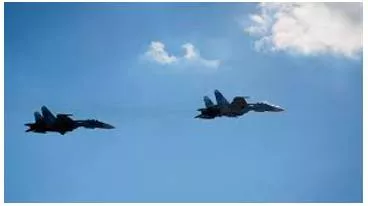
No fly zones would escalate the ukraine war – but they shouldn’t be off the table
Ukraine’s president, Volodymyr Zelenskiy, has made passionate arguments for protection for his nation from the air, asking “how many people must be blown up, how many legs, arms, heads must be torn off and fly away?” before supporters of Ukraine are compelled to “close the skies” and instigate a no-fly zone? This call has been repeated by protesters, politicians and pundits around the world.No-fly zones are designed to deny the use of airspace – and engage with aircraft, usually with hostile intent, that refuse to comply and fly into them. They involve the surveillance of an area of airspace to detect any incursions into it by aircraft. They also require combat fighter aircraft with the capability to intercept any incursions; these interceptors can try to escort enemy aircraft out of the zone or, as a last resort, shoot them down.
The UK government, along with the US and other nations, has been emphatic in its rejection of any attempt to enforce a no-fly zone over Ukraine. It has argued that this could result in escalation and would not, in any case, protect the people of Ukraine from the horrific bombardment they are suffering from ground-based artillery.
Critics would say that setting this red line so early in the conflict might be perceived as weakness by Vladimir Putin. By taking options off the table, the nations rallying for Ukraine put themselves in an inherently disadvantageous position, creating an “escalation paradox” – if any action from the west that isn’t solely reactive to Russia’s activities is ruled out, then we are destined to remain reactive in perpetuity.
Weighing the possibilities, a no-fly zone over Ukraine presents unique challenges. It would be significantly more demanding than anything coalitions have done in the past: this is a raging conflict, not a peace support situation. This is not a comparable potential endeavour with, say, the Iraq no-fly zones. There, around 50 aircraft policed a nation with limited air power capabilities over an area less than half the size of Ukraine by launching air patrols for a couple of hours a day.
Attempting to control Ukraine’s airspace 24/7 would be completely different and a hugely challenging operation, organisationally speaking. Putin’s forces present a different order of capability, armed as they are with sophisticated air defence weapons. On top of that, agreeing to rules of engagement – such as whether to destroy Putin’s anti-aircraft defences, manned by Russian soldiers, and likely based in Russia and Belarus as well as Ukraine – would be challenging. It would raise the question of attacking or engaging forces in countries outside Ukraine.
While there is disagreement about the practicality and downstream effects of a no-fly zone, one thing is clear: Putin would oppose any attempts to police Ukraine’s airspace, thus challenging the enforcers to try to shoot Russian aircraft out of the sky. Clearly, given Putin’s unpredictability, combined with the threats he has made to use nuclear weapons, there is serious concern that enforcing a no-fly zone could result in escalation at the nuclear level.
Even if that doesn’t happen, if Russia attacks “coalition” aircraft then there is concern this could trigger Nato’s article 5 and, as the UK defence secretary, Ben Wallace, has said, thereby start a wider European war. Clearly, that would be in none of our interests, nor would it make the situation for Ukrainians on the ground any better.
However, there is a valid debate to be had about the public handling and messaging around the potential of a no-fly zone by states. The UK government has been careful to point out that at each juncture it has been Putin who has escalated the situation. By implication, a coalition no-fly zone would represent an escalation on the part of the west, and the government sees this as unacceptable. It argues that a no-fly zone would make the UK an active participant in the conflict. Given its commitments to arm and back Ukraine, that argument is moot – the UK is already involved.
In saying that only the Russians are escalating, the UK government is implying that doing anything other than reacting to events is too aggressive. This feels like boxing ourselves into a corner. If we can’t take the initiative because that’s also “escalating”, we are supporting the Ukrainians with one hand tied behind our back.
Is a no-fly zone the panacea that will change the course of events in Ukraine? Probably not. And it risks taking the conflict into a much broader and darker arena given Putin’s threats and irrationality. The sad fact is that a no-fly zone that ushers in a third world war still fails to protect Ukrainians from the barrage of fire they face from heavy artillery that is being illegally targeted at them from Putin’s ground troops, while potentially diverting attention and operational focus from Ukraine itself.
But should escalation, on the part of the massive majority of the globe that supports Ukraine and rejects Putin’s horrific actions, be permanently removed from the table of options? I believe not.










Stay updated with The Hindu Editorial Vocab24 app, your definitive source for breaking news and comprehensive coverage from India and around the globe. Whether it's political developments, business updates, sports highlights, the latest technology trends, or current events, The Hindu brings live, accurate, and reliable news directly to your device.
Don’t fall for sensationalized or fake news shared online. Read and share accurate updates with friends and family through The Hindu Editorial Vocab24 app. Download it today!
News Coverage in The Hindu Editorial Vocab24 App
Breaking News: Receive instant notifications on breaking news stories as they unfold. Stay informed about major events and developments in India and around the world with live blogs, news in shorts videos, and concise articles.
Politics: Get the latest updates on Indian politics, including elections, policy changes, government decisions, and political events that shape the nation.
Business and Economy: Stay ahead in the economic landscape with detailed business news and market analysis. Learn about stock market trends, financial reports, corporate news, and economic developments to make informed investment decisions.
Current Events: Follow stories on social issues, policy changes, global events, and daily current affairs, tailored for UPSC and other competitive exam preparations.
Technology: Keep up with the latest gadgets, innovations, and tech trends. Read expert reviews and analyses in short, concise updates on cutting-edge technology from India and beyond.
Sports: Never miss a moment of your favorite sports. Get live scores, match reports, and expert analysis on cricket, football, tennis, and more.
International News: Stay informed about global events and geopolitical developments, including the Russia-Ukraine war, Israel-Palestine conflict, and other key international stories.
Local News: Stay connected to your community with the latest updates on city events, issues, and local news. Coverage includes hyperlocal updates from cities like Bangalore, Chennai, Delhi, Hyderabad, Mumbai, Kolkata, and more.
Trending Topics: Discover what's trending today with the most talked-about stories and hot topics across India and the world.
Experience journalism that values integrity, accuracy, and reliability. Download The Hindu Editorial Vocab24 app today and stay connected with the world.
Subscribe to our newsletter!







