

No russian artists have not been ‘cancelled’
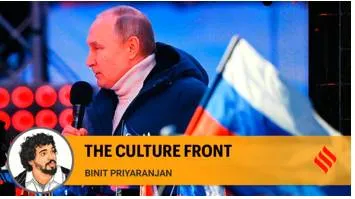
“Today, they are trying to cancel a thousand-year-old country,” lamented Russian President Vladimir Putin, speaking in a televised meeting with major cultural figures earlier this month. He was referring to several events involving Russian cultural figures who have voiced their support for the war being cancelled, especially in the West, since Russia invaded Ukraine.One of those cancelled is Valery Gergiev, general director of the St Petersburg Mariinsky Theater and a friend of Putin’s, who was present at Friday’s meeting. While most of the cancelled figures are alive, a small minority of the events cancelled included pieces by deceased icons such as Tchaikovsky — performances of the composer’s pieces were cancelled in Italy, Japan and Croatia. However, that didn’t stop Putin from drawing the spotlight to it in his speech. “They’re now engaging in the cancel culture, even removing Tchaikovsky, Shostakovich and Rachmaninov from posters. Russian writers and books are now cancelled,” he said.
Since its introduction into mainstream popular culture through college campuses and social media around half a decade ago, “cancel culture” has become a raging issue in the culture war in the West, sharply dividing conservatives and left-liberals. It has become an umbrella term that has different meanings according to who you ask but its essence remains a collective boycott and de-platforming of individuals, corporations or institutions for actions collectively deemed inappropriate or offensive.
Cancel culture itself has been called out for “cancelling” free speech, bullying, and a mob mentality. Depending on the offence and the extent of punishment meted out, cancel culture has been called everything from a “distraction” to a “hyperbolic phase of the larger culture war”, to America’s “free speech problem”.
Looking at the issue through the prism of conservative opinion provides insights into Putin’s remarks and the message behind them. Right-wing groups have increasingly portrayed cancel culture as emblematic of a far-left ideological hysteria rooted in “outrage culture”, fuelled by groupthink and authoritarian mob justice. Donald Trump, no stranger to calls for cancellation, made it a central talking point in his presidential re-election campaign in 2020, calling his impeachment trial “constitutional cancel culture” and cancel culture “totalitarian”.
He is by no means alone. More than half the delegates at the Republican National Convention 2020 mentioned cancel culture as a menace, and conservative state governments have sought to pass legislation seeking to curb it in the US. These groups see cancel culture as an indication of mob justice by moral zealots on the far-left, colloquially called “social justice warriors”, who weaponise social media to punish and hurt anyone, whether comic, writer, professor or scientist, for daring to breach a moral orthodoxy under the guise of “political correctness”.
As the political-cultural faultlines in the West have widened, the attitude to cancel culture has become a line that now sharply divides liberals and conservatives. It is in this sense that Putin invoked the term, comparing the West’s treatment of Russian culture to Nazi Germany’s burning of books. These portrayals depict the person, institution, or in this case, the country being cancelled as the victim.
Putin hinted at this in his singling out of J K Rowling, who was “cancelled” for her views on transgenderism — a topic still very much on the fringes of the public conversation outside the West. “Recently, they cancelled the children’s writer Joanne Rowling because she – the author of books that have sold hundreds of millions of copies worldwide – fell out of favour with fans of so-called gender freedoms,” he said. The Moscow Times, while reporting on Putin’s speech, quoted former president Dmitry Medvedev describing the West’s “frenzied hatred” as being pushed by the US to stoke “Russophobia” as part of what the Kremlin calls a “special military operation”.
With comments on cancel culture, Putin is giving a dog-whistle to conservatives and hard-right groups in Russia and around the globe, including the West. It should be seen as an effort to put a distortionary spin on the cultural and social sanctions imposed on Russia as a result of his actions since the invasion of Ukraine, and level the same charges against the West legitimised by their own conservative leadership and intellectuals.
Further evidence of Putin borrowing from the American conservative’s playbook is the overblown portrayal of the “cancelling” of Russia visible in his referring to Russian writers and books being cancelled as if they were boycotted en masse. These are the same exaggerated terms in which mainstream US right-wing news media such as Fox News usually portray cancel culture’s image and reach.
Noam Chomsky talks about how the true meaning of “socialism” never really reached the common masses because the two largest propaganda machines, the US and the USSR, had both peddled distorted definitions of the term. From Donald Trump’s rhetoric in the US presidential election to Putin’s reference to the term, political divisions around “cancel culture” have also reached their apogee. We must be wary of its use to spread misinformation and shift the blame for the due consequences of waging war on a sovereign country.









Stay updated with The Hindu Editorial Vocab24 app, your definitive source for breaking news and comprehensive coverage from India and around the globe. Whether it's political developments, business updates, sports highlights, the latest technology trends, or current events, The Hindu brings live, accurate, and reliable news directly to your device.
Don’t fall for sensationalized or fake news shared online. Read and share accurate updates with friends and family through The Hindu Editorial Vocab24 app. Download it today!
News Coverage in The Hindu Editorial Vocab24 App
Breaking News: Receive instant notifications on breaking news stories as they unfold. Stay informed about major events and developments in India and around the world with live blogs, news in shorts videos, and concise articles.
Politics: Get the latest updates on Indian politics, including elections, policy changes, government decisions, and political events that shape the nation.
Business and Economy: Stay ahead in the economic landscape with detailed business news and market analysis. Learn about stock market trends, financial reports, corporate news, and economic developments to make informed investment decisions.
Current Events: Follow stories on social issues, policy changes, global events, and daily current affairs, tailored for UPSC and other competitive exam preparations.
Technology: Keep up with the latest gadgets, innovations, and tech trends. Read expert reviews and analyses in short, concise updates on cutting-edge technology from India and beyond.
Sports: Never miss a moment of your favorite sports. Get live scores, match reports, and expert analysis on cricket, football, tennis, and more.
International News: Stay informed about global events and geopolitical developments, including the Russia-Ukraine war, Israel-Palestine conflict, and other key international stories.
Local News: Stay connected to your community with the latest updates on city events, issues, and local news. Coverage includes hyperlocal updates from cities like Bangalore, Chennai, Delhi, Hyderabad, Mumbai, Kolkata, and more.
Trending Topics: Discover what's trending today with the most talked-about stories and hot topics across India and the world.
Experience journalism that values integrity, accuracy, and reliability. Download The Hindu Editorial Vocab24 app today and stay connected with the world.
Subscribe to our newsletter!







