

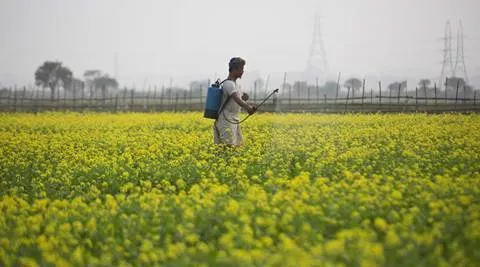
Narendra modi government has not overlooked farmers’ concerns
Farm distress, like the one in Gujarat that saw the incumbent BJP routed in the state’s agrarian Saurashtra region, is often attributed to inefficient agro-policies, and this time too, many fingers have been pointed at the Union government. But that is far from rational. In the last three and a half years, the Union government has pursued many pragmatic policies—relating to food-grains, pulses, oilseeds, sugar, etc,that are supportive of farmers and farm trade. There could have been issues arising out of macroeconomic policies or due to weather disturbances/drought, but the government has reacted prudently in correcting market turbulences and addressing the concerns of all stakeholders. Take wheat, for instance. In April 2014, FCI and other procuring agencies had stocks of about 18 million tonnes (mt), and they reduced their holdings to about 8 mt in April 2017. Reduction in stocks, some of which are stored in unscientific conditions, is a welcome development that cuts carrying costs that stands at around Rs 5,000-6,000/tonne. This entails a minimum saving of Rs 5,000 crore on annual storage costs. In April 2013, the wheat inventory with the government was 24 mt—about 16 mt more than the minimum stock required to be held. Higher stocks compel FCI to sell wheat at low OMSS in the market—this also suppresses farmer’s realisation in open market. When the government makes procures in excess, it prevents farmers from taking advantage of higher market prices.There has been negative annual (wholesale) wheat inflation of 6%, thanks to liberal imports with calibration of the duty structure applicable. By allowing wheat imports by the private sector, policymakers achieved the three objectives of (i) ensuring stability in local prices, (ii) balancing buffer stocks and (iii) avoiding public-sector tenders for import. The government procured 30 mt of wheat from farmers in FY18 at MSP—about 63% of total market arrivals of 48 mt—and this is up by 7mt from the previous year’s procurement. This will pare down imports this year. Coming to rice, India has become the world’s largest exporter of rice with annual non-basmati rice exports of 6.5-7.5 mt to Africa, West Asia and South Asian countries, in competition with Thailand, Vietnam and Pakistan. The government has refrained from interfering with any ad hoc policy decisions on this commodity. Additionally, there is an annual export of basmati rice, of about 4mt wherein Iran and Saudi Arabia are largest buyers of 1.5-2 mt. India’s total rice (non-basmati + basmati) export amounts to around 11-12 mt per annum—that is about 25% of the world rice trade of 42 mts. In the last six years, Indian rice export stood at roughly 60-65 mt.
In fact, the prohibition on export of non-basmati rice from 2007 to 2011 had no justification and merely led to excessive rice stocks in the country. Many export-oriented rice millers suffered losses during the period of ban and that pain is sure to have been transmitted to farmers. This year, large-volume non-basmati rice export has also taken place—with Bangladesh and Sri Lanka buying—both by the public and private sector, primarily due to improved logistics and right pricing. Had India been out of the market as far as non-basmati rice is concerned, world prices would have almost doubled by now. Indian power and presence in rice exports is well-acknowledged worldwide. Rice export takes place 24X7 and round the whole year at market-determined prices. On pulses, the government’s initiatives have been positive for farmers. To check the slide in pulses’ prices, government agencies procured about 2mt last year. Now, the government is stuck with massive stocks, and the loss will be to the account of the government. That is a risk that India’s officialdom took though, financially, it is an imprudent decision to have state-owned companies stocking and selling pulses because of erratic market prices.
Import restrictions have been placed for some pulses—imports are capped at 0.2 mt annually—to support Indian pulse-farmers. A steep import duty, of 50%, is imposed on yellow peas that are the cheapest form of protein—nearly 2 mt is imported annually. No yellow peas import is foreseen till the 50% duty stays. Consumers may suffer because chana and other dal prices may rise, but farmers seem to benefit from such tariff hikes. Farmers in MP, Maharashtra, Karnataka, Rajasthan and other pulses-growing states will have benefited from such a policy. As all oilseed prices fell below MSP, a deep sense of distress was settling in on farmers. The government, therefore, promptly decided to give relief. There has been across-the-board duty hike on imports of crude soybean oil 30% (the earlier duty was 17.5%), soybean refined oil 30% (20%), palm crude oil 30% (15%), RBD palm oil 40% (25%), sunflower crude oil 25% (12.5%), sunflower refined oil 35% (20%), canola/mustard oil crude 25% (12.5%), canola/mustard oil refined 35% (20%). Farmers must appreciate the bold decision taken by the government on oilseed-related issues.
On a pan-India basis, sugar’s price climbed by 37% in the last two years as last year’s sugar output fell to 21mt. Policymakers protected farmers and the industry by hiking import duty from 40% to 50% to block cheaper imports while permitting selective import of about 0.8 mt raw sugar in two tranches for the coastal mills, out of which, 0.3 mt was permitted with 25% duty. Farmer’s arrears of sugarcane have substantially come down due to such supportive policies. There is a need to induct new seed technologies for high-yields, thereby reducing the cost of production and improving farm profitability. It is in this aspect that the government has dithered. MSP can be hiked whenever necessary, but that is no panacea or remedy for the farmers as it is applicable to 6-7% of the total crops grown in India. It is deemed to be a political tool and being much higher than international prices, it implies that inefficient production is being promoted by public policy. Many state governments have tried to waive off farmers’ loans against the wishes of Union finance ministry. Thus, the concerns of farmers have never been overlooked. Lack of liquidity due to demonetisation, GST-related confusions and stock limits on trade have affected farmers. Broadly, the government has been highly supportive of farmers.
Courtesy : Tejinder Narang












Stay updated with The Hindu Editorial Vocab24 app, your definitive source for breaking news and comprehensive coverage from India and around the globe. Whether it's political developments, business updates, sports highlights, the latest technology trends, or current events, The Hindu brings live, accurate, and reliable news directly to your device.
Don’t fall for sensationalized or fake news shared online. Read and share accurate updates with friends and family through The Hindu Editorial Vocab24 app. Download it today!
News Coverage in The Hindu Editorial Vocab24 App
Breaking News: Receive instant notifications on breaking news stories as they unfold. Stay informed about major events and developments in India and around the world with live blogs, news in shorts videos, and concise articles.
Politics: Get the latest updates on Indian politics, including elections, policy changes, government decisions, and political events that shape the nation.
Business and Economy: Stay ahead in the economic landscape with detailed business news and market analysis. Learn about stock market trends, financial reports, corporate news, and economic developments to make informed investment decisions.
Current Events: Follow stories on social issues, policy changes, global events, and daily current affairs, tailored for UPSC and other competitive exam preparations.
Technology: Keep up with the latest gadgets, innovations, and tech trends. Read expert reviews and analyses in short, concise updates on cutting-edge technology from India and beyond.
Sports: Never miss a moment of your favorite sports. Get live scores, match reports, and expert analysis on cricket, football, tennis, and more.
International News: Stay informed about global events and geopolitical developments, including the Russia-Ukraine war, Israel-Palestine conflict, and other key international stories.
Local News: Stay connected to your community with the latest updates on city events, issues, and local news. Coverage includes hyperlocal updates from cities like Bangalore, Chennai, Delhi, Hyderabad, Mumbai, Kolkata, and more.
Trending Topics: Discover what's trending today with the most talked-about stories and hot topics across India and the world.
Experience journalism that values integrity, accuracy, and reliability. Download The Hindu Editorial Vocab24 app today and stay connected with the world.
Subscribe to our newsletter!







