

Nafta’s economic impact
This article is about the much talked about NAFTA agreement which had been highly debated during the US Presidential Elections. With the current US President Donald Trump outrightly suggesting renegotiation of the said treaty, it's advisable to learn more about the NAFTA itself. For the students of International Relations , Polity also World Geography the article presents itself as a ready reckoner.The North American Free Trade Agreement, or NAFTA, is a three-country accord negotiated by the governments of Canada, Mexico, and the United States that entered into force in January 1994. NAFTA’s terms, which were implemented gradually through January 2008, provided for the elimination of most tariffs on products traded among the three countries. Liberalization of trade in agriculture, textiles, and automobile manufacturing was a major focus. The deal also sought to protect intellectual property, establish dispute-resolution mechanisms, and, through side agreements, implement labor and environmental safeguards.
NAFTA fundamentally reshaped North American economic relations, driving an unprecedented integration between Canada and the United States’ developed economies and Mexico, a developing country. NAFTA enjoyed bipartisan backing—it was negotiated by Republican President George H.W. Bush and passed through Congress and implemented under Democratic President Bill Clinton. It encouraged a more than tripling of regional trade and cross-border investment between the three countries also grew significantly. Yet NAFTA has remained a perennial target in the broader debate over free trade. President Donald J. Trump says the deal has shifted U.S. manufacturing production, and jobs, to Mexico, and his administration has vowed to renegotiate or withdraw from it.
How does NAFTA fit into the broader debate over trade policy?
When negotiations for NAFTA began in 1991, the goal for all three countries was the integration of Mexico with the highly developed, high-wage economies of the United States and Canada. The hope was that freer trade would bring stronger and steadier economic growth to Mexico, providing new jobs and opportunities for its growing workforce and discouraging illegal migration from Mexico. For the United States and Canada, Mexico was seen both as a promising new market for exports and as a lower cost investment location that could enhance the competitiveness of U.S. and Canadian companies.
While the United States had completed a free trade agreement with Canada in 1988, the addition of Mexico was unprecedented. Opponents of NAFTA seized on the wage differentials with Mexico, which had a per capita income just 30 percent that of the United States. U.S. presidential candidate Ross Perot argued in 1992 that trade liberalization would lead to a “giant sucking sound” of U.S. jobs fleeing across the border. Supporters like Presidents Bush and Clinton countered that the agreement would create hundreds of thousands of new jobs a year, while Mexican President Carlos Salinas de Gortiari saw it as an opportunity to modernize the Mexican economy so that it would “export goods, not people.”
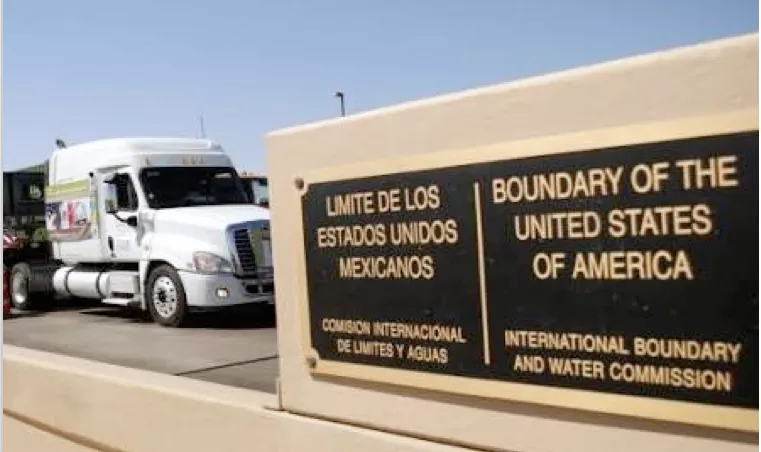
NAFTA's goal was the integration of Mexico with the highly developed economies of the United States and Canada.
NAFTA also ushered in a new era of regional and bilateral free trade agreements (FTAs), which have proliferated as the World Trade Organization’s (WTO) global trade talks have stagnated. The United States now has FTAs with twenty countries, and is pushing for major new regional deals with Asia and Europe. NAFTA also pioneered the incorporation of labor and environmental provisions in U.S. trade agreements, provisions which have become progressively more comprehensive in subsequent FTAs.
Economists largely agree that NAFTA has provided benefits to the North American economies. Regional trade increased sharply over the treaty’s first two decades, from roughly $290 billion in 1993 to more than $1.1 trillion in 2016. Cross-border investment has also surged, with U.S. foreign direct investment (FDI) stock in Mexico increasing in that period from $15 billion to more than $100 billion. But experts also say that it has proven difficult to tease out the deal’s direct effects from other factors, including rapid technological change, expanded trade with other countries such as China, and unrelated domestic developments in each of the countries. Debate persists regarding NAFTA’s legacy on employment and wages, with some workers and industries facing painful disruptions as they lose market share due to increased competition, and others gaining from the new market opportunities that were created.
How has NAFTA affected the U.S. economy?
In the years since NAFTA, U.S. trade with its North American neighbors has more than tripled, growing more rapidly than U.S. trade with the rest of the world. Canada and Mexico are the two largest destinations for U.S. exports, accounting for more than a third of the total. Most estimates conclude that the deal had a modest but positive impact on U.S. GDP of less than 0.5 percent, or a total addition of up to $80 billion dollars to the U.S. economy upon full implementation, or several billion dollars of added growth per year.
Such upsides of trade often escape notice, because while the costs are highly concentrated in specific industries like auto manufacturing, the benefits of a deal like NAFTA are distributed widely across society. Supporters of NAFTA estimate that some fourteen million jobs rely on trade with Canada and Mexico, while the nearly two hundred thousand export-related jobs created annually by the pact pay 15 to 20 percent more on average than the jobs that were lost.
Critics of the deal, however, argue that it is to blame for job losses and wage stagnation in the United States, driven by low-wage competition, companies moving production to Mexico to lower costs, and a widening trade deficit. The U.S.-Mexico trade balance swung from a $1.7 billion U.S. surplus in 1993 to a $54 billion deficit by 2014. Economists like the Center for Economic and Policy Research’s (CEPR) Dean Baker and the Economic Policy Institute argue that this surge of imports caused the loss of up to 600,000 U.S. jobs over two decades, though they admit that some of this import growth would likely have happened even without NAFTA.
Many workers and labor leaders point to these numbers to blame trade, including NAFTA, for the decline in U.S. manufacturing jobs. The U.S. auto sector lost some 350,000 jobs since 1994—a third of the industry—while Mexican auto sector employment spiked from 120,000 to 550,000 workers.
NAFTA Timeline
Many economists also assert that the recent troubles of U.S. manufacturing have little to do with NAFTA, arguing that manufacturing in the United States was under stress decades before the treaty. Research by David Autor, David Dorn, and Gordon Hanson published in January 2016 found that competition with China had a much bigger negative impact on U.S. jobs since 2001, when China joined the WTO. Hanson, an economist and trade expert at the University of California, San Diego, says that the steepest decline in manufacturing jobs, which fell from seventeen million to eleven million between 2000 and 2010, is mostly attributable to trade with China and underlying technological changes.
In fact, says Hanson, NAFTA helped the U.S. auto sector compete with China. By contributing to the development of cross-border supply chains, NAFTA lowered costs, increased productivity, and improved U.S. competitiveness. These sort of linkages, which have given U.S. automakers an advantage in relation to China, would be much more difficult without NAFTA’s tariff reductions and protections for intellectual property.
How has it affected the Mexican economy?
NAFTA gave a major boost to Mexican farm exports to the United States, which have tripled since NAFTA’s implementation. Hundreds of thousands of auto manufacturing jobs have also been created in the country, and most studies have found that the pact had a positive impact on Mexican productivity and consumer prices.
The pact was the continuation of a decade of economic liberalization that saw the country transition from one of the world’s most protectionist economies to one of the most open to trade. Mexico had reduced many of its trade barriers upon joining the General Agreement on Tariffs and Trade (GATT), the precursor to the WTO, in 1986, but still had a pre-NAFTA average tariff level of 10 percent.
Mexican policymakers saw NAFTA as an opportunity to both accelerate and “lock in” these hard won reforms to the Mexican economy. In addition to liberalizing trade, Mexico’s leaders reduced public debt, introduced a balanced budget rule, stabilized inflation, and built up the country’s foreign reserves. Thus while Mexico was hard hit by the 2008 U.S. recession due to its dependence on exports to the U.S. market—in 2009 Mexican exports to the United States fell 17 percent while its economy contracted by over 6 percent—its economy was able to bounce back relatively quickly. Mexico returned to growth in 2010, its GDP expanding over 5 percent, and subsequently falling to around 2 percent in 2014 and 2015.
But Mexico’s NAFTA experience has suffered from a disconnect between the promises of some of its supporters—that the pact would deliver rapid growth, raise wages, and reduce emigration—and the deal’s more mixed outcomes. Between 1993 and 2013, Mexico’s economy grew at an average rate of just 1.3 percent a year during a period when Latin America was undergoing a major expansion. Poverty remains at the same levels as in 1994. And the expected “wage convergence” between U.S. and Mexican wages didn’t happen, with Mexico’s per capita income rising at an annual average of just 1.2 percent in that period—far slower than Latin American countries such as Brazil, Chile, and Peru.
Mexican unemployment also rose, which some economists have blamed on NAFTA for exposing Mexican farmers, especially corn producers, to competition from heavily subsidized U.S. agriculture. A study led by CEPR economist Mark Weisbrot estimates that NAFTA put almost two million small-scale Mexican farmers out of work, in turn driving illegal migration to the United States. (Migration to the United States, both legal and illegal, more than doubled after 1994, peaking in 2007. However, the flow reversed after 2008 as more Mexican-born immigrants began leaving the country than arriving. Experts attribute this to stricter border enforcement, changing demographics in Mexico, and the combination of fewer available jobs in the United States along with more in Mexico.)
What impact has it had on Canada?
Canada has seen strong gains in cross-border investment in the NAFTA era: Since 1993, U.S. and Mexican investments in Canada have tripled. U.S. investment, which accounts for more than half of Canada’s FDI stock, grew from $70 billion in 1993 to over $368 billion in 2013.
However, the most consequential aspect for Canada—opening its economy to the U.S. market, by far Canada’s largest trading partner—predated NAFTA, with the 1989 entry into force of the Canada-U.S. Free Trade Agreement (CUSFTA). Overall Canada-U.S. trade increased rapidly in the wake of Canada’s trade liberalization. Post-NAFTA, Canadian exports to the United States grew from $110 billion to $346 billion, while imports from the United States grew by almost the same amount.
Agriculture, in particular, saw a boost. Canada is the leading importer of U.S. agricultural products, and one of NAFTA’s biggest economic effects for Canada has been to increase bilateral U.S.-Canada agricultural flows. Canadian agricultural trade with the United States more than tripled since 1994, as did Canada’s total agriculture exports to NAFTA partners.
Neither the worst fears of Canada’s trade opponents—that opening to trade would gut the country’s manufacturing sector—nor its highest hopes—that it would spark a rapid increase in productivity—came to pass. Canadian manufacturing employment held steady, but the “productivity gap” between the Canadian and U.S. economies wasn’t closed: Canada’s labor productivity remains at 72 percent of U.S. levels.
What’s next for NAFTA?
The deal has remained a political target. In 2008, then-presidential candidate Barack Obama responded to widespread trade skepticism in the Democratic base by promising to renegotiate NAFTA to include tougher labor and environmental standards, an idea subsequently postponed to future trade agreements. The issue resurfaced in the 2016 presidential campaign, with both Senator Bernie Sanders (I–VT) and Donald Trump criticizing the pact for job losses. After his January 2017 inauguration, President Trump confirmed that he would inform Canada and Mexico of his intent to reopen NAFTA for renegotiation. He reiterated his threat to withdraw the United States from the pact in the absence of a “better deal” for U.S. companies.
Much of the debate has centered on how to mitigate the negative effects of deals like NAFTA, whether by compensating workers who lose their jobs or providing worker retraining programs to help them transition to new industries.
Many experts have argued for deeper North American integration, especially in areas such as energy, border security, and immigration reform. To that end, President Obama had pushed the U.S.-led Trans-Pacific Partnership (TPP) with eleven other countries, including Canada and Mexico. That deal was signed in February 2016. But with President Trump rejecting the TPP in addition to reopening NAFTA, the new administration is set to upend decades of bipartisan consensus on the desirability of expanding the United States’ multilateral trade relationships.


<b>requiem for the internet freedom strategy< b>
Oct 29, 2017






Stay updated with The Hindu Editorial Vocab24 app, your definitive source for breaking news and comprehensive coverage from India and around the globe. Whether it's political developments, business updates, sports highlights, the latest technology trends, or current events, The Hindu brings live, accurate, and reliable news directly to your device.
Don’t fall for sensationalized or fake news shared online. Read and share accurate updates with friends and family through The Hindu Editorial Vocab24 app. Download it today!
News Coverage in The Hindu Editorial Vocab24 App
Breaking News: Receive instant notifications on breaking news stories as they unfold. Stay informed about major events and developments in India and around the world with live blogs, news in shorts videos, and concise articles.
Politics: Get the latest updates on Indian politics, including elections, policy changes, government decisions, and political events that shape the nation.
Business and Economy: Stay ahead in the economic landscape with detailed business news and market analysis. Learn about stock market trends, financial reports, corporate news, and economic developments to make informed investment decisions.
Current Events: Follow stories on social issues, policy changes, global events, and daily current affairs, tailored for UPSC and other competitive exam preparations.
Technology: Keep up with the latest gadgets, innovations, and tech trends. Read expert reviews and analyses in short, concise updates on cutting-edge technology from India and beyond.
Sports: Never miss a moment of your favorite sports. Get live scores, match reports, and expert analysis on cricket, football, tennis, and more.
International News: Stay informed about global events and geopolitical developments, including the Russia-Ukraine war, Israel-Palestine conflict, and other key international stories.
Local News: Stay connected to your community with the latest updates on city events, issues, and local news. Coverage includes hyperlocal updates from cities like Bangalore, Chennai, Delhi, Hyderabad, Mumbai, Kolkata, and more.
Trending Topics: Discover what's trending today with the most talked-about stories and hot topics across India and the world.
Experience journalism that values integrity, accuracy, and reliability. Download The Hindu Editorial Vocab24 app today and stay connected with the world.
Subscribe to our newsletter!







