

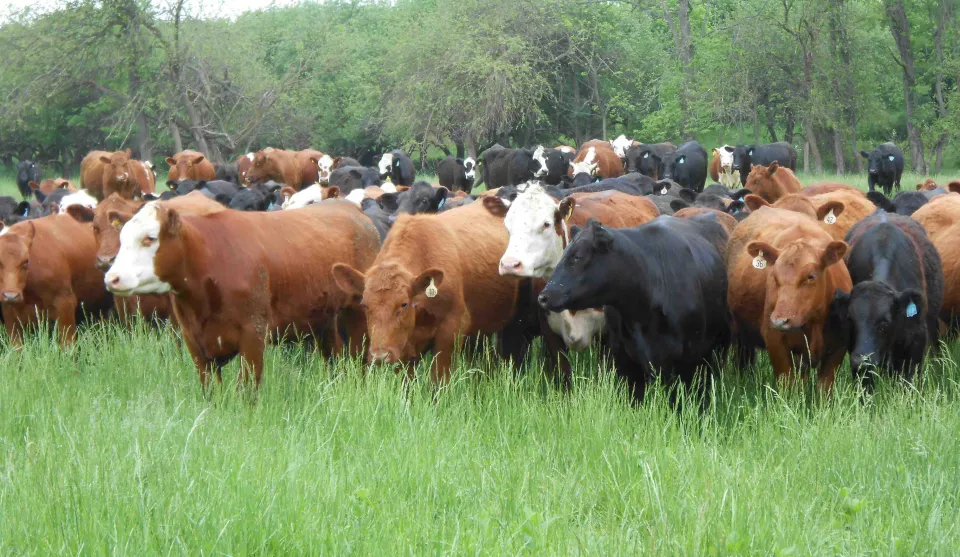
Methane emissions from cattle are 11% higher than estimated
Bigger livestock in larger numbers in more regions has led to methane in the air climbing faster than predicted due to ‘out-of-date data’Emissions of the greenhouse gas methane from livestock are larger than previously thought, posing an additional challenge in the fight to curb global warming, scientists have said.
Revised calculations of methane produced per head of cattle show that global livestock emissions in 2011 were 11% higher than estimates based on data from the UN’s Intergovernmental Panel for Climate Change (IPCC).
Periodic reports by the IPCC, drawing from thousands of scientists, help leaders take action on climate change, which has begun to wreak havoc on weather around the world.
“In many regions, livestock numbers are changing, and breeding has resulted in larger animals with higher intakes of food,” said Julie Wolf, a researcher in the US Department of Agriculture and the lead author of a study in the journal Carbon Balance and Management.
“This, along with changes in livestock management, can lead to higher methane emissions,” she said.
Earlier estimates, Wolf added in a statement, were based on “out-of-date data”.
After rising slowly from 2000 to 2006, the concentration of methane in the air has climbed 10 times more quickly in the last decade, according to earlier research.
Besides natural sources such as peatland, wetlands and termites, methane from human activity – approximately two-thirds of the total – is produced in two ways: the odourless and colourless gas leaks during the production and transport of coal, oil and especially natural gas; and, in roughly equal measure, from the flatulence of ruminants such as cattle and sheep, as well as the decay of organic waste, notably in landfills.
Methane accounted for about 16% of global greenhouse gas emissions in 2015, according to the IPCC. Carbon dioxide – produced mainly by the burning of fossil fuels – accounts for more than three-quarters of planet-warming emissions.
“As our diets become more meat- and dairy-rich, so the hidden climate cost of our food tends to mount up,” said prof Dave Reay from the University of Edinburgh reacting to the study.
“Cows belching less methane may not be as eye-catching as wind turbines and solar panels, but they are just as vital for addressing climate change.”
The new study boosts the “estimate of human-induced emissions of methane from all sources by about four %,” said prof Piers Forster from the University of Leeds , who was not involved in the research.
Methane is far more potent than CO2 as a greenhouse gas, capturing more of the sun’s radiative force, but it persists for less time in the atmosphere. Taking that into account, scientists calculate that over a 100-year period the “global-warming potential” of the gas is 28 times greater than for carbon dioxide.
The study noted that methane emissions from livestock have risen most sharply in the rapidly developing regions of Asia, Latin America and Africa. By contrast, the increase has slowed sharply in the US and Canada. In Europe, emissions of the gas have declined.
A sharp rise in methane pollution could jeopardise the goal – enshrined in the 196-nation Paris climate pact – of capping global warming below 2C, a consortium of 81 scientists warned in December.
“Such a target will become increasingly difficult if reductions in methane emissions are not also addressed strongly and rapidly,” they wrote in an open letter.












Stay updated with The Hindu Editorial Vocab24 app, your definitive source for breaking news and comprehensive coverage from India and around the globe. Whether it's political developments, business updates, sports highlights, the latest technology trends, or current events, The Hindu brings live, accurate, and reliable news directly to your device.
Don’t fall for sensationalized or fake news shared online. Read and share accurate updates with friends and family through The Hindu Editorial Vocab24 app. Download it today!
News Coverage in The Hindu Editorial Vocab24 App
Breaking News: Receive instant notifications on breaking news stories as they unfold. Stay informed about major events and developments in India and around the world with live blogs, news in shorts videos, and concise articles.
Politics: Get the latest updates on Indian politics, including elections, policy changes, government decisions, and political events that shape the nation.
Business and Economy: Stay ahead in the economic landscape with detailed business news and market analysis. Learn about stock market trends, financial reports, corporate news, and economic developments to make informed investment decisions.
Current Events: Follow stories on social issues, policy changes, global events, and daily current affairs, tailored for UPSC and other competitive exam preparations.
Technology: Keep up with the latest gadgets, innovations, and tech trends. Read expert reviews and analyses in short, concise updates on cutting-edge technology from India and beyond.
Sports: Never miss a moment of your favorite sports. Get live scores, match reports, and expert analysis on cricket, football, tennis, and more.
International News: Stay informed about global events and geopolitical developments, including the Russia-Ukraine war, Israel-Palestine conflict, and other key international stories.
Local News: Stay connected to your community with the latest updates on city events, issues, and local news. Coverage includes hyperlocal updates from cities like Bangalore, Chennai, Delhi, Hyderabad, Mumbai, Kolkata, and more.
Trending Topics: Discover what's trending today with the most talked-about stories and hot topics across India and the world.
Experience journalism that values integrity, accuracy, and reliability. Download The Hindu Editorial Vocab24 app today and stay connected with the world.
Subscribe to our newsletter!







