

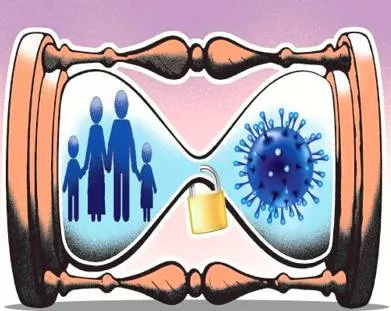
Lock down completely now
To learn from other countries’ tragedies and fight Covid-19, here’s what we must do.India is fortunate that we’re one of the last few countries to experience the terrible effects of coronavirus. China was the first country to be hit, but because they implemented draconian containment measures, they managed to get the infection under control. Italy, the UK and US took too long to decide on a complete lockdown and they’re now suffering the consequences.
A limited lockdown doesn’t work because Covid-19 is an extremely contagious and transmissible virus. It spreads very easily through droplets, sneezing or contaminated materials. A complete shutdown of movement will prevent and reduce the viral transmission dramatically, which will give time for the government to prepare the healthcare infrastructure to manage the dramatically increased patient load.
In Italy, it’s not just the virus killing patients, it’s the deluge of patients which overwhelms the hospitals and forces doctors to decide who should be saved and who should be left to die. Lombardy has the most advanced healthcare system in the world and even they couldn’t ventilate elderly patients with respiratory distress. Lives could have been saved if the hospitals had time to prepare.
If we don’t completely shut down now, we’ll be forced to shut down after a month when the number of cases explode – just like in China, Italy and Spain. Today, people have got their salaries and grocery shops are well stocked. They will be able to manage a lockdown with some difficulty. But if we lock down a month from now, citizens will be demoralised due to devastation caused by the virus, no money in the pocket, and expensive food.
Civil society must understand what will unfold, if we don’t act now. Extrapolating the Lombardy data, Karnataka is likely to have 80,000 Covid-19 patients. A city like Bengaluru will have about 16,000 positive patients, 2,400 will need hospitalisation, 2,000 will need ICU care and 1,000 will require ventilators. We need to do the following to prepare:
Every major city should dedicate two major 1,000-bed government hospitals and convert them into Covid hospitals with piped oxygen, suction and compressed air supply to run 1,000 ventilators. If you mix Covid patients with regular patients, 40% of regular patients will get infected.
The entire Covid hospital needs central piped oxygen. In western Europe, Covid patients died because oxygen supply got exhausted.
Health ministry should create two teams of doctors, one for screening and triage, and another ICU team to manage critical care service.
Patients who may not require advanced critical care support should be treated at the Covid hospital. Critically ill patients with respiratory failure should be sent to private hospitals with a modern ICU with highly skilled staff, and equipment like ECMO. Fever clinics with online consultation across the city with guidelines on viral screening and follow-up.
For 2,000 ICU beds, a six-hour shift needs 700 nurses, 200 resident doctors and 100 anaesthetists/ intensivists. For 24-hour coverage, 2,800 nurses, 800 resident doctors and 400 anaesthetists. We need at least 200 senior intensivists or anaesthetists to cover 2,000 beds remotely through WhatsApp.
Covid ICU simulation should be set up at large hospitals to teach staff on safe practices. Safety of health workers should be the utmost priority.
India is acutely short of ventilators. No other country is allowing export of ventilators. Government must support local companies to manufacture ventilators on a war footing.
Postgraduate medical students should be given the option to work in the Covid ICU as part of their training programme. PG students, interns and final year medical students should be posted in the respective hospitals’ ICU to familiarise with ventilated patients.
National Medical Council should allow young doctors trained in recognised overseas medical colleges a temporary licence to work under senior doctors. In the end, it is the junior doctors and nurses who’re going to save people.
Medical Council of India should permit online consultation and eprescriptions to manage Covid patient data from home and maintain medical records. Indian Nursing Council should permit final year nursing students to take care of stable ICU patients.
Every suggestion we have made has precedence in the developed countries, but they learnt their lessons too late. We can identify their best practises and learn from their mistakes. China was overwhelmed because of an unprecedented surge and a refusal to acknowledge the spread of the disease.
An Imperial College study predicted 12 lakh deaths in the US, 5 lakh deaths in the UK and 35 lakh deaths in India if Covid-19 is allowed to spread unchecked. But India can conquer Covid-19 by flattening the curve and setting an example for rest of the world to follow. Thanks to our government’s progressive policies, we have the largest number of young skilled doctors, nurses and technicians. We can liberate their full potential by empowering them and providing them with the necessary tools. Let’s not become like Italy, which had to import 300 Chinese doctors to manage their ICUs.












Stay updated with The Hindu Editorial Vocab24 app, your definitive source for breaking news and comprehensive coverage from India and around the globe. Whether it's political developments, business updates, sports highlights, the latest technology trends, or current events, The Hindu brings live, accurate, and reliable news directly to your device.
Don’t fall for sensationalized or fake news shared online. Read and share accurate updates with friends and family through The Hindu Editorial Vocab24 app. Download it today!
News Coverage in The Hindu Editorial Vocab24 App
Breaking News: Receive instant notifications on breaking news stories as they unfold. Stay informed about major events and developments in India and around the world with live blogs, news in shorts videos, and concise articles.
Politics: Get the latest updates on Indian politics, including elections, policy changes, government decisions, and political events that shape the nation.
Business and Economy: Stay ahead in the economic landscape with detailed business news and market analysis. Learn about stock market trends, financial reports, corporate news, and economic developments to make informed investment decisions.
Current Events: Follow stories on social issues, policy changes, global events, and daily current affairs, tailored for UPSC and other competitive exam preparations.
Technology: Keep up with the latest gadgets, innovations, and tech trends. Read expert reviews and analyses in short, concise updates on cutting-edge technology from India and beyond.
Sports: Never miss a moment of your favorite sports. Get live scores, match reports, and expert analysis on cricket, football, tennis, and more.
International News: Stay informed about global events and geopolitical developments, including the Russia-Ukraine war, Israel-Palestine conflict, and other key international stories.
Local News: Stay connected to your community with the latest updates on city events, issues, and local news. Coverage includes hyperlocal updates from cities like Bangalore, Chennai, Delhi, Hyderabad, Mumbai, Kolkata, and more.
Trending Topics: Discover what's trending today with the most talked-about stories and hot topics across India and the world.
Experience journalism that values integrity, accuracy, and reliability. Download The Hindu Editorial Vocab24 app today and stay connected with the world.
Subscribe to our newsletter!







