

Living with the earth in kerala
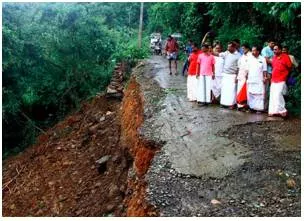
The State’s future is inextricably linked to how it conserves its natural capital by limiting consumption.Natural disasters have by now come to be accepted as a feature of the annual monsoon season in Kerala. In the past two years there has been flooding on an unprecedented scale along with landslides. Last year, 59 people lost their lives in a landslide at Kavalappara in Malappuram district. This year we have seen one at Pettimudi in Idukki district where a hill collapsed, submerging the houses of estate workers while they slept. The estimated death toll had reached 65 some days ago, with persons still missing.
On top of the landslides, we have had to bear witness to a spectacular plane crash at Kozhikode airport, again accompanied with a loss of lives. While we try to wrench ourselves away from our memories of these fateful events by recalling the valiant effort made by the pilots to save lives and of the selfless act of local youths who arrived immediately to take the survivors to hospitals, the crash serves as a reminder that further hardship awaits us if we do not jettison the development model that has come to characterise the State.
It’s plunder everywhere
The fact that Kerala has received wide acclaim for having achieved social indicators associated with high human development has meant that a crucial underlying dynamic has been ignored. This dynamic is one of an unrelenting attack on the foundation of human survival, natural capital. Everywhere in Kerala the earth has been violated. The rivers are polluted when they are not dry, the valleys are filled with garbage and the hills gouged out to accommodate residences and religious houses when they have not been dynamited for quarrying. It is quite extraordinary that this has all taken place in a State that has been hailed by a section of the intelligentsia as representing the gold standard of development. For anyone willing to read the signs, such a decimation of natural capital, with its attendant consequences of flooding and landslides, bodes ill for the future of a whole people.
The natural disasters recurring year after year and the recent plane crash both represent the outcome of the hubris that we can consume as if the earth does not matter. As natural capital, such as year-round water availability and the nutrient content of the soil, has diminished, not only has it impacted sectors of the economy such as agriculture but we have now seen that the way we treat the earth matters also for our very security.
At the core is politics
Kerala’s future is inextricably linked to how it conserves its natural capital. With consumption defined broadly to include land use, it is apparent that the conservation of the State’s natural resources is crucially dependent upon a restraint on consumption. Politics is central to this issue, not in the sense of what political parties do in the normal course but whether citizens decide to alter the course of development by their action. This response cannot end with minimising one’s own consumption but must extend to calling out instances of the depletion of natural capital by vested interests. Kerala’s vested interests are not only economic, which are visible, but also cultural, which are less so. It is difficult to imagine that politics as usual, as defined by the two political fronts that have ruled Kerala for decades by now, will lead the State to a place where conservation of nature will guide our actions. Actually, the state of natural capital in the State reflects an absence of governance. Political parties everywhere are reluctant to dampen the aspiration for greater consumption for fear that it affects their electoral prospects, but Kerala’s two fronts set a high example of indulging the appetite for increasing consumption, an extreme example of this being the proposal for an airport serving Sabarimala, which if it were to fructify would be the fifth in this small State.
Though the plane crash at Kozhikode cannot so easily be construed as resulting in the destruction of natural capital, it can be seen as trying to extend the limits it imposes, with consequences for our security. While tabletop runways are by no means peculiar to Kerala, airports on India’s southwest coast have to face the challenge of the monsoon which produces hazardous conditions for landing. Also, Kozhikode sees much greater traffic than say Kathmandu or Shimla, thus increasing the possibility of a mishap. Ever since the crash of a flight in Mangaluru, an airport with similar characteristics, in 2010, it has been apparent that flights to Kozhikode are vulnerable. The answer would not have been to end flights but to avoid the height of the monsoon and to take wide-bodied aircraft off the menu. Experts on air safety have spoken publicly of how they had raised concerns about Kozhikode soon after Mangaluru. While this appears to have been over-ruled by a political process, we the people are no less culpable by nurturing consumption aspirations unmindful of the contours of the earth.
Past and present
It is useful to recall the belief that Kerala was named for its geography. For centuries, its people demonstrated a genius for conserving natural resources by restraining their consumption. This was soon lost as its economy globalised and domestic consumption came to be fuelled by wealth generated offshore. Building local infrastructure to support this consumption has become a threat to life. For the State to have a future, consumption has to be limited so that the State’s natural capital is not irretrievably lost. In the 1990s, as mobile telephony was spreading, someone had triumphantly coined the slogan “Geography is history”. We now see that at least some of our history will be shaped by geography.



Top court quashes FIRs against Gen Z protesters
Sep 04, 2026







Stay updated with The Hindu Editorial Vocab24 app, your definitive source for breaking news and comprehensive coverage from India and around the globe. Whether it's political developments, business updates, sports highlights, the latest technology trends, or current events, The Hindu brings live, accurate, and reliable news directly to your device.
Don’t fall for sensationalized or fake news shared online. Read and share accurate updates with friends and family through The Hindu Editorial Vocab24 app. Download it today!
News Coverage in The Hindu Editorial Vocab24 App
Breaking News: Receive instant notifications on breaking news stories as they unfold. Stay informed about major events and developments in India and around the world with live blogs, news in shorts videos, and concise articles.
Politics: Get the latest updates on Indian politics, including elections, policy changes, government decisions, and political events that shape the nation.
Business and Economy: Stay ahead in the economic landscape with detailed business news and market analysis. Learn about stock market trends, financial reports, corporate news, and economic developments to make informed investment decisions.
Current Events: Follow stories on social issues, policy changes, global events, and daily current affairs, tailored for UPSC and other competitive exam preparations.
Technology: Keep up with the latest gadgets, innovations, and tech trends. Read expert reviews and analyses in short, concise updates on cutting-edge technology from India and beyond.
Sports: Never miss a moment of your favorite sports. Get live scores, match reports, and expert analysis on cricket, football, tennis, and more.
International News: Stay informed about global events and geopolitical developments, including the Russia-Ukraine war, Israel-Palestine conflict, and other key international stories.
Local News: Stay connected to your community with the latest updates on city events, issues, and local news. Coverage includes hyperlocal updates from cities like Bangalore, Chennai, Delhi, Hyderabad, Mumbai, Kolkata, and more.
Trending Topics: Discover what's trending today with the most talked-about stories and hot topics across India and the world.
Experience journalism that values integrity, accuracy, and reliability. Download The Hindu Editorial Vocab24 app today and stay connected with the world.
Subscribe to our newsletter!







