

Kashmir cauldron i
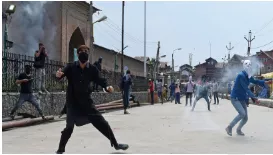
Kashmir is on the boil again and this is almost a repetition of the situation that prevailed in the Valley in 2016, after the killing of Burhan Wani, a militant leader of Hizbul Mujahideen. The fact that militancy would be revived with the onset of summer was fairly predictable; infiltration (the act of surreptitiously penetrate, enter or gain access) from across the border increased after the melting of snow in the mountainous regions. Militancy in Kashmir is sustained not only by the infiltrators pushed to the Indian side of the LoC by the Pakistani military/Rangers, but also by the financial assistance that the separatists/militants receive from across the border, as confirmed by the recent raids conducted by the NIA and the ED, and the confessions of the second-rung separatist leaders. The money is channeled through conduits that have links with influential persons in business, politics and the administration. Unless serious attempts are made to break these links and stop the flow of foreign funds, terrorism in Kashmir cannot be dealt with effectively. Arguably, the current turmoil (a state of great disorder or uncertainty) in Kashmir is sustained by the support ~ political/diplomatic, military as well as financial ~ that the separatists receive from across the border. But the problem has deeper roots and requires careful consideration, if the situation is to be retrieved. When boys and girls studying in schools/colleges take to the streets and start pelting stones at the security forces, they do it out of frustration and a sense of alienation (a situation of estranged), although many among the stone-pelting youth might have been doing it at the behest (आदेश) of their masters who have recruited them for this job, perhaps on payment of pecuniary (of relating to money) benefits. But this would not have been possible without a sense of alienation, created by the lack of education and job opportunities. This has been aggravated (to make worse) by the frequent disruption of normal life by the activities of separatists/militants, and the response of the security forces. The stone-pelting youth were born during the turbulent 1990s and have lived through two decades of turbulence. Their anger and resentment is not unnatural, though all of them are not necessarily anti-Indian. It is significant that a young Kashmiri girl ~ who was a volleyball champion ~ was once involved in a stone-throwing incident to vent (to express a strong emotion) her frustration at the failure of the governmentto build a stadium for promoting the game. How could the situation in Kashmir become so volatile within three years after the J&K assembly elections in 2014? In terms of voter participation, it was a landmark election with more than 65 per cent voters exercising their right to vote, the highest in the past 25 years, despite the call for a poll boycott issued by the Hurriyat leaders. Indeed, the turnout (attendance) was hailed by the European Parliament as an example of free and fair election. The current situation is to a large extent the result of the short-sighted policies of political parties that have been more interested in capturing power than in serving the people. The 2014 Assembly election was preceded by the decision of the Congress to sever its alliance with the National Conference (NC), that ruled the state since 2008, and to contest all the 87 Assembly seats on its own. The result was disastrous for both parties. The election did not yield an absolute majority to any of the political parties. Although the PDP won the largest number of seats (28) in the 2014 election,the biggest beneficiary was the BJP which campaigned vigorously, after its stunning(exceptionally amazing) victory in the 2014 Parliamentary elections held earlier in the same year, and increased its tally from 11 seats won in the 2008 elections to 25 in 2014. Significantly, the BJP won the majority of seats in Jammu while the PDP won in Kashmir, indicating a clear geographical divide in the support bases of the two parties. Ideologically, the PDP and the BJP are strange bedfellows, and the BJP had never been in power in Jammu and Kashmir. Nevertheless, when the PDP-BJP coalition government was formed on 1 March 2015 after weeks of negotiations and bargaining, on the basis of a Common Minimum Programme, and with the slogan of Sabke hath sabke saath, people’s expectations were raised, especially because of the Prime Minister’s rhetoric. As it turned out, the government failed to deliver, especially after the death of Mufti Mohammad Sayeed. This is nothing new, and is evident from the fact that while the Central government has over the years spent millions of rupees in the state for development, the benefits have not trickled down (arriving of financial benefits) to those who need it most. Corruption is rampant in Kashmir and according to some, nothing is possible without bribes ~ from admission to a school, getting a job or lodging an FIR in a police station. While corruption is an all India malaise, it has acquired an additional dimension in Kashmir because of ineffective governance. People bare their angst against the government, particularly when the ruling party is in alliance with that at the Centre. There are historical reasons for this. Kashmiris resent the progressive attenuation (the act of gradual diminishing in the strength of something) of autonomy. The process began soon after the accession of Kashmir to India and has continued to this day, in the name of integration. As Sheikh Abdullah wrote to Nehru on 10 July, 1950: “I have several times stated that we acceded to India despite our having so many affinities (closeness) with Pakistan because we thought our programme will not fit with that policy. If however we are driven to the conclusion that we cannot build our state on our own lines, suited to our genius, what answer can I give to my people and how am I to face them?” He was unseated from power unceremoniously and put behind bars on 9 August 1953 because he refused to follow New Delhi’s line on ‘integration’ of the state with the rest of India, and was allegedly toying with the idea of an independent Kashmir. Thus by arresting the chief architect of Kashmir’s accession to India, New Delhi created a psychological chasm (a large difference of opinion) between the Kashmiris and the rest of India that is yet to be bridged. People in general became sceptical of the value of Article 370 of the Constitution, guaranteeing them the right to build the state ‘on their own lines’. Within a fortnight after Sheikh Abdullah’s arrest the Prime Ministers of India and Pakistan met and iterated their commitment to plebiscite (जनमत संग्रह) . That Pakistan reneged on its pledge to withdraw its forces as a precondition for holding a fair plebiscite in Jammu and Kashmir, that had acceded to India, is a different matter. Had the plebiscite been held in the aftermath of signing the agreement brokered (mediated) by the UNCIP, on the modalities for withdrawal of forces by the two sides, perhaps India would have won comfortably even in the Valley. But that did not happen. What is more, neither India nor Pakistan really wanted Kashmir to be independent. Nehru reportedly warned the National Conference leader that he would rather hand over Kashmir to Pakistan than allow an ‘independent’ Kashmir to be set up, which would soon become a centre of intrigues and international pressure. Perhaps he was not entirely wrong. Since 1953, the state of Jammu and Kashmir had been ruled by leaders pliable (easily influenced or swayed by) to New Delhi’s advice and all the elections to the Jammu and Kashmir Assembly had been rigged, barring the one in 1977, with the parties supporting the demand for a plebiscite to decide Kashmir’s future. Dissension (प्रतिरोध) was suppressed and this alienated a large segment of the educated middle class, that was not a part of the ruling elite. One could argue that with proper economic development of the state and the opportunity to express one’s views freely ~ as should happen in a democracy ~ the demand of the Plebiscite Front for a plebiscitein Kashmir would have lost its force. That the majority of people in Kashmir were not necessarily anti-Indian was proved during the successive wars with Pakistan ~ in 1965, 1971 and again in 1999.Cauldron (noun)
(A situation characterized by instability and strong emotions) अस्थायित्व/कशाकशी
Synonyms: Instability, Vehemence, Volatility, Oscillation (Of Emotions)
Example: Investors are always worried about the cauldron of the stock market.
Infiltration (noun)
(The act of surreptitiously penetrate, enter or gain access) घुसपैठ
Synonyms: Intrusion, Penetration, Attack, Intrusion, Invasion
Example: In the science fiction movie, the bad strand of virus did infiltrate society and wipe out many of them.
Chasm (noun)
(A large difference of opinion/ a profound difference between people, viewpoints, feelings, etc.) दरार/मतभेद
Synonyms: Rift, Schism, Severance, Rupture, Parting Of The Ways (Of Thoughts), Separation
Example: As the economy worsens, the chasm between the rich and the poor grows wider.
Affinity (noun)
A natural liking for and understanding of someone or something. लगाव
Synonyms: Inclination, Penchant, Cohesion, Congeniality, like-mindedness, Closeness
Example: Phil and Beatrice displayed an affinity for one another, making us suspect that they would eventually marry.
Attenuation (noun)
(The act of gradual diminishing in the strength of something) कम होना
Synonyms: Depletion, De-Vitalization, Enfeeblement, Weakening
Example: Doctors claim taking the flu vaccine will attenuate the effects of the illness.
Stunning (adjective)
(Exceptionally amazing) शानदार
Synonyms: Remarkable, Extraordinary, Staggering, Incredible, Impressive, Outstanding, Amazing, Marvelous
Example: With her stunning beauty, the 24-year old student from Minnesota was won the title of Ms. World.
Vent (verb)
(To express a strong emotion) (बाहर निकलने देना/अभिव्यक्त करना (स्वतन्त्रता से))
Synonyms: Release, Let Out, Express, Discharge, Bring into the open
Example: After a fight with manager Jim vented his frustration by consumption of alcohol.
Pecuniary (adjective)
Relating to or consisting of money. आर्थिक/धनसंबंधी
Synonyms: Financial, Monetary, Fiscal, Capital, Budgetary
Example: Because of the young woman’s pecuniary needs, she is determined to marry a wealthy man.
Plebiscite (noun)
The direct vote of all the members of an electorate on an important public question such as a change in the constitution. जनमत संग्रह
Synonyms: Referendum, Election, Poll, vote, ballot
Example: The results of the plebiscite will determine whether or not the bill will become law.
Broker (verb)
To mediate in between/ arrange or negotiate (an agreement).) बातचीत करना या करवाना माध्यमिक रूप से
Synonyms: Mediate, Resolve, Conciliate, Referee, Make Settled
Example: If a country or government brokers an agreement, a ceasefire, or a round of talks, they try to negotiate or arrange it.

un locked & un loaded
Aug 21, 2017
India must protect its food givers
Aug 13, 2017
Reading between lines of inequity
Aug 12, 2017
Should india mull sanctions on china
Aug 06, 2017
Moneylenders still rule india's rural economy
Aug 03, 2017
Targeting the girl child
Jul 30, 2017





Stay updated with The Hindu Editorial Vocab24 app, your definitive source for breaking news and comprehensive coverage from India and around the globe. Whether it's political developments, business updates, sports highlights, the latest technology trends, or current events, The Hindu brings live, accurate, and reliable news directly to your device.
Don’t fall for sensationalized or fake news shared online. Read and share accurate updates with friends and family through The Hindu Editorial Vocab24 app. Download it today!
News Coverage in The Hindu Editorial Vocab24 App
Breaking News: Receive instant notifications on breaking news stories as they unfold. Stay informed about major events and developments in India and around the world with live blogs, news in shorts videos, and concise articles.
Politics: Get the latest updates on Indian politics, including elections, policy changes, government decisions, and political events that shape the nation.
Business and Economy: Stay ahead in the economic landscape with detailed business news and market analysis. Learn about stock market trends, financial reports, corporate news, and economic developments to make informed investment decisions.
Current Events: Follow stories on social issues, policy changes, global events, and daily current affairs, tailored for UPSC and other competitive exam preparations.
Technology: Keep up with the latest gadgets, innovations, and tech trends. Read expert reviews and analyses in short, concise updates on cutting-edge technology from India and beyond.
Sports: Never miss a moment of your favorite sports. Get live scores, match reports, and expert analysis on cricket, football, tennis, and more.
International News: Stay informed about global events and geopolitical developments, including the Russia-Ukraine war, Israel-Palestine conflict, and other key international stories.
Local News: Stay connected to your community with the latest updates on city events, issues, and local news. Coverage includes hyperlocal updates from cities like Bangalore, Chennai, Delhi, Hyderabad, Mumbai, Kolkata, and more.
Trending Topics: Discover what's trending today with the most talked-about stories and hot topics across India and the world.
Experience journalism that values integrity, accuracy, and reliability. Download The Hindu Editorial Vocab24 app today and stay connected with the world.
Subscribe to our newsletter!







