

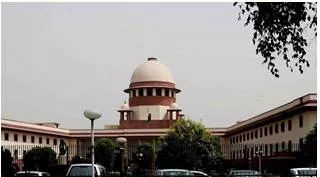
It’s time for the collegium system to go
The recent decision of the Collegium to inexplicably replace two high court chief justices selected for elevation has reaffirmed my long-standing concerns about the methods of working of the Collegium.As a democracy, it seems anomalous that we continue to have a judiciary whose essence is determined by a process that is evidently undemocratic.
In the inaugural session of the Supreme Court of India (SC), held 69 years ago, we were promised an independent judiciary that would be the third pillar in India’s constitutional framework, counterbalancing the legislature and the executive. In the Constituent Assembly debates that preceded the creation of the SC, Jawaharlal Nehru, speaking on higher judicial appointments, said that the judges selected should be of the “highest integrity” and be persons “who can stand up against the executive government and whoever might come in their way”. I fear that we may have forgotten these important words.
The process for the appointment of judges lies at the heart of an independent judiciary. Over the years, this process has manifested itself in the questionable form of the Collegium of judges, which decides on appointments to both the SC and the high courts. The recent decision of the Collegium to inexplicably replace two high court chief justices selected for elevation has reaffirmed my long-standing concerns about the methods of working of the Collegium.
The Collegium process has once again shown that it is opaque, with its members working as if in a cabal. More problematically, the Collegium is not accountable to any other authority. Its present decision to appoint Justice Dinesh Maheshwari and Justice Sanjiv Khanna, by retracting and superseding earlier selections of fine judges in their own right, is especially concerning. Justice Maheshwari was earlier rejected by the Collegium in its December 2018 meeting. Justice Khanna has been selected over his three senior colleagues, Justices Pradeep Nandrajog, Gita Mittal and S Ravindra Bhat. My issue is less about the seniority convention than about the lack of transparency.
Admittedly, the seniority convention for higher judicial appointments is not set in stone. While plenty of skirmishes took place between the judiciary and the executive in the early decades of the republic, the first major appointments-related decision that turned this convention on its head was the executive’s move to anoint A N Ray, the fourth most senior judge of the SC at the time, as the Chief Justice of India. This was the era before the Collegium came into being, and was an appointment that provoked much-heated debate.
The Second Judges’ case of 1993, which led to the formation of a collegium of high-ranking judges identifying persons for appointment to the SC and high courts, chose to re-state the seniority convention in appointments. The decision clarified that “Unless there be any strong cogent reason to justify a departure, that order of [inter-se] seniority [amongst Judges of High Courts] must be maintained between them while making their appointment to the Supreme Court.”
The decision to create a Collegium in the first place was disastrous in more ways than one. H M Seervai, for example, wrote that “never has a majority judgment of the Supreme Court reached a lower level of judicial incompetence”. Justice Krishna Iyer described this judgment as “an egregious fraud on the Constitution”. Lord Cooke of Thorndon also criticised this judgment in an essay that borrowed its title from Alexander Pope’s famous words, “fools rush in where angels fear to tread”.
In my view, one of the many problems of the Collegium is precisely that it emphasises excessively on seniority. That said, I must admit that following the seniority convention offers a semblance of certainty and transparency, even though it takes away from selecting judges on other objective (and far more important) criteria such as merit and competence. In the present instance, however, all notions of seniority have been thrown to the wind, for no apparent reason. The SC’s exhortations that seniority should be deviated from only if there are “cogent reasons” to do so seem to have been ignored; at least, no reasons — cogent or otherwise — have been offered in this surprising decision. We should all be concerned.
There is also the matter of principle — the Collegium has decided that the sanctity of its own decisions no longer stands. Its own previous decision to appoint other persons to the Supreme Court was reversed, without any explanation or justification.
Besides this, of course, no one — still — knows how judges are selected, and the appointments made reek of biases of self-selection and in-breeding. Sons and nephews of previous judges or senior lawyers tend to be popular choices for judicial roles. With its ad hoc informal consultations with other judges, which do not significantly investigate criteria such as work, standing, integrity and so on, the Collegium remains outside the sphere of legitimate checks and balances.
In the last half a decade or so, there was some agreement that the Collegium system of appointments had failed, and that we needed a more transparent and accountable system. The proposal for a National Judicial Appointments Commission (NJAC) came about, seeking to guarantee the independence of the system from inappropriate politicisation, strengthen the quality of appointments, enhance the fairness of the selection process, promote diversity in the composition of the judiciary, and rebuild public confidence in the system.
Unfortunately, the SC, in its majority decision declaring the NJAC unconstitutional, missed a terrific opportunity to introduce important reformatory changes in the functioning of the judiciary. It could have read down the law, and reorganised the NJAC to ensure that the judiciary retained majority control in its decisions. But it did nothing. It did not amend the NJAC Act to have safeguards that would have made it constitutionally valid. It also did not reform the Collegium in any way to address the various concerns voiced by one and all, including the Court itself. Instead, to the disappointment of all those who hoped for a strong, independent and transparent judiciary, it reverted to the old Collegium-based appointments mechanism.
As a democracy, it seems anomalous that we continue to have a judiciary whose essence is determined by a process that is evidently undemocratic. That reforms in the existing selection process are urgently needed is stating the obvious. Justice Chelameswar, the sole judge who upheld the NJAC, tried to make a statement on this front, by walking out of the Collegium and insisting on transparent procedures. The Supreme Court, too, had referred to the need to introduce reforms while deciding the NJAC matter. But I have been hard-pressed to find any apparent sign of reform in the system.
The lack of a written manual for functioning, the absence of selection criteria, the arbitrary reversal of decisions already taken, the selective publication of records of meetings — all of these point to the fact that the Collegium is not only as opaque as it was, it may perhaps have become worse. This is a time to revisit the Collegium issue, either through a Presidential reference to the Supreme Court, or a constitutional amendment with appropriate changes in the original NJAC law. We would do well to remember Nehru’s words on the importance of identifying judges of the highest integrity for appointment to the highest courts of the land. This is the best we can do for our country, and this is what we deserve.












Stay updated with The Hindu Editorial Vocab24 app, your definitive source for breaking news and comprehensive coverage from India and around the globe. Whether it's political developments, business updates, sports highlights, the latest technology trends, or current events, The Hindu brings live, accurate, and reliable news directly to your device.
Don’t fall for sensationalized or fake news shared online. Read and share accurate updates with friends and family through The Hindu Editorial Vocab24 app. Download it today!
News Coverage in The Hindu Editorial Vocab24 App
Breaking News: Receive instant notifications on breaking news stories as they unfold. Stay informed about major events and developments in India and around the world with live blogs, news in shorts videos, and concise articles.
Politics: Get the latest updates on Indian politics, including elections, policy changes, government decisions, and political events that shape the nation.
Business and Economy: Stay ahead in the economic landscape with detailed business news and market analysis. Learn about stock market trends, financial reports, corporate news, and economic developments to make informed investment decisions.
Current Events: Follow stories on social issues, policy changes, global events, and daily current affairs, tailored for UPSC and other competitive exam preparations.
Technology: Keep up with the latest gadgets, innovations, and tech trends. Read expert reviews and analyses in short, concise updates on cutting-edge technology from India and beyond.
Sports: Never miss a moment of your favorite sports. Get live scores, match reports, and expert analysis on cricket, football, tennis, and more.
International News: Stay informed about global events and geopolitical developments, including the Russia-Ukraine war, Israel-Palestine conflict, and other key international stories.
Local News: Stay connected to your community with the latest updates on city events, issues, and local news. Coverage includes hyperlocal updates from cities like Bangalore, Chennai, Delhi, Hyderabad, Mumbai, Kolkata, and more.
Trending Topics: Discover what's trending today with the most talked-about stories and hot topics across India and the world.
Experience journalism that values integrity, accuracy, and reliability. Download The Hindu Editorial Vocab24 app today and stay connected with the world.
Subscribe to our newsletter!







