

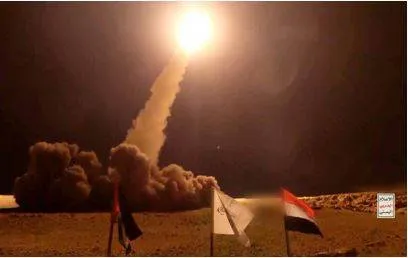
Israel struggles to deter escalating attacks from yemen’s houthi rebels
The Iran-backed Houthis are stepping up their missile attacks, sending hundreds of thousands of Israelis scrambling for shelter; the rocket fire is posing a threat to Israel’s economy, keeping many foreign airlines away and preventing the country from jump-starting its hard-hit tourism industry.The rockets from Gaza have mostly fallen silent. A ceasefire with Hezbollah militants in Lebanon has taken hold. But repeated fire from Yemen’s Houthi rebels, a faraway foe, is proving a stubborn threat for Israel.
The Iran-backed Houthis are stepping up their missile attacks, sending hundreds of thousands of Israelis scrambling for shelter in the middle of the night, scaring away foreign airlines and keeping up what could be the last major front in the Middle East wars.
“It’s like musical chairs,” said Yoni Yovel, 31, who left the northern Israeli city of Haifa late last year to avoid rocket fire from Hezbollah only to see his apartment in Tel Aviv’s Jaffa neighborhood heavily damaged by a Houthi missile.
Israel has repeatedly bombarded ports, oil infrastructure and the airport in the Houthi-held capital Sanaa, some 2,000 km away. Israeli leaders have threatened to kill central Houthi figures and have tried to galvanise the world against the threat.
But the Houthis persist. In recent weeks, missiles and drones from Yemen have struck nearly every day, including early Friday morning, setting off air raid sirens in broad swaths of Israel. In some cases, the projectiles have penetrated Israel’s sophisticated aerial defence system, most recently toppling an empty school and shattering the windows of apartments near an empty playground where one missile landed.
Because most missiles are intercepted and because the fire is usually a single missile at a time, the strikes have not caused major physical damage, although a few attacks have been fatal during the 15-month war in Gaza.
But the rocket fire is posing a threat to Israel’s economy, keeping many foreign airlines away and preventing the country from jump-starting its hard-hit tourism industry.
Houthi attacks on shipping in the Red Sea have all but shuttered an Israeli port in the city of Eilat and have prompted ships destined for it to take a longer, more costly route around Africa to Israel’s Mediterranean ports.
Symbolic reminder
The Houthi strikes are also a symbolic reminder for Israel of the Iran-backed enemies that encircle it, known as the “Axis of Resistance,” and the last major holdout. And because Israel’s counterstrikes have yet to deter the Houthis, their persistent attacks defy Israel’s image as a regional military powerhouse.
“They are the only ones who are active now,” said Danny Citrinowicz, a research fellow at the Institute for National Security Studies, a Tel Aviv think tank. The Houthis, he said, “are a challenge of a different kind.”
Shortly after Hamas launched its attack on Israel on October 7, 2023, the Houthis began striking Israel-linked ships in the strategic Bab el-Mandeb Strait along Yemen’s coast. Those attacks expanded to include other ships with no ties to Israel, disrupting cargo and energy shipments that are critical for worldwide trade. The Houthis said it was part of their campaign aimed at pressuring Israel and the West over the war in Gaza.
In response, U.S. and partner forces have launched multiple rounds of coordinated airstrikes against Houthi launch sites and weapons storage sites.
Throughout the war, the Houthis have also been firing missiles and drones at Israel, at first focusing on Eilat and eventually broadening attacks to include major population centres and the seaside metropolis of Tel Aviv.
“There was thunder the other night and my daughter thought it was a missile. She woke up and started screaming,” said Ibrahim Sosa, 53, whose home in Jaffa is near the site of a recent missile landing.
Israel has retaliated repeatedly and vowed to escalate if the attacks don’t stop.
Will hunt down leaders
“We will hunt down all of the Houthis’ leaders and we will strike them just as we have done in other places,” said Defence Minister Israel Katz, shortly after Israeli jets struck Yemen last week.
The Israeli strikes have been deadly, with several people killed.
Israeli military spokesman Rear Adm. Daniel Hagari said that Israel’s strikes focused on “military infrastructure which was used and directly contributed to Houthi terror activities, including to smuggle arms and finance their terror activities.”
Mr. Hagari acknowledged the battle would be complex. And despite massive Israeli air power, the Houthis have continued their assaults. That stands in contrast to Hamas, Hezbollah and Iran — three other enemies Israel has largely neutralised over the past 15 months.
“Israel has many years of familiarity with those enemies. There is intelligence and there is the important element of a ground manoeuvre, and in Yemen we can’t do that. The scale here is different,” said Eyal Pinko, a former Israeli defence official and senior research fellow at the Begin-Sadat Center for Strategic Studies, an Israeli think tank.
Yemen does not border Israel, and Israel cannot easily stage a ground invasion as it has in Gaza and Lebanon to dismantle enemies’ infrastructure. Israel has to orchestrate complex air missions to fly to Yemen, which are costly and limited in what they can achieve.
While the Houthis have been active as an insurgent force for years, Israel hasn’t seen them as a priority or invested as much in gathering intelligence against them.

Atiqa records two top-four finishes in WSK Final Cup
Sep 05, 2026










Stay updated with The Hindu Editorial Vocab24 app, your definitive source for breaking news and comprehensive coverage from India and around the globe. Whether it's political developments, business updates, sports highlights, the latest technology trends, or current events, The Hindu brings live, accurate, and reliable news directly to your device.
Don’t fall for sensationalized or fake news shared online. Read and share accurate updates with friends and family through The Hindu Editorial Vocab24 app. Download it today!
News Coverage in The Hindu Editorial Vocab24 App
Breaking News: Receive instant notifications on breaking news stories as they unfold. Stay informed about major events and developments in India and around the world with live blogs, news in shorts videos, and concise articles.
Politics: Get the latest updates on Indian politics, including elections, policy changes, government decisions, and political events that shape the nation.
Business and Economy: Stay ahead in the economic landscape with detailed business news and market analysis. Learn about stock market trends, financial reports, corporate news, and economic developments to make informed investment decisions.
Current Events: Follow stories on social issues, policy changes, global events, and daily current affairs, tailored for UPSC and other competitive exam preparations.
Technology: Keep up with the latest gadgets, innovations, and tech trends. Read expert reviews and analyses in short, concise updates on cutting-edge technology from India and beyond.
Sports: Never miss a moment of your favorite sports. Get live scores, match reports, and expert analysis on cricket, football, tennis, and more.
International News: Stay informed about global events and geopolitical developments, including the Russia-Ukraine war, Israel-Palestine conflict, and other key international stories.
Local News: Stay connected to your community with the latest updates on city events, issues, and local news. Coverage includes hyperlocal updates from cities like Bangalore, Chennai, Delhi, Hyderabad, Mumbai, Kolkata, and more.
Trending Topics: Discover what's trending today with the most talked-about stories and hot topics across India and the world.
Experience journalism that values integrity, accuracy, and reliability. Download The Hindu Editorial Vocab24 app today and stay connected with the world.
Subscribe to our newsletter!







