

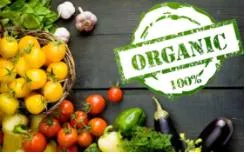
Is organic really better 4 food myths debunked by science
Myths and MisconceptionsFor some consumers, the mere act of shopping at the supermarket can be full of overwhelming decisions. After extended debate in the grocery aisle, after attempts to parse through the misleading packaging, you might end up choosing the organic tomatoes over the conventional ones. They’re twice the price, so they’ve got to be better, right?
But it’s not so simple. Celebrities, anti-GMO groups, and food trends have spread misleading information and myths about the food we chose to eat every day. Do foods labeled “organic” actually make us healthier? Are they free of pesticides? Should we be afraid of pesticides in the first place?
Recently, singer/actress Zooey Deschanel made headlines because her docu-series about organic food, called “Your Food’s Roots,” was riddled with errors and misinformation. In a recent Facebook video, Deschanel misleadingly claimed that people should eliminate the 12 vegetables and fruits most likely to have the highest amounts of pesticide residues in order to keep healthy. The list, dubbed the “dirty dozen,” is reportedly curated annually by the Environmental Working Group (EWG), a non-profit focused on health advocacy and research.
That claim isn’t in line with the consensus of the scientific community, however. Toxicologists have long discredited any ill effects of eating foods that happen to be on that list — 79 percent of the members of the Society of Toxicology said that the EWG “overstated the health risks of chemicals,” according to a 2009 survey by George Mason University. In 2016, the Alliance for Food and Farming, a non-profit that represents organic and conventional farmers, repeated calls for the EWG to consider the USDA guidelines before renewing its “dirty dozen” list, arguing that the produce on it has repeatedly been shown to have no negative health impacts.
Even more concerning, Deschanel urges consumers to “strictly buy organic” foods to avoid pesticides. That’s bad advice backed by faulty reasoning. Many studies have shown that just because a food is labeled “organic,” that doesn’t mean it was grown without pesticides (more on that later). In any case, scientists note that limiting the consumption of fruits and vegetables for fear of pesticide use could be much worse for consumers’ health than inadvertently consuming a little bit of pesticide.
“My biggest concern is that a lot of these reports may [produce] a negative effect in that they may discourage people from consuming what are perfectly healthy, conventionally-produced [non-organic] fruits and vegetables,” Carl Winter, food toxicologist at the University of California, Davis and member of the Institute of Food Technologists, told Futurism. “While everybody wants to do what they hear is the right thing, they could be doing themselves more harm than good in the long term.”
Here are four common, pervasive myths about GMOs and organic foods. Understanding what the science says can help consumers ensure that they choose the food that will best keep them healthy.
Organic Food Is Safer Because It Doesn’t Touch Pesticides
Exposure to a little pesticide isn’t necessarily toxic for people. “The big question from a toxicological standpoint is how much are we exposed to? The first principle of toxicology is the dose makes the poison,” Winter said. While studies have shown that conventional, non-organic foods do indeed come with a greater likelihood of exposure to pesticide residues compared to their organic counterparts, the health risks of exposure are often exaggerated by organizations such as the Environmental Working Group and food safety associations. “The levels we are exposed to are far, far less than levels that would be expected to cause any harm to our population. So reducing our exposure a little bit more — in this case by purchasing organic food — really isn’t going to cause any appreciable health benefit to us as consumers.
GMOs Are Bad for the Environment
People who oppose GMOs often note their purported effect on the environment. They fear that genetic modifications could jump from farms to the larger natural environment, or that GMO crops suppress the natural biodiversity of an area. Perhaps most cuttingly, they note that GMOs demand a greater use of herbicides, which reduces biodiversity and makes weeds more resistant to the chemicals.
These criticisms do have a modicum of truth to them. Genetic modifications have jumped from crops to local varieties, albeit infrequently, and farmers are leaning heavily (arguably too heavily) on the same types of crops, which leaves them vulnerable to disease. A 2016 study found that farmers who raised genetically-modified soybeans used more herbicide than farmers who didn’t adopt the herbicide-resistant GM strains. Researchers admit that we still have a lot to learn about the environmental impacts of GMOs.
But overall, GMOs don’t cause as much damage as their critics may have you believe. The same 2016 study found that GMOs actually reduced the amount of pesticides needed to raise the same amount of maize compared to crops that didn’t use GM strains of maize engineered to resist pests. Another 2014 study found that genetically modified crops had a 22 percent greater yield than non-GM varieties. More food per square meter could mean that less land is needed worldwide for agriculture, leaving more habitats undisturbed or allocating more land for natural reserves or wildlife corridors. Plus, many GMO crops need less water than organic or non-GM varieties, which will help feed everyone in a warmer world.
Scientists are still not completely sure if GMOs are better for the environment than other types of crops. But they at least demand fewer resources than organic crops.
At the end of the day, “organic” food isn’t a bad option. And neither are GMOs. But consumers should make their food choices based on science, not hearsay. Many myths persist around the risks of GMOs and the benefits of organic foods. But one thing is clear: eating fruits and vegetables is the most important thing, no matter if they’re organic or GMO.



Three signs google is turning to the dark side
May 26, 2018








Stay updated with The Hindu Editorial Vocab24 app, your definitive source for breaking news and comprehensive coverage from India and around the globe. Whether it's political developments, business updates, sports highlights, the latest technology trends, or current events, The Hindu brings live, accurate, and reliable news directly to your device.
Don’t fall for sensationalized or fake news shared online. Read and share accurate updates with friends and family through The Hindu Editorial Vocab24 app. Download it today!
News Coverage in The Hindu Editorial Vocab24 App
Breaking News: Receive instant notifications on breaking news stories as they unfold. Stay informed about major events and developments in India and around the world with live blogs, news in shorts videos, and concise articles.
Politics: Get the latest updates on Indian politics, including elections, policy changes, government decisions, and political events that shape the nation.
Business and Economy: Stay ahead in the economic landscape with detailed business news and market analysis. Learn about stock market trends, financial reports, corporate news, and economic developments to make informed investment decisions.
Current Events: Follow stories on social issues, policy changes, global events, and daily current affairs, tailored for UPSC and other competitive exam preparations.
Technology: Keep up with the latest gadgets, innovations, and tech trends. Read expert reviews and analyses in short, concise updates on cutting-edge technology from India and beyond.
Sports: Never miss a moment of your favorite sports. Get live scores, match reports, and expert analysis on cricket, football, tennis, and more.
International News: Stay informed about global events and geopolitical developments, including the Russia-Ukraine war, Israel-Palestine conflict, and other key international stories.
Local News: Stay connected to your community with the latest updates on city events, issues, and local news. Coverage includes hyperlocal updates from cities like Bangalore, Chennai, Delhi, Hyderabad, Mumbai, Kolkata, and more.
Trending Topics: Discover what's trending today with the most talked-about stories and hot topics across India and the world.
Experience journalism that values integrity, accuracy, and reliability. Download The Hindu Editorial Vocab24 app today and stay connected with the world.
Subscribe to our newsletter!







