

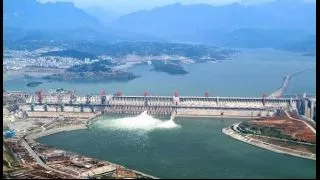
Is china muddying brahmaputra waters
It is not China’s water diversions, but intentional flooding or contamination that should be India’s major concernSporadic reports on China’s water diversion plans on the Yarlung Tsangpo, the upper stream of the Brahmaputra river, are invariably met with sustained overreactions in India. Late last month, reports of China planning a 1,000km-long tunnel system to divert these waters to arid Xinjiang were followed by thick black soot coming from the Siang tributary of the Brahmaputra. It led to Ninong Ering, member of Parliament (MP) from East Arunachal Pradesh, writing a letter to the prime minister. This was followed by visual, online and print media, as also the MP, doing their bit in highlighting this as yet another example of the dragon’s evil designs. The chief minister of Assam and the Congress state committee took it from there until Union minister Arjun Meghwal clarified that preliminary findings of the Central Water Commission suggested this was caused by the earthquake that hit Tibet on 17 November.
What does this episode tell us?
First and foremost, it takes an MP over a week to make the relevant authorities take notice of the thick black soot in Siang which, of course, continues to destroy the aquatic life, birds, flora and fauna and even the livelihood of thousands in Arunachal Pradesh and Assam as the water remains unusable. Its long-term ecological and environmental impact will also reach lower riparian Bangladesh. Whether its trigger was man-made or natural does not alter the intensity of its impact.
Second, India’s snail-paced response in providing even a preliminary assessment, and inaction in providing relief from this contamination, is now leading to calls for setting up hydrological labs across the region. However, there is not much hope that this will be implemented any time soon. Remember, it’s been decades since India has been unsuccessfully trying to clean the river Ganga. This track record makes pressing all panic buttons our first response to seek attention.
Third, of course, is China’s continued disregard of even agreed norms and the overall tenor of India-China relations, which surely leads policy experts to begin with no less than the worst-case scenario.
Even a cursory check tells us how, despite China having 50% spatial share of this 3,000km-long water system, low precipitation and desert conditions mean that Tibet generates only 25% of its total basin discharge, while India, with 34% of the basin, contributes to 39% of the total discharge. So, it is not China’s water diversions, but intentional flooding or contamination that should be a major concern for India. Is India working on preparing itself to tackle such eventualities?
China has been building at least five hydropower projects in addition to the 510-megawatt one at Zangmu that was commissioned in October 2015. These are claimed to be run-of-the-river projects, but can also facilitate storage if required. Given the seismically sensitive and geologically evolving Himalayas, such storages can unleash man-made or natural disasters. Unlike Tibet, the Indian side has scores of population centres on the banks of these river systems. To recall, the entire debate on India-China ‘water wars’ was triggered in 2000 by the sudden burst of one such dam, causing flash floods that resulted in 25 deaths and damage to property and livestock. This is what perturbed India when China began building its Zangmu hydropower project in 2008 and this high-pitch rhetoric over water continues to linger.
There is no denying that China has been reticent, allowing no more than a snail-paced incremental increase in its cooperation. Starting from their 2002 memorandum of understanding (MoU) for exchange of data on water levels, discharge and rainfall during the monsoon season, China and India had set up an expert-level mechanism for the Brahmaputra and Sutlej rivers in 2006. In their follow-up MoUs of 2013 and 2015, China agreed to supply data between 15 May and 15 October every year, with India agreeing to pay for these services. However, the last meeting of this mechanism was held in April 2016 and India has received no data for this year. First in the name of the Doklam standoff and then on the pretext of ongoing upgrade and renovation of data-collection stations in Tibet, China has refused to share hydrological data with India. But these excuses fall flat as Bangladesh continues to receive the same data.
How can India enhance its leverage against China?
There is a need to refrain from populist high-octane China bashing, which has been counterproductive so far. India must build its own capabilities to redress and withstand such disasters. It is only from such a position of sanity and strength that India can get China to regularize existing mechanisms and expand them beyond just data exchange on water flows, levels, rainfall, etc. These need to expand to cover quality of water and mutual inspections by joint or third-country observers.
The plans for gigantic diversions seem formidable, if not fanciful. These have been floated occasionally over the past two decades but repeatedly faced serious financial and technical impediments. The impact on India, if ever, would depend on factors like wherefrom and how much of Yarlung Tsangpo water can be diverted. Undertaking such a project in the seismically sensitive virgin high Himalayas carries deadly ecological and environmental implications for China. The impact on India would follow later and will be marginal.
Author : Swaran Singh is professor at the School of International Studies, Jawaharlal Nehru University, New Delhi


The non trivial costs of a slow judiciary
Jan 31, 2018
Very important the economic survey an overview
Jan 30, 2018
The conflict between equity and efficiency
Jan 29, 2018
Judicial primacy is not the same as exclusivity
Jan 25, 2018
Global monetary policy enters a decisive phase
Jan 25, 2018





Stay updated with The Hindu Editorial Vocab24 app, your definitive source for breaking news and comprehensive coverage from India and around the globe. Whether it's political developments, business updates, sports highlights, the latest technology trends, or current events, The Hindu brings live, accurate, and reliable news directly to your device.
Don’t fall for sensationalized or fake news shared online. Read and share accurate updates with friends and family through The Hindu Editorial Vocab24 app. Download it today!
News Coverage in The Hindu Editorial Vocab24 App
Breaking News: Receive instant notifications on breaking news stories as they unfold. Stay informed about major events and developments in India and around the world with live blogs, news in shorts videos, and concise articles.
Politics: Get the latest updates on Indian politics, including elections, policy changes, government decisions, and political events that shape the nation.
Business and Economy: Stay ahead in the economic landscape with detailed business news and market analysis. Learn about stock market trends, financial reports, corporate news, and economic developments to make informed investment decisions.
Current Events: Follow stories on social issues, policy changes, global events, and daily current affairs, tailored for UPSC and other competitive exam preparations.
Technology: Keep up with the latest gadgets, innovations, and tech trends. Read expert reviews and analyses in short, concise updates on cutting-edge technology from India and beyond.
Sports: Never miss a moment of your favorite sports. Get live scores, match reports, and expert analysis on cricket, football, tennis, and more.
International News: Stay informed about global events and geopolitical developments, including the Russia-Ukraine war, Israel-Palestine conflict, and other key international stories.
Local News: Stay connected to your community with the latest updates on city events, issues, and local news. Coverage includes hyperlocal updates from cities like Bangalore, Chennai, Delhi, Hyderabad, Mumbai, Kolkata, and more.
Trending Topics: Discover what's trending today with the most talked-about stories and hot topics across India and the world.
Experience journalism that values integrity, accuracy, and reliability. Download The Hindu Editorial Vocab24 app today and stay connected with the world.
Subscribe to our newsletter!







