

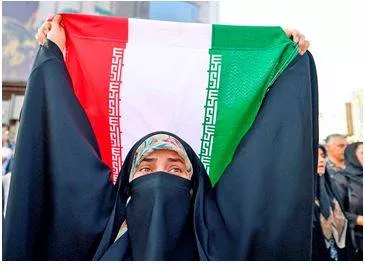
Iran has a plethora of options it can pick from in response to u s strikes
Iran signals potential retaliation after U.S. attacks key military and nuclear sites, removing what officials call the ‘last rationale’ for restraint; with a ‘far larger target bank’ now in reach, Iran may activate its multi-tiered capabilities, from missile attacks to disruptions in the Strait of Hormuz.Iran has spent decades building multi-tiered military capabilities at home and across the region that were at least partly aimed at deterring the United States from attacking it. By entering Israel’s war, the U.S. may have removed the last rationale for holding them in reserve.
This could mean a wave of attacks on U.S. forces in West Asia, an attempt to close a key bottleneck for global oil supplies, or a dash to develop a nuclear weapon with what remains of Iran’s disputed programme after American strikes on three key sites.
A decision to retaliate against the U.S. and its regional allies would give Iran a far larger target bank and one that is much closer than Israel, allowing it to potentially use its missiles and drones to greater effect. The U.S. and Israel have far superior capabilities, but those have not always proven decisive in America’s recent history of military interventions in the region.
Ever since Israel started the war with a surprise bombardment of Iran’s military and nuclear sites on June 13, Iranian officials from the supreme leader on down have warned the U.S. to stay out, saying it would have dire consequences for the entire region.
It should soon be clear whether those were empty threats or a grim forecast.
Iran’s next move
The Strait of Hormuz is the narrow mouth of the Persian Gulf, through which some 20% of all oil traded globally passes, and at its narrowest point, it is just 33 km wide. Any disruption there could send oil prices soaring worldwide and hit American pocketbooks.
Iran boasts a fleet of fast-attack boats and thousands of naval mines that could potentially make the Strait impassable, at least for a time. It could also fire missiles from its long Persian Gulf shore, as its allies, Yemen’s Houthi rebels, have done in the Red Sea.
The U.S., with its 5th Fleet stationed in nearby Bahrain, has long pledged to uphold freedom of navigation in the Strait and would respond with far superior forces. But even a relatively brief firefight could paralyse shipping traffic and spook investors, causing oil prices to spike and generating international pressure for a ceasefire.
The U.S. has tens of thousands of troops stationed in the region, including at permanent bases in Kuwait, Bahrain, Qatar, the UAE — Arab Gulf countries just across the Persian Gulf from Iran, and much closer than Israel.
Those bases boast the same kinds of sophisticated air defences as Israel, but would have much less warning time before waves of missiles or swarms of armed drones. And even Israel, which is several hundred kilometres further away, has been unable to stop all of the incoming fire.
Iran could also choose to attack key oil and gas facilities in those countries with the goal of exacting a higher price for U.S. involvement in the war. A drone attack on two major oil sites in Saudi Arabia in 2019 — claimed by the Houthis but widely blamed on Iran — briefly cut the kingdom’s oil production in half.
Iran’s so-called Axis of Resistance — a network of militant groups across West Asia — is a shadow of what it was before the war ignited by Hamas’s October 7, 2023, attack on Israel out of the Gaza Strip — but it still has some formidable capabilities.
Israel’s 20-month war in Gaza has severely diminished the Palestinian Hamas and Islamic Jihad groups, and Israel mauled Lebanon’s Hezbollah last fall, killing most of its top leadership and devastating much of southern Lebanon, making its involvement unlikely.
But Iran could still call on the Houthis, who had threatened to resume their attacks in the Red Sea if the U.S. entered the war, and allied militias in Iraq. Both have drone and missile capabilities that would allow them to target the U.S. and its allies.
Iran could also seek to respond through militant attacks further afield, as it is widely accused of doing in the 1990s with an attack on a Jewish community centre in Argentina that was blamed on Iran and Hezbollah.
It could be days or weeks before the full impact of the U.S. strikes on Iran’s nuclear sites is known.
But experts have long warned that even joint U.S. and Israeli strikes would only delay Iran’s ability to develop a weapon, not eliminate it. That’s because Iran has dispersed its programme across the country to several sites.
Iran would likely struggle to repair or reconstitute its nuclear programme while Israeli and U.S. warplanes are circling overhead. But it could still decide to fully end its cooperation with the International Atomic Energy Agency (IAEA) and abandon the Nuclear Non-Proliferation Treaty.
North Korea announced its withdrawal from the treaty in 2003 and tested a nuclear weapon three years later, but it had the freedom to develop its programme without punishing airstrikes.
Iran insists its programme is peaceful, though it is the only non-nuclear-armed state to enrich uranium up to 60%, a short step away from weapons-grade levels of 90%.
U.S. intelligence agencies and the IAEA assess that Iran has not had an organised military nuclear programme since 2003.
Israel is widely believed to be the only nuclear-armed state in the West Asia but does not acknowledge having such weapons.

Trump announces ceasefire between Lebanon and Israel
Apr 19, 2026


As trade row eases u s clears missile sale to india
Nov 23, 2025





Stay updated with The Hindu Editorial Vocab24 app, your definitive source for breaking news and comprehensive coverage from India and around the globe. Whether it's political developments, business updates, sports highlights, the latest technology trends, or current events, The Hindu brings live, accurate, and reliable news directly to your device.
Don’t fall for sensationalized or fake news shared online. Read and share accurate updates with friends and family through The Hindu Editorial Vocab24 app. Download it today!
News Coverage in The Hindu Editorial Vocab24 App
Breaking News: Receive instant notifications on breaking news stories as they unfold. Stay informed about major events and developments in India and around the world with live blogs, news in shorts videos, and concise articles.
Politics: Get the latest updates on Indian politics, including elections, policy changes, government decisions, and political events that shape the nation.
Business and Economy: Stay ahead in the economic landscape with detailed business news and market analysis. Learn about stock market trends, financial reports, corporate news, and economic developments to make informed investment decisions.
Current Events: Follow stories on social issues, policy changes, global events, and daily current affairs, tailored for UPSC and other competitive exam preparations.
Technology: Keep up with the latest gadgets, innovations, and tech trends. Read expert reviews and analyses in short, concise updates on cutting-edge technology from India and beyond.
Sports: Never miss a moment of your favorite sports. Get live scores, match reports, and expert analysis on cricket, football, tennis, and more.
International News: Stay informed about global events and geopolitical developments, including the Russia-Ukraine war, Israel-Palestine conflict, and other key international stories.
Local News: Stay connected to your community with the latest updates on city events, issues, and local news. Coverage includes hyperlocal updates from cities like Bangalore, Chennai, Delhi, Hyderabad, Mumbai, Kolkata, and more.
Trending Topics: Discover what's trending today with the most talked-about stories and hot topics across India and the world.
Experience journalism that values integrity, accuracy, and reliability. Download The Hindu Editorial Vocab24 app today and stay connected with the world.
Subscribe to our newsletter!







