

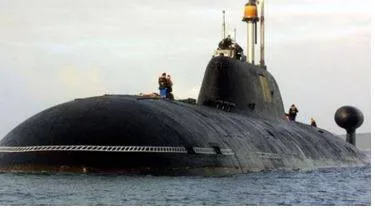
Indian navy approaches government for two nuclear attack submarines
The first step in this exercise would be that the defence ministry would accord acceptance of necessity or AON to the Indian avy.New Delhi: With 'Project Delta', its plan to augment its submarine fleet, delayed beyond 2027 due to Russia’s war with Ukraine, the Indian Navy has approached the government for approval to build two nuclear-powered conventionally armed submarines or SSNs to deter the country’s adversaries in the Indo-Pacific.
While the 30-year-old submarine plan approved by the Modi government in 2015 sanctions six SSNs in the Indo-Pacific, the first step is the acceptance of necessity (AoN) for two SSNs. The matter has been raised at the apex level and consultations are on to expedite the process.
As reported by Hindustan Times earlier, India’s second nuclear-powered nuclear missile-armed submarine, SSBN (nuclear-powered submarines armed with ballistic missiles) INS Arighat, will be commissioned shortly with the first SSBN, INS Arihant, already patrolling the deep waters of Indo-Pacific. India’s third SSBN, INS Aridaman, is also all set to be commissioned early next year as part of the country’s formidable nuclear triad.
While the proposed lease of Russian Akula class SSNs (this is what was termed Project Delta) was delayed due to Russian preoccupation with the Ukraine war and technological sanctions that may last at least till 2028, the Indian Navy has taken a decision to build SSNs after building three more Kalveri (Scorpene) class diesel-electric submarines at Mazagon Dockyards in Mumbai.
The principal reason for Indian national security planners opting for SSNs is that a nuclear attack submarine's range is limited by crew endurance, supplies and waste disposal, while conventional attack submarines surface for recharging of batteries every second day. The speed of SSNs is 20 knots under water but the SSKs or diesel-electric submarines only register four to five knots even with air-independent propulsion.
Given that the Chinese Navy has plans to send long-range patrols to the Indian Ocean and has already equipped Pakistan with Yuan-class SSKs, India needs to build deterrence against these principal adversaries and counter them. A Chinese Song class submarine participated in a naval exercise with Pakistan last year with the submarine practising bottoming at Karachi harbour as part of an attack demonstration to the Pakistan Navy. Bangladesh has acquired two Ming-class submarines from China.
Another reason for the focus on SSNs is that SSBNs are only for nuclear deterrence and are part of India’s second-strike capability. India’s first four SSBNs, all Arihant class will be equipped with 750 km range K-15 ballistic missiles, while the next class will be equipped with 3000 km range K-4 ballistic missiles.
India also needs SSNs as the Chinese submarines are using Ombai-Wetar straits, off the coast of QUAD ally Australia, to enter undetected into the Indian Ocean and have been surveying the 90 degrees East Ridge as well as South Indian Ocean, as far as the west coast of Africa. While the Modi government understands the requirement for SSNs for India’s deterrence, it is for the Indian Navy to convince Raksha Mantri Rajnath Singh and India’s national security planners to take the next step.












Stay updated with The Hindu Editorial Vocab24 app, your definitive source for breaking news and comprehensive coverage from India and around the globe. Whether it's political developments, business updates, sports highlights, the latest technology trends, or current events, The Hindu brings live, accurate, and reliable news directly to your device.
Don’t fall for sensationalized or fake news shared online. Read and share accurate updates with friends and family through The Hindu Editorial Vocab24 app. Download it today!
News Coverage in The Hindu Editorial Vocab24 App
Breaking News: Receive instant notifications on breaking news stories as they unfold. Stay informed about major events and developments in India and around the world with live blogs, news in shorts videos, and concise articles.
Politics: Get the latest updates on Indian politics, including elections, policy changes, government decisions, and political events that shape the nation.
Business and Economy: Stay ahead in the economic landscape with detailed business news and market analysis. Learn about stock market trends, financial reports, corporate news, and economic developments to make informed investment decisions.
Current Events: Follow stories on social issues, policy changes, global events, and daily current affairs, tailored for UPSC and other competitive exam preparations.
Technology: Keep up with the latest gadgets, innovations, and tech trends. Read expert reviews and analyses in short, concise updates on cutting-edge technology from India and beyond.
Sports: Never miss a moment of your favorite sports. Get live scores, match reports, and expert analysis on cricket, football, tennis, and more.
International News: Stay informed about global events and geopolitical developments, including the Russia-Ukraine war, Israel-Palestine conflict, and other key international stories.
Local News: Stay connected to your community with the latest updates on city events, issues, and local news. Coverage includes hyperlocal updates from cities like Bangalore, Chennai, Delhi, Hyderabad, Mumbai, Kolkata, and more.
Trending Topics: Discover what's trending today with the most talked-about stories and hot topics across India and the world.
Experience journalism that values integrity, accuracy, and reliability. Download The Hindu Editorial Vocab24 app today and stay connected with the world.
Subscribe to our newsletter!







