

India needs a refugee and asylum law
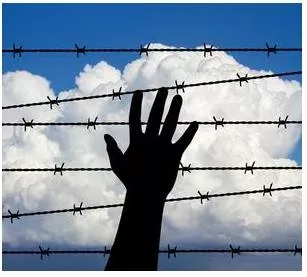
On refugee issues, it ought to be among the most admired nations and not one that has much to be ashamed of — as now.This month I introduced a Private Member’s Bill in the Lok Sabha proposing the enactment of a Refugee and Asylum law. The Bill lays down comprehensive criteria for recognising asylum seekers and refugees and prescribes specific rights and duties accruing from such status. It was made necessary by our government’s continuing disrespect for the international legal principle of non-refoulement — the cornerstone of refugee law, which states that no country should send a person to a place where he or she may face persecution — and even more, its betrayal of India’s millennial traditions of asylum and hospitality to strangers.
A slew of examples
The Government has shamefully expelled to Myanmar two batches of Rohingya refugees in the face of a grave risk of persecution in the country they had fled. In conducting this act of “refoulement” in violation of international law, the Government revealed both religious bigotry (the refugees were Muslim) and intolerance. It has attempted to do the same with Chakmas in Arunachal Pradesh and Myanmarese in Mizoram. Today, Afghan students stranded in India by the takeover of their country by the Taliban have not had their visas renewed, and could find themselves in a similar predicament.
My Bill would put an end to such arbitrary conduct by the authorities. The right to seek asylum in India would be available to all foreigners irrespective of their nationality, race, religion, or ethnicity, and a National Commission for Asylum would be constituted to receive and decide all such applications. The principle of non-refoulement is clearly affirmed, with no exceptions, though reasons have been specified for exclusion, expulsion, and revocation of refugee status, to respect the Government’s sovereign authority but limit its discretion.
When I use the word “refugee”, of course, I do so in the internationally-accepted definition of the term, which embraces people who have fled their home countries and crossed an international border because of a well-founded fear of persecution in their home countries, on grounds of race, religion, nationality, membership of a particular social group, or political opinion. This means that people who cross borders in quest of economic betterment, or because they are fleeing poverty, anarchy or environmental disaster, do not qualify as refugees. Nor do those who flee from one part of their home country to another because of war, conflict or fear of persecution.
India has been, and continues to be, a generous host to several persecuted communities, doing more than many countries, but is neither a signatory to the 1951 UN Refugee Convention, nor does it have a domestic asylum framework. This is ironic, given that our record on asylum goes back millennia, from the Jewish people who fled to India centuries before Christ after the demolition of their Jerusalem Temple by the Babylonians and then the Romans, to the Zoroastrians fleeing Islamic persecution in Persia, to Tibetans, Bangladeshis and Sri Lankan Tamils in more recent years, as well as streams of Nepalis, Afghans and the Rohingya. (Indeed, so famed was our reputation as a land of asylum that a defeated Cleopatra thought of sending her son to the safety of India’s west coast, before killing herself. Alas, her son made the fatal mistake of turning back midway to stake his claim to the throne, and met with a gory end, or he might have lived happily ever after in India!)
In fact, it is quite deeply embedded in the Indian psyche that nobody should ever have to face the predicament of being driven out of their home. Our great epics, the Ramayana and the Mahabharata, both dwell at great length upon the injustice of the protagonists being forced into exile, and the nobility involved in extending support and succour to the exiles. And the fact that one of our most popular festivals, Deepavali, celebrates the homecoming of refugees after 14 years of exile, demonstrates fully how important the concept of home and the homeland is to an Indian.
Given this history, India ought to be a natural leader on the question of refugee rights on the world stage. However, our present actions and our lack of a legal framework does our heritage no credit, shames us in the eyes of the world, and fails to match up to our actual past track record.
No uniform law
In the absence of a uniform and comprehensive law to deal with asylum seekers, we lack a clear vision or policy on refugee management. We have a cocktail of laws such as the Foreigners Act, 1946, the Registration of Foreigners Act, 1939, the Passports Act (1967), the Extradition Act, 1962, the Citizenship Act, 1955 (including its controversial 2019 amendment) and the Foreigners Order, 1948 — all of which club all foreign individuals together as “aliens”. Because India has neither subscribed to international conventions on the topic nor set up a domestic legislative framework to deal with refugees, their problems are dealt with in an ad hoc manner, and like other foreigners they always face the possibility of being deported.
When we speak of refugee protection, we often limit ourselves to just providing asylum. We need a proper framework to make sure that refugees can access basic public services, be able to legally seek jobs and livelihood opportunities for some source of income. The absence of such a framework will make the refugees vulnerable to exploitation, especially human trafficking. In 2011 when India came out with a Standard Operating Procedure to provide Long Term Visas to asylum seekers, I had pointed out that in the absence of a law, the application of these notifications can be easily tampered with based on political and extraneous reasons. Our officials want the freedom to do as they please — for political or other reasons — without being confined by the limits of a law.
We can, and must, do better. India must enact a National Asylum Law, such as the one I have been demanding for years and presented to Parliament earlier this month. India currently hosts more than two lakh refugees but the Bharatiya Janata Party government’s churlish attitude to the Rohingya and other “inconvenient” refugees risks putting us in the global doghouse. My Bill, if enacted, will instead put India at the forefront of asylum management in the world. It will finally recognise India’s long-standing and continuing commitment to humanitarian and democratic values while dealing with refugees.
It troubles me that a country with proud traditions and noble practices remains legally neither committed nor obliged to do anything for refugees, even if we behave humanely in practice. I think it is high time the Government reviewed its long-standing reluctance to sign up legally to what we have already been doing morally. International law involves no obligations that we have not already undertaken voluntarily; to refuse to enact a refugee law that matches the highest standards of the international conventions, out of an anxiety not to be “bound” to the wishes of the international community, is unworthy of a major country like India. After all, we are increasingly moving from being a subject of the international system, a rule-taker as it were, to a rule-maker within it.
Our judiciary has already shown the way forward on this: in 1996, the Supreme Court of India ruled that the state has to protect all human beings living in India, irrespective of nationality, since they enjoy the rights guaranteed by Articles 14, 20 and 21 of the Constitution to all, not just Indian citizens. Based on this premise, the Supreme Court stopped the forcible eviction of Chakma refugees who had entered Arunachal Pradesh in 1995, in the landmark NHRC vs State of Arunachal Pradesh case. The Court held that an application for asylum must be properly processed and till a decision is made whether to grant or refuse asylum, the state cannot forcibly evict an asylum seeker. At the same time, with different judges, come different approaches — as we have seen in the Rohingya case. The enactment and enumeration of refugee rights will reduce our dependence on judge-centric approaches — or even worse, the whims of Home Ministry bureaucrats, police officers and politicians.
Worthwhile aspiration
We should build on the Supreme Court’s vision and pass my Bill, or something very like it. We should be among the most admired nations in the world, not one that, on refugee issues, has much to be ashamed of now. The problems of refugees worldwide are problems that demand global solidarity and international cooperation. India, as a pillar of the world community, as a significant pole in the emerging multipolar world, must play its own part, on its own soil as well as on the global stage, in this noble task. In so doing, we would uphold our own finest traditions and the highest standards of our democracy, as well as demonstrate once again that we are what we have long claimed to be: a good international citizen in an ever-closer knit and globalising world. This is a worthwhile aspiration for all of us who care about what India stands for, at home and in the world. If Mr. Modi’s government wants to be a Vishwaguru, it should behave like one.
Shashi Tharoor, Member of Parliament (Congress) and author, served the United Nations refugee agency, the UNHCR, for 11 years (1978-89). He is the author of ‘The Battle of Belonging’
India has been, and continues to be, a generous host to several persecuted communities, doing more than many countries, but is neither a signatory to the 1951 UN Refugee Convention, nor does it have a domestic asylum framework In the absence of a uniform and comprehensive law to deal with asylum seekers, we lack a clear vision or policy on refugee management Our judiciary has already shown the way forward on this: in 1996, the Supreme Court of India ruled that the state has to protect all human beings living in India, irrespective of nationality, since they enjoy the rights guaranteed by Articles 14, 20 and 21 of the Constitution to all, not just Indian citizens.



Top court quashes FIRs against Gen Z protesters
Sep 04, 2026







Stay updated with The Hindu Editorial Vocab24 app, your definitive source for breaking news and comprehensive coverage from India and around the globe. Whether it's political developments, business updates, sports highlights, the latest technology trends, or current events, The Hindu brings live, accurate, and reliable news directly to your device.
Don’t fall for sensationalized or fake news shared online. Read and share accurate updates with friends and family through The Hindu Editorial Vocab24 app. Download it today!
News Coverage in The Hindu Editorial Vocab24 App
Breaking News: Receive instant notifications on breaking news stories as they unfold. Stay informed about major events and developments in India and around the world with live blogs, news in shorts videos, and concise articles.
Politics: Get the latest updates on Indian politics, including elections, policy changes, government decisions, and political events that shape the nation.
Business and Economy: Stay ahead in the economic landscape with detailed business news and market analysis. Learn about stock market trends, financial reports, corporate news, and economic developments to make informed investment decisions.
Current Events: Follow stories on social issues, policy changes, global events, and daily current affairs, tailored for UPSC and other competitive exam preparations.
Technology: Keep up with the latest gadgets, innovations, and tech trends. Read expert reviews and analyses in short, concise updates on cutting-edge technology from India and beyond.
Sports: Never miss a moment of your favorite sports. Get live scores, match reports, and expert analysis on cricket, football, tennis, and more.
International News: Stay informed about global events and geopolitical developments, including the Russia-Ukraine war, Israel-Palestine conflict, and other key international stories.
Local News: Stay connected to your community with the latest updates on city events, issues, and local news. Coverage includes hyperlocal updates from cities like Bangalore, Chennai, Delhi, Hyderabad, Mumbai, Kolkata, and more.
Trending Topics: Discover what's trending today with the most talked-about stories and hot topics across India and the world.
Experience journalism that values integrity, accuracy, and reliability. Download The Hindu Editorial Vocab24 app today and stay connected with the world.
Subscribe to our newsletter!







