

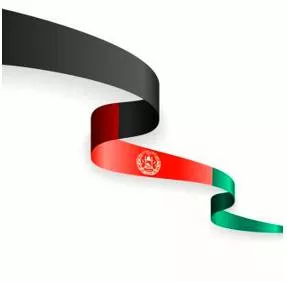
India must directly engage with taliban 2 0
The time for hesitant, backchannel parleys is over and New Delhi has to begin ‘open talks’ as it is a strategic necessity.With the withdrawal of the United States from Afghanistan in process, New Delhi has decided to ramp down its civilian presence in the war-torn country, bracing for a full-blown civil war. India has ‘temporarily’ closed its consulate in Kandahar and evacuated its diplomats and Indo-Tibetan Border Police (ITBP) personnel stationed there. This follows the decision to suspend operations in the Indian consulates in Jalalabad and Herat. As a result, India today is left with its Embassy in Kabul and the consulate in Mazar-e-Sharif.
The Taliban’s sway
These developments indicate two things: New Delhi’s decision to partially “withdraw” from Afghanistan shows that betting only on the government in Kabul was a big mistake, and that New Delhi realises the threat Taliban poses to Indian assets and presence in Afghanistan. Either way, India’s Afghan policy is at a major crossroads; to safeguard its civilian assets there as well as to stay relevant in the unfolding ‘great game’ in and around Afghanistan, New Delhi must fundamentally reset its Afghanistan policy.
India must, in its own national interest, begin ‘open talks’ with the Taliban before it is too late. The time for hesitant, half-embarrassed backchannel parleys is over. However, when I say it is time to ‘openly’ talk to the Taliban, I do not mean according recognition to the Taliban. In any case, what is there to ‘recognise’ at this point as far as the Taliban is concerned? It is only one of the parties in Afghanistan — it is neither the Afghan government, nor a part of it. Not yet. But with over a third of Afghanistan’s more than 400 districts under Taliban control, the talk-to-the-Taliban-option is indeed the best of the many less than perfect options available to India.
To be fair, New Delhi has been steadily abandoning its puritanical policy towards the Taliban over the past few years. In late 2018, when Moscow organised a conference which had the Taliban, members of the Afghan High Peace Council, and other countries from the region in attendance, India sent a ‘non-official delegation’ of two retired diplomats to Moscow. Thereafter, in September last year, India’s External Affairs Minister S. Jaishankar joined the inaugural session of the intra-Afghan negotiations in Doha. Last month, reports indicated that India has started reaching out to the Taliban which was indirectly confirmed by the Ministry of External Affairs when it said “we are in touch with various stakeholders in pursuance of our long-term commitment towards development and reconstruction in Afghanistan”.
However, such half-hearted, half-embarrassed, ideologically-hesitant meandering outreach to the Taliban is hardly sufficient to safeguard Indian interests in a rapidly shifting Afghan geopolitical landscape. Open dialogue with the Taliban should no longer be a taboo; it is a strategic necessity. Therefore, our outreach must now be direct and unambiguous. But before I explain why I say so, let me briefly analyse New Delhi’s rationale for the indirect approach to the Taliban.
Rationale for indirect talks
There are at least five possible reasons why New Delhi appears to want to keep the Taliban engagement slow and behind closed doors. For one, if New Delhi chooses to engage the Taliban directly, it could make Afghanistan President Ashraf Ghani, thus far India’s trusted partner, uneasy. This could potentially nudge him to look towards China and the Shanghai Cooperation Organisation (SCO) for national security and personal political survival. So, in New Delhi’s calculation, a bird in the hand is worth two in the bush. Two, decision makers in New Delhi are also faced with the dilemma of who to talk to within the Taliban given that it is hardly a monolith. New Delhi may have little access to the members of the Quetta Shura or the fighters on the ground in Afghanistan. So, the only option might be the Doha-based Taliban negotiators or leaders such as Abdul Salam Zaeef whose beef with Pakistan is well known. Third, given the global opprobrium that Taliban faced in its earlier avatar and the lack of evidence about whether the outfit is a changed lot today, New Delhi might not want to court the Taliban so soon. More so, there is little clarity about what the Taliban’s real intentions are going forward and what they would do after ascending to power in Kabul. Finally, it would not be totally unreasonable to consider the possibility of Pakistan acting out against India in Kashmir if India were to establish deeper links with the Taliban.
New Delhi’s rationale is not entirely erroneous. And yet, there are more compelling reasons why India should engage with the Taliban more proactively and openly. For one, whether we like it or not, the Taliban, one way or another, is going to be part of the political scheme of things in Afghanistan, and unlike in 1996, a large number of players in the international community are going to recognise/negotiate/do business with the Taliban. So, basic statecraft requires that we follow that route as well. Making peace with the fait accompli is not always a bad thing especially in the absence of better alternatives.
The Pakistan factor
Two, the Taliban today is looking for regional and global partners for recognition and legitimacy especially in the neighbourhood. So the less proactive the Indian engagement with the Taliban, the stronger Pakistan-Taliban relations would become. Put differently, and bluntly, letting the Pakistani deep state exclusively deal with the Taliban is an inherently bad idea.
Third, even though the Taliban is widely considered to be propped up by Pakistan, it would be a mistake to think that the Taliban will continue to be Pakistan’s servile followers upon gaining power in Kabul. A worldly-wise and internationally-exposed Taliban 2.0 would develop its own agency and sovereign claims including perhaps calling into question the legitimacy of the Durand Line separating Pakistan and Afghanistan, something Pakistan was always concerned about. More so, contrary to what many analysts assume, a Taliban-dominated Afghanistan, next door to its Tehreek-e-Taliban Pakistan-infested tribal areas, may not really end up becoming a happy space for Pakistan. In other words, the Taliban would want to hedge their bets on how far to listen to Pakistan. That is precisely when New Delhi should engage the Taliban.
Four, India needs to court all parties in Afghanistan, including the Taliban, if it wants to ensure its security of its civilian assets there. It makes neither strategic nor economic sense to withdraw from Afghanistan after spending over $3 billion, something the Government seems to be prepared to do. Withdrawing from Afghanistan now because the Taliban is on the rise (and we do not want to have relations with them) will go on to highlight how weak our strategic resolve is.
Five, India’s outreach to the Taliban should have started years ago before the Taliban had many suitors as they do today. So, if India is not proactive in Afghanistan at least now, late as it is, Russia, Iran, Pakistan and China will emerge as the shapers of Afghanistan’s political and geopolitical destiny, which for sure will be detrimental to Indian interests there.
Open the congested frontier
Finally, and perhaps most importantly, opening up the congested north-western frontier is key to bringing India’s continental grand strategy on an even keel, a process New Delhi has already started. Backchannel talks with Pakistan and a consequent ceasefire on the Line of Control, political dialogue with the mainstream Kashmiri leadership, secret parleys with Taliban all indicate that New Delhi is opening up its congested north-western frontier. Proactive engagement of the Taliban will provide this effort with more strategic heft.




Top court quashes FIRs against Gen Z protesters
Sep 04, 2026







Stay updated with The Hindu Editorial Vocab24 app, your definitive source for breaking news and comprehensive coverage from India and around the globe. Whether it's political developments, business updates, sports highlights, the latest technology trends, or current events, The Hindu brings live, accurate, and reliable news directly to your device.
Don’t fall for sensationalized or fake news shared online. Read and share accurate updates with friends and family through The Hindu Editorial Vocab24 app. Download it today!
News Coverage in The Hindu Editorial Vocab24 App
Breaking News: Receive instant notifications on breaking news stories as they unfold. Stay informed about major events and developments in India and around the world with live blogs, news in shorts videos, and concise articles.
Politics: Get the latest updates on Indian politics, including elections, policy changes, government decisions, and political events that shape the nation.
Business and Economy: Stay ahead in the economic landscape with detailed business news and market analysis. Learn about stock market trends, financial reports, corporate news, and economic developments to make informed investment decisions.
Current Events: Follow stories on social issues, policy changes, global events, and daily current affairs, tailored for UPSC and other competitive exam preparations.
Technology: Keep up with the latest gadgets, innovations, and tech trends. Read expert reviews and analyses in short, concise updates on cutting-edge technology from India and beyond.
Sports: Never miss a moment of your favorite sports. Get live scores, match reports, and expert analysis on cricket, football, tennis, and more.
International News: Stay informed about global events and geopolitical developments, including the Russia-Ukraine war, Israel-Palestine conflict, and other key international stories.
Local News: Stay connected to your community with the latest updates on city events, issues, and local news. Coverage includes hyperlocal updates from cities like Bangalore, Chennai, Delhi, Hyderabad, Mumbai, Kolkata, and more.
Trending Topics: Discover what's trending today with the most talked-about stories and hot topics across India and the world.
Experience journalism that values integrity, accuracy, and reliability. Download The Hindu Editorial Vocab24 app today and stay connected with the world.
Subscribe to our newsletter!







