

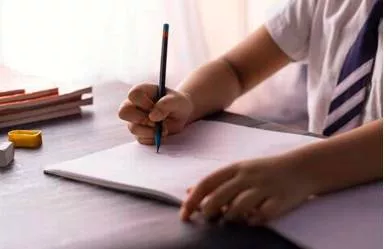
India’s schoolchildren need their childhood back
The country needs to stop asking whether schools are safe and start acknowledging that in-person school is essential.The economy is open. Malls, bars, restaurants, and some offices are open, but schools have been closed for 16 months and counting. They have sporadically opened for the higher grade students, and the Board examinations have been a key discussion point. There is indeed some basis to the old joke that Indian parents have a razor-sharp focus on academics and want their children to be a doctor or an engineer. This focus is not entirely misplaced, for academic results in the higher grades are important to determine colleges and professions, and for many Indians, a chance at a better life.
The wide-ranging impact
However, let us not forget our youngest children. Six yearolds who have spent more time outside the classroom than inside. Five year olds who have never been inside school nor ever met their teachers or classmates. Let us not lose sight of the importance of education in the younger years as well as the overall purpose of education. In-person school education teaches children to share, wait for their turn, negotiate, and compromise; by depriving them of social contact, we are depriving them of essential learning and development. For children from economically weak backgrounds, schools are a key source of nutrition. For some, schools serve as safe spaces from the chaos of their homes. For many children, particularly those who do not have educated parents or cannot afford home tutors, the denial of education results in learning losses and, ultimately, denial of a chance to earn a livelihood. For parents, school closures have added to childcare and teaching duties. Household incomes are reducing amidst rising inflation as parents, mainly mothers, have quit their jobs.
The Indian Council of Medical Research (ICMR) recently stated that “once India starts considering, it will be wise to open primary schools first and then secondary schools. Also, we have to ensure that all support staff[,] whether it be school bus drivers, teachers and other staff in the school[,] need to be vaccinated”. Researchers do agree, however, that children are at low risk of developing severe COVID-19 compared to adults.
Expert opinion
In June 2021, commenting on the World Health Organization-All India Institute of Medical Sciences (AIIMS) serosurvey, AIIMS Director, Dr. Randeep Guleria said, “This study also looked at sero surveillance among children. In the less than 18 years of age group, it was found that more than 50 per cent of children and in some areas, more than 80 per cent of children from both urban and rural areas had antibodies. This means they were already infected and developed antibodies.” The ICMR recently released results of the Fourth National Sero-Prevalence Survey which showed that more than half of the children (6-17 years) were seropositive and sero-prevalence was similar in rural and urban areas. Given the above, it is possible to think about starting schools in areas where the community level of infection is low. A one-size-fits-all approach across India will not work. This means that in some States such as Kerala or Maharashtra, where COVID-19 cases could be surging again, students should stay home, while their counterparts in other States where positivity rates are lower, can start going to school.
There are a host of recommendations on how to open schools safely, including by the World Bank, SRCC Children’s Hospital, Mumbai and the Lancet COVID-19 Commission India Task Force. Schools cannot be opened overnight. There is a large amount of preparation required, and the longer we wait to begin planning, the longer it will take to implement.
As immediate measures, governments should: call for lists of school staff and procure full vaccination for them. Scientists should confirm if the gap between doses can be made shorter akin to health-care workers; engage relevant experts to undertake public campaigns to make school staff and parents aware of the low risk of transmission in schools and low severity in children, urge them to understand the science and encourage them to commit to a social contract to be ever-vigilant and keep a sick or exposed child home; issue guidance for staggered re-opening of primary schools — e.g., 50% attendance or smaller groups of students on alternate days or weeks; upgrade school infrastructure to facilitate a hybrid system of learning where parents who do not wish to send their children to school have the choice to continue with online learning; train school teachers in hybrid learning; formulate and issue guidance on COVID-19 protocols to be adopted by schools — distancing to the extent possible, outdoor classes weather-permitting, masking, hand hygiene, and proper ventilation (scientists have indicated that even the humble pedestal fan can do wonders for ventilation); finalise logistics such as packed meals and transport; and ensure availability of medical consultation so that staff and parents need not scramble for assistance.
Other required long-term measures, which will also require funding, time, and effort, include greater investment in health-care facilities, particularly paediatric facilities, and implementation of systems to track local level of infections.
Managing the risks
As parents, we must recognise the costs of isolation and online learning for our young children. We cannot wait for children to get vaccinated because this may take years. According to a media report, Britain has said that “it has decided against giving mass COVID-19 vaccinations to all children and they would only be offered in certain situations such as when young people have underlying health conditions”. We cannot expect schools to provide a 100% guarantee that our children will be safe. Nothing is risk-free; risk must be managed with mitigation strategies. Instead, we must build mutual trust among governments, schools, and citizens. Each of us must implement and adhere to COVID-19 safety protocols recommended by scientists. Each of us must be vigilant and responsible, ensure all adults in our households are fully vaccinated and ensure children stay home if sick or exposed. Until a greater proportion of the population is vaccinated, we should endeavour to curtail unnecessary travel or exposure because we know from serosurveys that adults are bringing infections home.
Parents’ groups on social media are abuzz with requests for ‘pods’ of students and home tutors. Education, like oxygen and medicines during the second novel coronavirus wave, is becoming the responsibility but also a privilege of private citizens. We cannot let status quo continue any longer — we need to stop asking whether schools are safe and start acknowledging that in-person school is essential. Extensive literature based on studies on transmission in schools is clear — children are not super-spreaders, schools are not hotspots or driving viral spread. For young children, even a few hours of interaction per week with their teachers and other children would be an excellent starting point. As Robert Jenkins, Global Director of Education for UNICEF, said, “There are many countries in which parents can go out and have a nice steak dinner, but their seven-year-old is not going to school. That’s a problem (https://go.nature.com/3rVrzND).” We need to come together to fix that problem and give our young children their childhood back.

Atiqa records two top-four finishes in WSK Final Cup
Sep 05, 2026









Stay updated with The Hindu Editorial Vocab24 app, your definitive source for breaking news and comprehensive coverage from India and around the globe. Whether it's political developments, business updates, sports highlights, the latest technology trends, or current events, The Hindu brings live, accurate, and reliable news directly to your device.
Don’t fall for sensationalized or fake news shared online. Read and share accurate updates with friends and family through The Hindu Editorial Vocab24 app. Download it today!
News Coverage in The Hindu Editorial Vocab24 App
Breaking News: Receive instant notifications on breaking news stories as they unfold. Stay informed about major events and developments in India and around the world with live blogs, news in shorts videos, and concise articles.
Politics: Get the latest updates on Indian politics, including elections, policy changes, government decisions, and political events that shape the nation.
Business and Economy: Stay ahead in the economic landscape with detailed business news and market analysis. Learn about stock market trends, financial reports, corporate news, and economic developments to make informed investment decisions.
Current Events: Follow stories on social issues, policy changes, global events, and daily current affairs, tailored for UPSC and other competitive exam preparations.
Technology: Keep up with the latest gadgets, innovations, and tech trends. Read expert reviews and analyses in short, concise updates on cutting-edge technology from India and beyond.
Sports: Never miss a moment of your favorite sports. Get live scores, match reports, and expert analysis on cricket, football, tennis, and more.
International News: Stay informed about global events and geopolitical developments, including the Russia-Ukraine war, Israel-Palestine conflict, and other key international stories.
Local News: Stay connected to your community with the latest updates on city events, issues, and local news. Coverage includes hyperlocal updates from cities like Bangalore, Chennai, Delhi, Hyderabad, Mumbai, Kolkata, and more.
Trending Topics: Discover what's trending today with the most talked-about stories and hot topics across India and the world.
Experience journalism that values integrity, accuracy, and reliability. Download The Hindu Editorial Vocab24 app today and stay connected with the world.
Subscribe to our newsletter!







