

India’s options and the pashtun factor
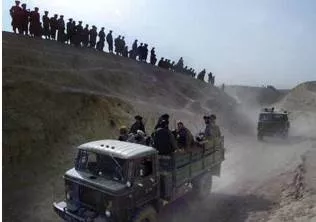
In fashioning its Afghan policy, India has to take into account a resurgent Taliban.It’s rightly being pointed out that India has to be prepared for the potential consequences of the withdrawal of U.S. troops from Afghanistan. While New Delhi is weighing its options it must take into account that for all its antipathy toward the Afghan Taliban, the latter does represent, in a distorted form, a facet of Pashtun nationalism. What has given added potency (The power of something to influence or make an impression.) to the Taliban’s appeal is this: its ability to couch in religious terminology traditional Pashtun aspirations for dominance in Afghanistan as well as the aversion of Pashtun tribes to foreign interference in their land.
Invasion shifts power
It is the combination of ultra-orthodox Islam, a product of Saudi involvement in the so-called Afghan “jihad”, with Pashtunwali, the traditional Pashtun social code, and opposition to foreign presence that provides strength to the Taliban. Most Pashtuns, who comprise over 40% of the population of Afghanistan, believe that they are the rightful rulers of the country. They base this on the history of the past 300 years when Pashtun dynasties ruled Afghanistan almost throughout. While the Persian-speaking Tajiks, who form around a quarter of the population, are more urban and educated than the Pashtun tribes and staffed a substantial portion of the Afghan bureaucracy, the ruling dynasties were invariably Pashtun.
This situation changed with the American invasion in 2001 aided by the largely Tajik Northern Alliance that shifted the locus of power out of Pashtun hands. The emergence of the Pashtun Taliban from Kandahar in 1994 was in reaction partly to the fear of Tajik domination and partly to the mayhem and anarchy caused by the “mujahideen” factions (A small organized dissenting group within a larger one, especially in politics.) fighting each other for control of the country. With Pakistan’s military help the predominantly Pashtun Taliban imposed a degree of order and ruled approximately three-quarters of Afghanistan from 1996 to 2001.
Pashtun resentment against foreign intervention, which drove their opposition to the Soviet invasion and now fuels antipathy towards American military presence, also has a long history going back to their resistance to British intrusion during the 19th century. It was augmented by British success in dividing the Pashtun lands in eastern and southeastern Afghanistan and drawing the Durand Line that attached a large portion to British India, now Pakistan. This drastically reduced Pashtun demographic superiority in Afghanistan. Opposition to the Durand Line was the principal reason why Afghanistan voted against Pakistan’s admission to the UN in 1947.
Traditionally, Pashtun nationalism in Afghanistan was based on ethnicity and tribal loyalties and not connected to religion, which explains their hostility toward predominantly Muslim Pakistan during the first three decades of its existence. The Soviet invasion of Afghanistan in December 1979 fundamentally changed the nature of Pashtun nationalism. It led to American and Saudi support for the Afghan insurgency, with Pakistan acting as the conduit (A long hollow cylinder for carrying a substance (as a liquid or gas).) for American arms and Saudi financial support to the tribes fighting the Soviets and their proxy government in Kabul. It also led to the import of Saudi-Wahhabi ideology through madrasas set up with Saudi funding on the Pakistan-Afghanistan border. These madrasas produced the first generation of the Taliban.
Pakistan and the Pashtuns
Simultaneously, the Soviet invasion altered the nature of Pakistan’s relationship with Pashtun nationalism, turning it from hostility to support. This process culminated (Reach a climax or point of highest development) with the installation of the Taliban regime in Kabul in 1996 with Pakistan’s military aid. It provided Pakistan with strategic depth in the event of a future conflict with India. Equally important, Pakistan’s support to this religiously inspired manifestation of Pashtun nationalism largely solved the problem of Pashtun irredentism within Pakistan.
Although polls show that the majority of Afghans do not support the Taliban, the divided and infirm nature of the nominally ruling dispensation and its corruption and inefficiency have helped the Taliban gain renewed support among parts of the Pashtun population. Added to this is the vicarious satisfaction that many Pashtuns feel at the Taliban’s defiance of the Kabul government, making it a viable force in Afghanistan.
The resurgent Taliban is driven not so much by Islam as the quest for Pashtun dignity and revenge. While it is not in a position to rule over the entire country, and certainly not the urban areas, it does control large swathes of the rural areas in the predominantly Pashtun provinces of eastern and southeastern Afghanistan. In other words, it is in a position to make the country ungovernable and indefinitely continue the civil war especially because of its control of the drug trade that finances its activities. The withdrawal of American forces will provide it greater opportunity to expand its area of operation.
Indian policy
It is important that New Delhi takes this factor into account while fashioning its policy toward Afghanistan in anticipation of American withdrawal. India’s refusal to publicly criticize, let alone denounce, the Soviet invasion of 1979, while understandable in that particular geopolitical context and a consequence of India’s gratitude for Soviet support during the Bangladesh war, ended up doing India great harm in the eyes of its traditional friends in Afghanistan, the Pashtuns. It also provided Pakistan greater scope to curry favour with Afghanistan’s largest and traditionally dominant ethnic group.
It will take a great deal of creative thinking and imaginative refashioning of New Delhi’s policy towards Afghanistan for India to recover lost ground vis-à-vis the Pashtuns. Depending on the U.S., itself on the verge of cutting its losses in Afghanistan, or on other powers such as Russia and Iran to protect Indian interests in that country will be foolhardy and counter-productive.



Top court quashes FIRs against Gen Z protesters
Sep 04, 2026







Stay updated with The Hindu Editorial Vocab24 app, your definitive source for breaking news and comprehensive coverage from India and around the globe. Whether it's political developments, business updates, sports highlights, the latest technology trends, or current events, The Hindu brings live, accurate, and reliable news directly to your device.
Don’t fall for sensationalized or fake news shared online. Read and share accurate updates with friends and family through The Hindu Editorial Vocab24 app. Download it today!
News Coverage in The Hindu Editorial Vocab24 App
Breaking News: Receive instant notifications on breaking news stories as they unfold. Stay informed about major events and developments in India and around the world with live blogs, news in shorts videos, and concise articles.
Politics: Get the latest updates on Indian politics, including elections, policy changes, government decisions, and political events that shape the nation.
Business and Economy: Stay ahead in the economic landscape with detailed business news and market analysis. Learn about stock market trends, financial reports, corporate news, and economic developments to make informed investment decisions.
Current Events: Follow stories on social issues, policy changes, global events, and daily current affairs, tailored for UPSC and other competitive exam preparations.
Technology: Keep up with the latest gadgets, innovations, and tech trends. Read expert reviews and analyses in short, concise updates on cutting-edge technology from India and beyond.
Sports: Never miss a moment of your favorite sports. Get live scores, match reports, and expert analysis on cricket, football, tennis, and more.
International News: Stay informed about global events and geopolitical developments, including the Russia-Ukraine war, Israel-Palestine conflict, and other key international stories.
Local News: Stay connected to your community with the latest updates on city events, issues, and local news. Coverage includes hyperlocal updates from cities like Bangalore, Chennai, Delhi, Hyderabad, Mumbai, Kolkata, and more.
Trending Topics: Discover what's trending today with the most talked-about stories and hot topics across India and the world.
Experience journalism that values integrity, accuracy, and reliability. Download The Hindu Editorial Vocab24 app today and stay connected with the world.
Subscribe to our newsletter!







