

India’s fate is tied to the rest of the world
It was through its global interactions that India defined itself throughout its history as an independent nation.Ever since Independence, India’s fate has been closely tied to the rest of the world. In some sense, it had no choice. A large, newly independent, impoverished, and impossibly diverse country required active engagement with a variety of partners for its survival, security, and development.
But a constantly evolving international environment presented India not just with opportunities but numerous challenges. Its frontiers were initially poorly demarcated and poorly integrated. India came to have two nuclear-armed neighbours with which it competed for territory. Several sources of domestic insecurity benefited from support from neighbouring countries. And India often found itself at odds with the great powers, ploughing a lonely furrow when it felt its greater interests were threatened, as on intervention in Bangladesh, nuclear non-proliferation, or trade.
An overview
Today, the troubles may seem plenty leading with the raging COVID-19 pandemic and its adverse effects on economic growth prospects, especially when coupled with intensifying competition with China and turmoil in Afghanistan. At the same time, India has greater means to tackle them: it is by some measures the sixth largest economy in the world, boasts a well-trained and professional military, and has a growing network of international strategic and economic partners. This brief overview suggests that India’s future, too, will remain intertwined with global affairs.
The long and winding road
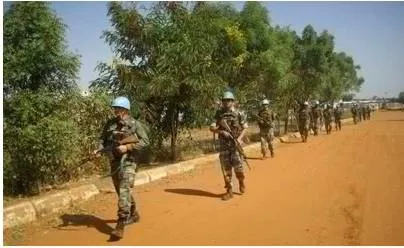
India had to adopt a foreign and security posture even before August 15, 1947. Independence and Partition left behind a messy territorial legacy. India’s first leaders opted for flexible and friendly relations with both the U.S. and the Soviet Union and their respective allies. In fact, India initially received the bulk of development and military assistance from the West; it was only from the mid-1950s onwards that the Soviet Union extended support. India also played an activist role in the decolonising world, extending diplomatic and (in some cases) security assistance to independence movements in Asia and Africa and sending military missions to Korea and the Congo.
India’s early efforts were arguably successful in consolidating territorial gains, in accelerating economic growth, and in positioning itself in a leadership role in the post-colonial world. But all these efforts suffered following the 1962 war with China. Despite that immense setback, the world came knocking at India’s door throughout the 1960s. Pakistani military adventurism picked up, resulting in the 1965 war. The question of Indian nuclear weapons acquired greater urgency following China’s test, even as Indian forces pushed back against China in Sikkim in 1967. There were also important economic strides made, including the Green Revolution, undertaken with considerable foreign technical and financial assistance.
The 1970s and the 1980s presented India with a more contained canvas. The Indo-Soviet Treaty of Friendship and Cooperation and the Bangladesh war altered India’s relations with both superpowers and shifted the dynamics of the rivalry with Pakistan. The Indian economy remained relatively closed at a time when other Asian economies had begun to liberalise. This period saw security challenges come closer to home: the peaceful nuclear explosion, the annexation of Sikkim, competition with Pakistan over Siachen, a stand-off with China, an intervention in Sri Lanka, and a countercoup in the Maldives. Domestic security challenges also assumed an external angle, whether in Punjab, Jammu and Kashmir, Tamil Nadu, or the North-east. Some efforts at resetting relations with the United States, liberalising the economy, and pursuing the nuclear option were made, but the outcomes were inconclusive.
After the Cold War
The post-Cold War era, therefore, presented India with a range of challenges. The 1991 Gulf war resulted in a balance of payments crisis and the liberalisation of the economy. India then adopted a range of reforms to liberalise the economy, but it faced more than just economic turmoil. The assassination of Rajiv Gandhi, the 1993 Mumbai bombings, and the insurgency in Jammu and Kashmir presented grave new security challenges. Yet, the period that followed witnessed some important developments under the prime ministership of P.V. Narasimha Rao: the advent of the Look East Policy and relations with the Association of Southeast Asian Nations; the establishment of diplomatic ties with Israel; the signing of a border peace and tranquility agreement with China; initial military contacts with the U.S., and preparations for nuclear tests.
The Atal Bihari Vajpayee government built further upon these developments, conducting a series of tests in 1998, negotiating a return to normal relations with most major powers within two years, and concluding an important set of agreements with China in 2003. At the same time, efforts at normalising ties with Pakistan were frustrated by the Kargil war, the hijacking of Indian Airlines flight IC-814 to Kandahar (Afghanistan), and the 2001 attack on India’s Parliament. These years also witnessed a rapid growth of the Indian economy, fuelled by a boom in information and communication technology companies, the services sector, and a rising consumer market.
After 2004, the Manmohan Singh government worked extensively to resolve the outstanding question of India’s nuclear status. By eliminating barriers to ‘dual use’ technologies and equipment, as well as a host of associated export controls, India had the opportunity to establish robust defence relations with the U.S. and its allies. Yet, the global financial crisis in 2008-09 presaged a slight change in approach, whereby India sought to partner with China and other rising powers on institutional reform, financial lending, climate change, and sovereignty. Coupled with an economic deceleration after 2011, India’s relations with the U.S. and Europe grew more contentious over the next three years.
Beginning in 2013, a more assertive China began to test India on the border and undermine Indian interests in South Asia and the Indian Ocean Region. After the second such border crisis in late 2014, a more competitive India-China relationship emerged. With further stand-offs at Doklam and Ladakh between 2017 and 2021, India opted to boycott China’s Belt and Road Initiative, raise barriers to Chinese investment, ban some Chinese technology, and consult more closely with other balancing powers in the Indo-Pacific. Security relations and understandings with the U.S. and its allies (Japan, France, Australia) accelerated after 2014. A greater emphasis on neighbourhood connectivity was adopted. While efforts were made to engage with Pakistan between 2014 and 2016, a series of Pakistani provocations resulted in a deep freeze in India-Pakistan relations, further reinforced by the terrorist attacks at Uri and Pulwama and Indian reprisals. Meanwhile, India’s relations with West Asian partners assumed greater importance.
An international India
India’s objectives have been broadly consistent: development, regional security, a balance of power, and the shaping of international consensus to be more amenable to Indian interests. At the same time, India’s means and the international landscape have changed, as have domestic political factors. This necessitated different approaches to international engagement between 1947 and 1962, between 1971 and 1991, and between 1991 and 2008.
As India enters its 75th year of independence, there are plenty of reasons for cautious optimism about its place in the world. Yet, the ravages of COVID-19 and growing international competition also underscore the difficulties that India will likely face as it attempts to transform into a prosperous middle-income country, a secure polity, and a proactive shaper of international norms. What is certain is that India will not have the luxury to turn inwards. In fact, it was through its global interactions that India defined itself throughout its history as an independent nation.



Top court quashes FIRs against Gen Z protesters
Sep 04, 2026






Stay updated with The Hindu Editorial Vocab24 app, your definitive source for breaking news and comprehensive coverage from India and around the globe. Whether it's political developments, business updates, sports highlights, the latest technology trends, or current events, The Hindu brings live, accurate, and reliable news directly to your device.
Don’t fall for sensationalized or fake news shared online. Read and share accurate updates with friends and family through The Hindu Editorial Vocab24 app. Download it today!
News Coverage in The Hindu Editorial Vocab24 App
Breaking News: Receive instant notifications on breaking news stories as they unfold. Stay informed about major events and developments in India and around the world with live blogs, news in shorts videos, and concise articles.
Politics: Get the latest updates on Indian politics, including elections, policy changes, government decisions, and political events that shape the nation.
Business and Economy: Stay ahead in the economic landscape with detailed business news and market analysis. Learn about stock market trends, financial reports, corporate news, and economic developments to make informed investment decisions.
Current Events: Follow stories on social issues, policy changes, global events, and daily current affairs, tailored for UPSC and other competitive exam preparations.
Technology: Keep up with the latest gadgets, innovations, and tech trends. Read expert reviews and analyses in short, concise updates on cutting-edge technology from India and beyond.
Sports: Never miss a moment of your favorite sports. Get live scores, match reports, and expert analysis on cricket, football, tennis, and more.
International News: Stay informed about global events and geopolitical developments, including the Russia-Ukraine war, Israel-Palestine conflict, and other key international stories.
Local News: Stay connected to your community with the latest updates on city events, issues, and local news. Coverage includes hyperlocal updates from cities like Bangalore, Chennai, Delhi, Hyderabad, Mumbai, Kolkata, and more.
Trending Topics: Discover what's trending today with the most talked-about stories and hot topics across India and the world.
Experience journalism that values integrity, accuracy, and reliability. Download The Hindu Editorial Vocab24 app today and stay connected with the world.
Subscribe to our newsletter!







