

India's housing conundrum
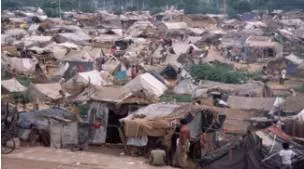
The Gaekwad family lives in a single room house on the outskirts of Mumbai. The family cooks, eats and sleeps in the same room which is also used as a play area by their three-year-old child. Lack of credit prevents them from taking loan to improve their living conditions. The Gaekwads are among the millions of Indians who live on sidewalks, on railway platforms, in illegal slums and shanties (a small, crudely built shack.).There is little more critical to a family’s quality of life than a healthy, safe living space. However, this section of India’s poor lives in inhuman conditions and is often under the threat of displacement, harassment and arrest. Over the last decade, India has substantially expanded its net of welfare policies, aimed at lifting millions from poverty. It seems that the time has come for the ‘right to shelter’. Priority for housing ought to be higher than education and health. Sustainable and inclusive housing solutions can bolster large economic growth efficiently.
There was a time when landlessness, which inevitably accompanies poverty and its attendant ills, affected a smaller chunk of the population. However, the number of landless people has been rising. The ones without land join the ranks of the worst ones in extreme poverty and the task of poverty alleviation became even more difficult. Considering the links between landlessness and poverty or the need to score better successes against poverty, it is important to put a hard brake on the process of becoming landless.
Landlessness and the lack of secure property rights among the poor are among those inequities that perpetuate (eternize) poverty, hold back economic development and fan social tensions. Demographic shifts, combined with poor or non-existent land ownership policies and insufficient resources have resulted in a surge of slum creation and further deteriorated living conditions.
Hernando de Soto in his book, The Mystery of Capital: Why Capitalism Triumphs in the West and Fails Everywhere Else, said, “The hour of capitalism’s greatest triumph,” declares the famed (august) Peruvian economist, “is in the eyes of four-fifth of humanity, its hour of crisis.” Soto explains that for many people in the developing world, the land on which they live is their only asset. If that property is not publicly recognised as belonging to them, they lose out that is, when men and women do not receive recognised legal rights to their land and can, thus, easily be displaced without recourse — development efforts flounder (flail), undermining conservation efforts, seeding injustice and conflict and frustrating efforts to escape poverty.
A major impediment (encumbrance) to the acquisition of housing finance is the lack of official land titles. People do not have documentary proof of being owners of the piece of land on which they live. Many low-income villagers have owned their land for generations. Community-recognised institutions can help legitimise claims to land that have been long tenured by a household.
The United Nations has estimated that more than 70 per cent of the world’s population lives without any formal acknowledgement of ownership of land. That is both a human and economic problem. Without the security of ownership, poor often invest little in their homes, result being a fragile (frangible) home that cannot withstand natural disasters, including floods. Whereas, when people have secure land rights, they invest in improvement projects, work more hours without fear of land theft and are more likely to take loans using their new property as security.
Lack of ownership right deprives people of basic amenities. Once titled, they can obtain access to several Government benefits. Even a small plot can lift a family out of extreme poverty. Land ownership is often the bedrock (the fundamental principles on which something is based.) of other development interventions, like owning land boosts nutrition, educational outcomes and gender equality. The converse is equally true.
According to the National Family Health Survey, only 19 per cent of the rural population lives in pucca houses, whilst the remaining 81 per cent live in kutcha or semi-pucca structures. Eighty-seven per cent of the homes in villages do not have access to toilet facilities. Nationally, the total economic impact of inadequate sanitation is estimated at $53.4 billion. Kutcha (or raw) structures have walls and roofs made of materials, such as unburnt bricks, bamboo, mud, grass, leaves, reeds or thatches. Semi-pucca structures signify that either the walls or the roof are made of pucca materials. Pucca (meaning solid) structures are considered permanent and are made out of cement, concrete, oven-burnt bricks, stone blocks, tiles, and timber.
Several State Governments have provided a degree of tenure security to poor households, which grants residents of unauthorised settlements specific period licences for their land or an official assurance that the user will not be forced to vacate the property. It also provides evidence so that usual and customary local practices support this assurance. All these rights entitle the occupant to presumed ownership.
The Government must implement an out-of-the-box (Outside of or beyond what is considered usual, traditional, or conventional.) approach to break down the thickets of red-tapism (the practice of requiring excessive paperwork and tedious procedures before official action can be considered orcompleted.). What is actually needed is revolutionary and cutting-edge reforms that rip through the dense jungle of paperwork and documentation. Given the scale, the need for adequate and affordable housing presents significant business opportunities for the private sector, especially for developers, investors and financial institutions.
What is finally needed is close and passionate collaboration. Inspiration does not occur in vacuum. It is a beautiful contagion (contamination = used in the sense of positivity) that passes through individuals who touch each other’s lives. One inspiring achievement has a tendency to raise a sense of possibility in others. The one who is inspired performs his own feats and inspires others, and so on down. Even as we grapple with mounting challenges, healers are rising up to cure the ills. They are going to hollow places and creating communities and building relationships that change lives, one by one.

Blithesome
May 07, 2021
Tragedy of kashmir that bleeds us to this day
Dec 25, 2017





Stay updated with The Hindu Editorial Vocab24 app, your definitive source for breaking news and comprehensive coverage from India and around the globe. Whether it's political developments, business updates, sports highlights, the latest technology trends, or current events, The Hindu brings live, accurate, and reliable news directly to your device.
Don’t fall for sensationalized or fake news shared online. Read and share accurate updates with friends and family through The Hindu Editorial Vocab24 app. Download it today!
News Coverage in The Hindu Editorial Vocab24 App
Breaking News: Receive instant notifications on breaking news stories as they unfold. Stay informed about major events and developments in India and around the world with live blogs, news in shorts videos, and concise articles.
Politics: Get the latest updates on Indian politics, including elections, policy changes, government decisions, and political events that shape the nation.
Business and Economy: Stay ahead in the economic landscape with detailed business news and market analysis. Learn about stock market trends, financial reports, corporate news, and economic developments to make informed investment decisions.
Current Events: Follow stories on social issues, policy changes, global events, and daily current affairs, tailored for UPSC and other competitive exam preparations.
Technology: Keep up with the latest gadgets, innovations, and tech trends. Read expert reviews and analyses in short, concise updates on cutting-edge technology from India and beyond.
Sports: Never miss a moment of your favorite sports. Get live scores, match reports, and expert analysis on cricket, football, tennis, and more.
International News: Stay informed about global events and geopolitical developments, including the Russia-Ukraine war, Israel-Palestine conflict, and other key international stories.
Local News: Stay connected to your community with the latest updates on city events, issues, and local news. Coverage includes hyperlocal updates from cities like Bangalore, Chennai, Delhi, Hyderabad, Mumbai, Kolkata, and more.
Trending Topics: Discover what's trending today with the most talked-about stories and hot topics across India and the world.
Experience journalism that values integrity, accuracy, and reliability. Download The Hindu Editorial Vocab24 app today and stay connected with the world.
Subscribe to our newsletter!







