

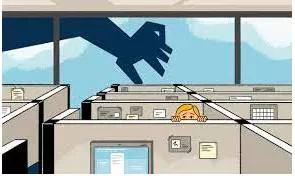
In the name of job flexibility ‘uberisation’ is spreading its tentacles across society
In the late 18th century, as the impact of the Industrial Revolution bit into the lives of the nascent working class, the high cost of fuel, one study notes, “forced inhabitants of many southern regions to abandon home cooking”. Fuel costs were much greater in the south than in the north. As a result, Frederic Morton Eden observed in The State of the Poor (1797), “the culinary preparations of the Northern peasant are so much diversified, and his table so often supplied with hot dishes”, whereas in the south, working-class families could not afford to boil or bake potatoes, so were forced to buy cheap white bread and eat dinner cold.Because it was more expensive to cook at home than to buy shop-made bread, there were more bakeries per head of population in poor areas such as Hampshire than in richer regions such as Yorkshire. More than 200 years on and we’re back in a Britain in which many poor families are being “forced to abandon home cooking” because of the high cost of fuel. Not only has there been an explosion in the use of food banks, but many food bank users “are declining products such as potatoes and other root veg because they can’t afford to boil them”.
Much of the discussion of the cost of living crisis has rightly been about the impact of soaring prices on the lives of millions driven to desperation. It is not just inflated prices for basic goods that have created such desperation. It is also the precariousness of income and, in particular, the huge growth in recent years of poorly paid, insecure jobs.
A study by Dalia Gebrial and Paddy Bettington, of the thinktanks Autonomy and the Centre for Labour and Social Studies, tracks what it calls the “Uberisation” of the labour market. “Insecurity,” it observes, has “become an endemic part of British working life” and “the proportion of the workforce employed precariously has ballooned”. The kind of insecurity once associated solely with the gig economy is now spreading through many sectors of employment: the health and care sectors, hospitality, cleaning, hair and beauty, even “previously protected middle-class jobs in academia”.
Using markers such as unemployment, under-employment, temporary contracts, part-time work, variable weekly wages and zero-hours contracts to establish an “Insecurity Index”, the report suggests that “insecurity has increased by 50% since 2005”. Almost every occupational sector shows greater insecurity.
After the 2008 financial crash, unemployment rose sharply, peaking at 8.5% in 2011 before falling to a 45-year low of 3.8% in 2019. The fall in unemployment has been hailed as a great economic success story. But unemployment has fallen largely because workers have been drawn into low-wage or part-time jobs or into self-employment. The price of low unemployment has been vastly increased job insecurity. London, often seen as wealthy, has been particularly badly hit by insecure work. So, unsurprisingly, have women, young people and ethnic minorities. The most high-profile and shocking expression of the insecurity of jobs was the recent sacking by P&O of almost 800 members of its shipping staff. There was widespread outrage, including from ministers, who have called on the chief executive, Peter Hebblethwaite, to step down and for the government to review all contracts with P&O. But it is government policies and laws that have made such mass sackings possible in the first place.
The actions of P&O were particularly savage, but employers often make use of the policy of “fire and rehire”. A study last year showed that 10% of all workers have been told to reapply for their jobs on worse conditions or face the sack; for 18-24 year-olds that figure almost doubled.British Gas, British Airways, the bus company Go North West and many others have attempted in the past year to fire and rehire workers. Last October, the government blocked a private member’s bill to outlaw the practice. For four decades, successive governments have, in the name of creating a “flexible” labour market, made it easier for employers to sack workers and harder for unions to respond. The roots of the process go back to the 1980s and Margaret Thatcher’s assault on unions and postwar social model. This is not the first time that P&O has sacked workers en masse. In 1988, the company exploited Thatcher’s laws to sack 400 workers, impose pay cuts and longer hours and then used the 16-month dispute that followed to break the National Union of Seamen.
When New Labour came to power in 1997, it introduced some important protective measures, such as the national minimum wage and tax credits, but maintained the Tory anti-union laws and reinforced the drive towards a more flexible labour market. By the early 2000s, there had been created what some analysts call an “hourglass” labour market, divided between badly paid “McJobs” at one end and generously rewarded “MacJobs” at the other, with “middling” jobs squeezed.
As trade union membership fell from 13.2m in 1979 to a record low of 6.2m in 2016 (since when it has slightly recovered to 6.6m), those who most need union protection are least likely to be unionised. It is like a return to the labour relations of the early 20th century. The expansion of insecure, poorly paid jobs in a flexible labour market without the protection of trade unions has been a major driver of the cost of living crisis.
There is a desperate need for an immediate response to soaring prices, from a proper increase in benefits and the minimum wage to holding down energy price increases. But equally important is challenging the policies that have created an insecure labour market under the guise of a flexible one: a need to roll back trade union restrictions and to remove employers’ rights to fire and rehire and to prevent unions from organising. Most of all, there is a need to ensure union protection of the lowest paid, least secure workers, expanding the work of unions such as the IWGB and the RMT.
A 21st-century Britain in which there are echoes of late 18th-century fuel poverty and early 20th-century labour insecurity is not something we should tolerate.












Stay updated with The Hindu Editorial Vocab24 app, your definitive source for breaking news and comprehensive coverage from India and around the globe. Whether it's political developments, business updates, sports highlights, the latest technology trends, or current events, The Hindu brings live, accurate, and reliable news directly to your device.
Don’t fall for sensationalized or fake news shared online. Read and share accurate updates with friends and family through The Hindu Editorial Vocab24 app. Download it today!
News Coverage in The Hindu Editorial Vocab24 App
Breaking News: Receive instant notifications on breaking news stories as they unfold. Stay informed about major events and developments in India and around the world with live blogs, news in shorts videos, and concise articles.
Politics: Get the latest updates on Indian politics, including elections, policy changes, government decisions, and political events that shape the nation.
Business and Economy: Stay ahead in the economic landscape with detailed business news and market analysis. Learn about stock market trends, financial reports, corporate news, and economic developments to make informed investment decisions.
Current Events: Follow stories on social issues, policy changes, global events, and daily current affairs, tailored for UPSC and other competitive exam preparations.
Technology: Keep up with the latest gadgets, innovations, and tech trends. Read expert reviews and analyses in short, concise updates on cutting-edge technology from India and beyond.
Sports: Never miss a moment of your favorite sports. Get live scores, match reports, and expert analysis on cricket, football, tennis, and more.
International News: Stay informed about global events and geopolitical developments, including the Russia-Ukraine war, Israel-Palestine conflict, and other key international stories.
Local News: Stay connected to your community with the latest updates on city events, issues, and local news. Coverage includes hyperlocal updates from cities like Bangalore, Chennai, Delhi, Hyderabad, Mumbai, Kolkata, and more.
Trending Topics: Discover what's trending today with the most talked-about stories and hot topics across India and the world.
Experience journalism that values integrity, accuracy, and reliability. Download The Hindu Editorial Vocab24 app today and stay connected with the world.
Subscribe to our newsletter!







