

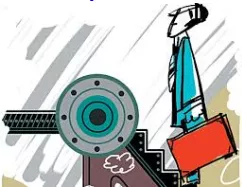
In need of a psycho economic boost
When a person decides to buy a flat, it reflects his or her optimism about the future. There is confidence that one will have enough income flowing in, to pay for the monthly instalments. This optimism is not because of job security, but because of the belief that one will get a new job, even if one becomes unemployed. The same is true for an entrepreneur setting up a new factory or new business. It’s called risk taking, but that is not to imply reckless gambling. It reflects the investor’s confidence about the future returns on the investment. If that confidence starts to wane (become weaker.), then potential home buyers refrain or postpone their decisions. Investors adopt a wait-and-watch attitude. If everyone in the economy starts becoming extra-cautious, the decline in confidence and economic activity becomes self-fulfilling. As the economy slows down, people say, “See I told you so! It was wise to not invest and take unnecessary risk now.”This decline can happen even if the economy is fundamentally sound. What causes investor or home buyer confidence to wane? It could be anecdotes (narrative), actual economic evidence, broken trust in government or socio-political developments. Not to overstate this, but there is an element of psychology that keeps the economy chugging (to make slow but steady progress) . The government’s role is as much to provide the right policy environment, as to provide a psychological atmosphere that is conducive to risk taking about the future, and inspire confidence in the people.
The Keynesian solution
John Maynard Keynes called these the “animal spirits” which guide buyer and investor behaviour. When those spirits are in a downward spiral, the end result could be recession, if not outright depression. His remedy was to suggest countercyclical policy, which has become the hallmark of Keynesianism (Keynesian economics are the various theories about how in the short run – and especially during recessions – economic output is strongly influenced by aggregate demand (total spending in the economy).). This includes an injection of both fiscal and monetary stimulus. This involves increasing government spending or cutting taxes, or both, and decreasing interest rates. Despite many attempts at discrediting the efficacy of Keynesian remedies, to this day policy-makers continue to repose (be situated or kept in a particular place.) faith in them. Sure, the effects could last only for a short term, but if that helps the economy into a higher gear, or break out (start suddenly.) of the “pessimism spiral”, it would have served its purpose.
We are not quite in a recession, nor are we anywhere remotely near a depression. But the fact is that we are in danger of the self-fulfilling prophecy nature of investment and consumer behaviour. The data need to be restated to understand the seriousness of the situation. GDP growth declining continuously for six quarters in a row, down from 9.2% to 5.7%. Investment share of GDP, which creates new factories and businesses for tomorrow, falling for almost five years. The latest data from the Centre for Monitoring Indian Economy show that even the project pipeline is drying up. Newly announced projects at Rs. 84,500 crore are at a four-year low. Even the stalled projects which have been revived are only 6% during this fiscal year, as against 25% last year. The value of stalled projects is at a record high of Rs. 13.2 lakh crore. During the last years of the previous government, projects were stalled due to delays in approvals and clearances, legal disputes and charges of corruption. But these issues were tackled, and yet new projects are not picking up. In fact, in terms of the number of new private sector projects announced in the latest quarter, it is at a 13-year low.
The short point is that investor enthusiasm is lacking, especially from the private sector. Added to their lack of demand is the reluctance of supply of investible funds.
Cautious banks
Banks, despite being flush with deposits (partly thanks to demonetisation), are in no mood to extend new credit. This is because of the increasing burden of bad loans (called non-performing assets, or NPAs). The ratio of NPAs has been continuously going up for five years. Either you have to write-off (a cancellation from an account of a bad debt or worthless asset.) the loans and book losses, or ask shareholders to bring more equity capital. The new bankruptcy code and procedure is promising, but is as yet untested for timeliness and effectiveness. There is also a suggestion to collect all the bad loans (that is, toxic waste) from the various banks and move them to a freshly capitalised bank, the so-called “bad bank”. The bad bank would focus solely on liquidating the collateral (something pledged as security for repayment of a loan, to be forfeited in the event of a default.), bringing in fresh owners and managers to run distressed companies. Once freed from NPAs, the existing banks can resume lending to the healthy sectors. This is a promising idea as well and worth pursuing. The government cannot shy away from funding the rescue of India’s banking. It has to provide capital to the new “bad bank” or to recapitalise the beleaguered (in a very difficult situation.) public sector banks, where most of the NPAs reside.
This is where the Keynesian wisdom of stimulus is worth recalling. All four drivers of economic growth are sputtering (proceed in a spasmodic and feeble way.). While reviving exports may need boosts like a weaker rupee or more export-linked incentives, consumption and investment sentiment can certainly be boosted by conventional Keynesian tools. Corporate income tax can be reduced to 25% as promised two years ago. Excise taxes on petrol and diesel need to be reduced. These are indirect taxes, hurt the poor more, are regressive and feed into general inflation through logistics and energy costs.
Four steps
On the spending side, the government can focus on the following four areas. First, provide fresh capital either to existing banks or the new “bad bank”. Second, provide some version of a wage subsidy as an incentive to labour intensive sectors. A version of this was offered to the textile and garment sectors last year, but can be improvised and extended. The successful model of Odisha in the garment sector can be replicated. Third, give a big boost to affordable housing, by funding land acquisition for the builder, and interest rate subvention (a grant of money, especially from a government.) for the home owner. The States of Kerala and Maharashtra have interesting and replicable models. Fourth, keep a big focus on exporters, especially in labour intensive sectors, including agriculture. This includes a weaker exchange rate, quicker refund of GST credit and expanding the scope of the Merchandise Export from India Scheme and Service Exports from India Scheme.
All of these are short-term economic stimuli, but can also provide a psychological boost to the animal spirits. Of course, consumer and investor confidence can return and sustain only when the Keynesian boost is buttressed (increase the strength of) by credibility of implementing longer-term reforms.




Top court quashes FIRs against Gen Z protesters
Sep 04, 2026







Stay updated with The Hindu Editorial Vocab24 app, your definitive source for breaking news and comprehensive coverage from India and around the globe. Whether it's political developments, business updates, sports highlights, the latest technology trends, or current events, The Hindu brings live, accurate, and reliable news directly to your device.
Don’t fall for sensationalized or fake news shared online. Read and share accurate updates with friends and family through The Hindu Editorial Vocab24 app. Download it today!
News Coverage in The Hindu Editorial Vocab24 App
Breaking News: Receive instant notifications on breaking news stories as they unfold. Stay informed about major events and developments in India and around the world with live blogs, news in shorts videos, and concise articles.
Politics: Get the latest updates on Indian politics, including elections, policy changes, government decisions, and political events that shape the nation.
Business and Economy: Stay ahead in the economic landscape with detailed business news and market analysis. Learn about stock market trends, financial reports, corporate news, and economic developments to make informed investment decisions.
Current Events: Follow stories on social issues, policy changes, global events, and daily current affairs, tailored for UPSC and other competitive exam preparations.
Technology: Keep up with the latest gadgets, innovations, and tech trends. Read expert reviews and analyses in short, concise updates on cutting-edge technology from India and beyond.
Sports: Never miss a moment of your favorite sports. Get live scores, match reports, and expert analysis on cricket, football, tennis, and more.
International News: Stay informed about global events and geopolitical developments, including the Russia-Ukraine war, Israel-Palestine conflict, and other key international stories.
Local News: Stay connected to your community with the latest updates on city events, issues, and local news. Coverage includes hyperlocal updates from cities like Bangalore, Chennai, Delhi, Hyderabad, Mumbai, Kolkata, and more.
Trending Topics: Discover what's trending today with the most talked-about stories and hot topics across India and the world.
Experience journalism that values integrity, accuracy, and reliability. Download The Hindu Editorial Vocab24 app today and stay connected with the world.
Subscribe to our newsletter!







