

Humanitarian needs remain pressing a month after myanmar earthquake
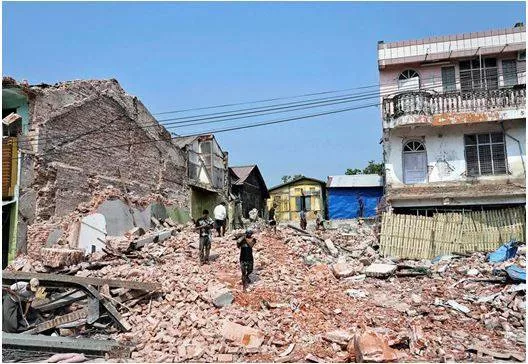
The 7.7 magnitude earthquake of March 28 hit a wide swath of the country; death toll stands at 3,769, with 5,106 people injured and 107 still missing and has left many areas without power, cell connections and damaged roads and bridges, in addition to tens of thousands of buildings, say reports.The humanitarian needs of hundreds of thousands of survivors remain desperately pressing a month after Myanmar’s deadly earthquake, compounded by air strikes that the military government is reportedly carrying out despite ceasefires meant to aid relief efforts during the country’s civil war.
The 7.7 magnitude quake of March 28 hit a wide swath of the country, causing significant damage to six regions and States, including the capital, Naypyitaw. Myanmar’s Department of Meteorology and Hydrology reported on Monday there had been 157 aftershocks after the big quake, ranging in magnitude from 2.8 to 7.5.
State-run MRTV television reported on Sunday that the quake’s death toll had reached 3,769, with 5,106 people injured and 107 still missing. The earthquake left many areas without power, telephone or cell connections and damaged roads and bridges, in addition to tens of thousands of buildings.
In some quake-hit areas, bereaved relatives and friends of the disaster’s victims on Monday offered donations to monks, a Buddhist tradition to transfer merit and blessings to the deceased.
A report released on Monday by the Myanmar Witness project of the London-based Centre for Information Resilience said the group had documented 80 post-quake air strikes by the military across multiple regions, including 65 after the Army declared its unilateral ceasefire on April 2, following similar declarations by its battlefield foes.
Amid conflict
Myanmar has been in turmoil since the army’s 2021 takeover ousted the elected government of Aung San Suu Kyi, which led to nationwide peaceful protests that escalated into armed resistance, uniting pro-democracy activists and ethnic minority guerrilla groups that have long been fighting for autonomy.
“Myanmar’s population was already on its knees after years of SAC aggression and armed conflict,” said Myanmar Witness project director Robert Dolan, referring to the military’s ruling State Administration Council. “The layers of suffering are hard to comprehend — we have seen regions wrecked by war and then the earthquake, only to sustain further damage from continued airstrikes.”
The bombings have primarily targeted civilian areas — markets, residential zones, Buddhist monasteries, and Christian churches — resulting in the deaths of over 200 civilians, including at least 24 children, from March 28 to April 19, 2025, according to a statement from the shadow National Unity Government, the main opposition group coordinating resistance to military rule.
Dave Eubank, a former U.S. Army Special Forces soldier who founded the Free Burma Rangers, a private aid organisation, said two of his medics had been killed in military attacks since the earthquake, which have primarily struck villages.
“These attacks have not slowed down at all, attacks by drones, air strikes, mortars and artillery continue unabated,” said Mr. Eubank, who was in Myanmar when the earthquake hit but is currently outside the country, though his teams continue to operate there. “They have been widespread and lethal, mostly to villagers — very few of the resistance have been killed by them.”
The military government has not directly commented on the air strikes, but when it extended its ceasefire on April 22, it reserved the right to respond as “necessary” to certain activities by the resistance forces.
UN agencies and other humanitarian organisations, meanwhile, stress that living conditions remain dire for earthquake survivors.
Millions displaced
Even before the earthquake, the civil war had displaced more than three million people and left nearly 20 million in need.
“Critical needs remain for safe shelter, clean water and sanitation, physical and mental health care, comprehensive protection services and cash assistance,” the United Nations Office for the Coordination of Humanitarian Affairs said on Friday in its latest situation report. Many who lost their homes are still in makeshift tents with little to protect them from pre-monsoon storms, which normally begins in May, and limited access to safe drinking water and clean sanitation raises the threat of waterborne diseases, the U.N. said.
Fear of aftershocks
The International Federation of Red Cross and Red Crescent Societies said in a report released on Monday that displaced people were living outdoors in temperatures of up to 40°C, with an overwhelming fear of further aftershocks.
In Naypyitaw, the damaged buildings of the labour and foreign ministries have been demolished for new construction, said a resident who asked not to be named for security reasons. Debris at markets and schools has been cleaned by municipal workers, while thousands of people, who lost their homes, were still living under tarpaulin sheets, he said.
He said that he was told that the departments and offices of several ministries will be temporarily relocated to Yangon, the country’s former capital and largest city, until their offices can be rebuilt.






Stay updated with The Hindu Editorial Vocab24 app, your definitive source for breaking news and comprehensive coverage from India and around the globe. Whether it's political developments, business updates, sports highlights, the latest technology trends, or current events, The Hindu brings live, accurate, and reliable news directly to your device.
Don’t fall for sensationalized or fake news shared online. Read and share accurate updates with friends and family through The Hindu Editorial Vocab24 app. Download it today!
News Coverage in The Hindu Editorial Vocab24 App
Breaking News: Receive instant notifications on breaking news stories as they unfold. Stay informed about major events and developments in India and around the world with live blogs, news in shorts videos, and concise articles.
Politics: Get the latest updates on Indian politics, including elections, policy changes, government decisions, and political events that shape the nation.
Business and Economy: Stay ahead in the economic landscape with detailed business news and market analysis. Learn about stock market trends, financial reports, corporate news, and economic developments to make informed investment decisions.
Current Events: Follow stories on social issues, policy changes, global events, and daily current affairs, tailored for UPSC and other competitive exam preparations.
Technology: Keep up with the latest gadgets, innovations, and tech trends. Read expert reviews and analyses in short, concise updates on cutting-edge technology from India and beyond.
Sports: Never miss a moment of your favorite sports. Get live scores, match reports, and expert analysis on cricket, football, tennis, and more.
International News: Stay informed about global events and geopolitical developments, including the Russia-Ukraine war, Israel-Palestine conflict, and other key international stories.
Local News: Stay connected to your community with the latest updates on city events, issues, and local news. Coverage includes hyperlocal updates from cities like Bangalore, Chennai, Delhi, Hyderabad, Mumbai, Kolkata, and more.
Trending Topics: Discover what's trending today with the most talked-about stories and hot topics across India and the world.
Experience journalism that values integrity, accuracy, and reliability. Download The Hindu Editorial Vocab24 app today and stay connected with the world.
Subscribe to our newsletter!







