

How to share intelligence
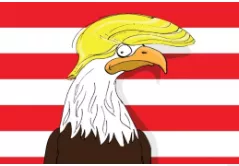
The United States currently gives an impression of being at war with itself. This stems from a series of charges and countercharges levied against President Donald Trump and his advisers, including that of collusion with the Russians, who are accused of meddling with the presidential election. Several probes have already been launched in this connection. Meanwhile, the kaleidoscopic (तेज़ी से बदलता हुआ) nature of the changes taking place in the top echelons of the new administration is hardly helping matters. The peremptory actions of the President, such as the dismissal of Federal Bureau of Investigation (FBI) Director James Comey, has only aggravated this situation. Almost every step taken by the new administration is leading to partisan rows. The media and intelligence agencies are far from impartial in their behaviour. Leaks from within the administration, including the White House, have also created a piquant (मनमुटाव वाली) situation. Nothing comparable to this has been seen since the Nixon years. Unparalleled disdain Liberal America and ‘Beltway’ Washington’s disdain for President Trump, and the manner in which he conducts his policies, is quite unparalleled. Barack Obama, Mr. Trump’s predecessor, is by contrast credited currently with many more virtues than at any time when he was in office. Forgotten is the anger against Obamacare and the Obama ‘doctrine’. He is seen as a moderate, someone wedded to maintaining equilibrium in international relations and, above all, someone at peace with the American nation and its people, in marked contrast to Trumponomics. What has led to a fractured society in the U.S. today carries a message for democracies everywhere. Democracy needs sensitive handling. One of the principal charges against members of the Trump team is that they maintained improper contact with Russian diplomats who, after Ukraine and Crimea, were regarded as international outcasts, at least from the point of view of the U.S. Contact with other foreign diplomats was acceptable, but not with the Russians, possibly a new and modified form of McCarthyism (McCarthyism is the practice of making accusations of subversion or treason without proper regard for evidence.), but nevertheless the current norm. A point to consider, no doubt, is whether there is indeed something sinister (अशुभ/भयावह) in all this, or it is a case of the liberal media overreaching itself, with investigative and intelligence agencies such as the FBI and the Central Intelligence Agency (CIA) acting in tow (साथ साथ) . The role of Congress and the elected representatives is little in evidence. Even after becoming President, Mr. Trump remains a ‘disruptor extraordinaire’. Disruption is today acceptable in fields such as technology and business, even regarded as essential for progress, but the same cannot be said for politics and diplomacy. The jury is still out on his overtures (पहल/प्रस्ताव) towards Russia, his simultaneous diplomatic forays (प्रारम्भिक प्रयास) vis-a-vis Saudi Arabia and Israel, his approach to the North Atlantic Treaty Organisation and Europe, his attitude towards China and the policy towards North Korea. For the present, hence, the President appears to be under a virtual siege. Apart from Congress and Congressional committees, which constitute an essential element of the U.S. system of ‘checks and balances’, he is today confronted by teams of lawyers assigned to a kind of ‘Trump Watch’, journalists, and NGOs. These apart, there are the street protesters. Seldom has an elected President had to face a situation of this kind. The most recent accusation levelled against the President, viz. that of leaking state secrets, surpasses anything levelled against him previously. It was the result of a leak from within the White House, and related to a meeting that Mr. Trump had with Russian Foreign Minister Sergey Lavrov in the Oval Office on May 10. The accusation is that the President revealed certain highly classified intelligence information to Mr. Lavrov. The impression conveyed was that the President had thereby violated the strict norms that govern dissemination of secret information. The classified intelligence is said to have been provided by a West Asian ally to the U.S. and was not to be shared with anyone. It was stated to be so sensitive that U.S. officials had not shared it widely within the U.S. government, and had not passed it on to other allies. The fear expressed was that the West Asian ally would not share any sensitive information with the U.S. in future. The facts of the case do not quite add up to what has been put out. An element of bias does seem to have crept in. It would seem that the main grouse (a complaint or grumble.) of Washington ‘insiders’ was to the meeting effected between Mr. Trump and Mr. Lavrov, which also included the Russian Ambassador Sergey Kislyak, a meeting from which the U.S. press was excluded and to which the Russian press was privy (मर्म भेदी/गुप्त जानकारी के संबंधित) . Mr. Kislyak’s presence was a kind of ‘red rag’ as his name had previously figured in the controversies involving Attorney General Jeff Sessions and former National Security Adviser Michael Flynn. Leaking of sensitive secret information became a useful plank to hit the President with. The secret intelligence referred to was that of advances made by the Islamic State in bomb-making, and its plans to mask the explosive devices by concealing it inside laptop computers, which could be carried on to an aircraft to launch a terrorist attack. No mention seems to have been made about the identity of the source or the mechanics of how the intelligence was obtained. Only the city from where the intelligence was obtained had been mentioned. It is not unusual for Presidents and Prime Ministers to exchange sensitive information — including of the intelligence variety — in closed-door sessions. It is again the general practice worldwide that heads of state and government are the best judges of what they can divulge (प्रकट करना/रहस्य खोलना) to their counterparts at such closed-door meetings. In this case, the President was apparently expansive during his meetings with the Russian Foreign Minister. There is nothing to indicate that he went beyond ‘boasting’ about the intelligence information in the possession of the U.S. In itself, what the President revealed was hardly a crime. It is well-known that leaders at this level are far less parsimonious (किफायती/ मितव्ययी) in parting with intelligence than are intelligence chiefs and members of the intelligence fraternity. The Indian experience We in India have been victims of such inadequate provision of intelligence by friendly countries, despite having elaborate arrangements for counterterrorism cooperation, an instance in point being the failure of friendly counter-intelligence agencies in 2008 to share all the information in their possession which might have prevented the November 26, 2008 terror attacks on multiple targets in Mumbai. A welcome departure from the attitude of intelligence chiefs is generally the approach of Presidents and Prime Ministers, who tend to take a more liberal view. Mr. Trump is perhaps guilty of breach of intelligence protocol. Intelligence protocol stipulates that prior approval should be obtained from the country providing the intelligence to share the classified information with a third country. Disclosure of ‘bare-bone intelligence’, short of identity and mechanics, is not an offence. That the media should have portrayed it as one of the gravest crises yet for the White House is inexplicable (unable to be explained or accounted for.) . This does not absolve Mr. Trump of not being careful with the intelligence in his possession, and to which he is privy through the Presidential Daily Brief and periodic meetings with his Director of Intelligence, and the heads of intelligence and investigative agencies such as the CIA and the FBI. One such intelligence gaffe (भूल/ग़लतफ़हमी) on the part of Mr. Trump was his recent disclosure to the Philippines President of the location of two nuclear submarines in the waters off the Korean Peninsula, while discussing the situation in North Korea. Relations between President Trump and sections of society in the U.S. appear stalemated at present. The avalanche of leaks from within the government reveals an unhealthy atmosphere. Maintaining secrecy of information is important, especially where it concerns exchanges between two governments. For democracies everywhere, there are lessons to be learnt from the present imbroglio (अव्यवस्था/उलझन) in the U.S. The need to maintain a balance between the government, the judiciary and the legislature, the media, interest groups and various elements in society is vital. Without this, the functioning of government and institutions would become highly untenable.Kaleidoscopic (adjective)
Continually shifting or rapidly changing. तेज़ी से बदलता हुआ
Synonyms: Altering, Fast Changing, Portraying Rapid Patterns
Example: Because of his kaleidoscopic nature, he was impeached immediately from the position of COO.
In tow (adverb)
Accompanying or following someone. साथ साथ
Synonyms: Accompanying, Following, Escorting, In Chaperone
Example: The manager went to the meeting with her staff in tow.
Overture (noun)
An approach or proposal made to someone with the aim of opening negotiations or establishing a relationship. पहल/प्रस्ताव
Synonyms: Opening Move, Conciliatory Move, Approach, Proposal, Proposition
Example: In an attempt to make peace the government has made a significant peace overture by opening the door to negotiation.
Foray (noun)
An initial attempt at something / a brief but spirited attempt to become involved in a new activity or sphere. प्रारम्भिक प्रयास
Synonyms: Initial Effort, First Effort, Endeavor At Inception
Example: Tired of being single, Rachel decided to try a foray into the realm of online dating websites.
Inexplicable (adjective)
(Unable to be explained or accounted for.) अबोध्य/वर्णन से बाहर
Synonyms: Unexplainable, Incomprehensible, Unfathomable Baffling, Puzzling, Perplexing
Example: Because the weather was clear and sunny a few moments ago, the sudden thunderstorm is inexplicable.
Privy (adjective)
Sharing in the knowledge of (something secret or private). मर्म भेदी/गुप्त जानकारी के संबंधित
Synonyms: Behind-The-Scenes, Confidential, Esoteric, Nonpublic, Private
Example: As the president’s chief adviser, Richard is privy to many of the executive officer’s deepest thoughts.
Divulge (verb)
Make known (private or sensitive information). प्रकट करना/रहस्य खोलना
Synonyms: Disclose, Reveal, Make Known, Leak, Expose, Uncover
Example: Drug manufacturers are required to divulge any side effects that may be caused by their drugs.
Parsimonious (adjective)
Very unwilling to spend money or use resources. किफायती/ मितव्ययी
Synonyms: Mean, Niggard, Frugal, Tight-Fisted
Example: Even though I have plenty of money, I tend to be parsimonious with my spending.
Gaffe (noun)
An obvious error or mistake भूल/ग़लतफ़हमी
Synonyms: Blunder, Error, Goof, Lapse, Miscue, Misstep, Mistake
Example: The blogger made a gaffe when he referred to the football player by another athlete's name.
Imbroglio (noun)
An extremely confused, complicated, or embarrassing situation. अव्यवस्था/उलझन
Synonyms: Complexity, Difficulty, Predicament, Plight, Trouble, Entanglement, Confusion, Muddle, Mess
Example: The hostages found themselves in an imbroglio when the two kidnappers began to fight.
U k budget increases child welfare allowance taxes
Nov 29, 2025






Stay updated with The Hindu Editorial Vocab24 app, your definitive source for breaking news and comprehensive coverage from India and around the globe. Whether it's political developments, business updates, sports highlights, the latest technology trends, or current events, The Hindu brings live, accurate, and reliable news directly to your device.
Don’t fall for sensationalized or fake news shared online. Read and share accurate updates with friends and family through The Hindu Editorial Vocab24 app. Download it today!
News Coverage in The Hindu Editorial Vocab24 App
Breaking News: Receive instant notifications on breaking news stories as they unfold. Stay informed about major events and developments in India and around the world with live blogs, news in shorts videos, and concise articles.
Politics: Get the latest updates on Indian politics, including elections, policy changes, government decisions, and political events that shape the nation.
Business and Economy: Stay ahead in the economic landscape with detailed business news and market analysis. Learn about stock market trends, financial reports, corporate news, and economic developments to make informed investment decisions.
Current Events: Follow stories on social issues, policy changes, global events, and daily current affairs, tailored for UPSC and other competitive exam preparations.
Technology: Keep up with the latest gadgets, innovations, and tech trends. Read expert reviews and analyses in short, concise updates on cutting-edge technology from India and beyond.
Sports: Never miss a moment of your favorite sports. Get live scores, match reports, and expert analysis on cricket, football, tennis, and more.
International News: Stay informed about global events and geopolitical developments, including the Russia-Ukraine war, Israel-Palestine conflict, and other key international stories.
Local News: Stay connected to your community with the latest updates on city events, issues, and local news. Coverage includes hyperlocal updates from cities like Bangalore, Chennai, Delhi, Hyderabad, Mumbai, Kolkata, and more.
Trending Topics: Discover what's trending today with the most talked-about stories and hot topics across India and the world.
Experience journalism that values integrity, accuracy, and reliability. Download The Hindu Editorial Vocab24 app today and stay connected with the world.
Subscribe to our newsletter!







