

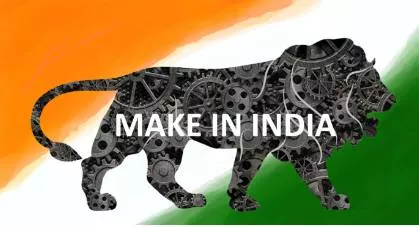
How to beef up ‘make in india’ and develop manufacturing muscle the economy will see immediate gains
Two recent developments signal that India stands to gain substantially from increased manufacturing activity. Harvard University’s Center for International Development says that India has diversified into more complex sectors and hence would be the fastest growing economy in the coming decade, with an annual GDP growth rate of 7.9%.And second, the ongoing US-China trade tiff has unwittingly created a window of opportunity for Indian manufacturing. As the US accuses China of systematic theft of intellectual property and China sets harsh terms for MNCs, many large firms look for manufacturing locations outside of China.
India’s manufacturing story can take shape if we can get just a few large firms to relocate. Remember, India’s IT outsourcing story started with two firms in 1997 when British Airways and GE set up operations to India. We need to do the same with manufacturing. This will require an in-depth look at the issues faced by the sector. Try answering the following questions.
Why do firms located in Germany, Japan or the US develop most new products and not firms located in other countries? Why do east Asian countries trade mostly in textiles and electronics?
Let us imagine a giant wheel on which every manufacturing technique is represented. The central core of the wheel houses techniques that require expertise in basic sciences, chemistry, metals, electronics, etc. These are so complex that most new developments vie for the Nobel prize. 3D printing technology, which may shift manufacturing of shirts, shoes and toys from developing countries to near customers in developed countries, is one example.
Germany, Japan and the US are masters of such core techniques. They have developed this expertise through policies and long-term investments in R&D. Firms located in other countries do not have access to this patent protected and fiercely guarded expert ecosystem.
While core techniques are located in the central area of the wheel, sector-specific and less complex techniques are located at different points in the outer region of the wheel. These relate to processing of raw materials, agriculture and mining products. Or techniques for use within the same product groups like apparel or electronics only. Since the two techniques are located at a distance from each other, expertise in one does not help in developing expertise in the other. This is unlike core products which are densely located at the central core.
This explains why east Asia mostly specialises in the textile and electronic products and could not diversify to say advanced chemicals or engineering products. Following similar logic, most African and Latin American countries are stuck with mining and agriculture-related goods.
The manufacturing wheel example illustrates that a single strategy for manufacturing is not adequate. India needs simultaneous focus on the core as well as many peripheral products. This will require targeting four product groups. Each requires different attention.
One: Factory machinery, which makes goods in an automated and intelligent way. Machine tools and semiconductor-making equipment (SME) are two vital sectors. India can focus on SME as it is at the centre of computers, mobiles, telecom, cars and Internet of Things. Some technology can be bought but most critical needs should be developed through in-house industrial R &D centres.
Two: Specialty materials, 3D printing, nanotechnology, precision mechanical devices, integrated circuits, medical imaging devices, etc. Manufacturing these would require commitment and long-term investments in R&D institutions.
Three: Computers, TV, mobile phones and other electronic and telecom equipment. Manufacturing in China, Korea and Taiwan revolves around this product group. These account for over 15% of GDP of each of these countries. Reduction in import bill will be the immediate visible impact.
Four: Auto components, toys, furniture, footwear, low-end engineering products. India can move quickly as the factories are easy to develop and can employ millions of people who can move from agriculture or informal sector to formal jobs.
Expertise in core products requires long-term focus and investments in Industrial Research, Design and Standards (IRDS) centres. Announce sector-specific integrated policy packages keeping in view similar offerings by other countries. Develop a few manufacturing zones/ clusters with plug and play infrastructure. And get one anchor firm for each new cluster to kick-start the operations. Anchor firms bring a large number of ancillary units needed and quickly ramp up production and exports. With these steps, India will play in the manufacturing big leagues.











Stay updated with The Hindu Editorial Vocab24 app, your definitive source for breaking news and comprehensive coverage from India and around the globe. Whether it's political developments, business updates, sports highlights, the latest technology trends, or current events, The Hindu brings live, accurate, and reliable news directly to your device.
Don’t fall for sensationalized or fake news shared online. Read and share accurate updates with friends and family through The Hindu Editorial Vocab24 app. Download it today!
News Coverage in The Hindu Editorial Vocab24 App
Breaking News: Receive instant notifications on breaking news stories as they unfold. Stay informed about major events and developments in India and around the world with live blogs, news in shorts videos, and concise articles.
Politics: Get the latest updates on Indian politics, including elections, policy changes, government decisions, and political events that shape the nation.
Business and Economy: Stay ahead in the economic landscape with detailed business news and market analysis. Learn about stock market trends, financial reports, corporate news, and economic developments to make informed investment decisions.
Current Events: Follow stories on social issues, policy changes, global events, and daily current affairs, tailored for UPSC and other competitive exam preparations.
Technology: Keep up with the latest gadgets, innovations, and tech trends. Read expert reviews and analyses in short, concise updates on cutting-edge technology from India and beyond.
Sports: Never miss a moment of your favorite sports. Get live scores, match reports, and expert analysis on cricket, football, tennis, and more.
International News: Stay informed about global events and geopolitical developments, including the Russia-Ukraine war, Israel-Palestine conflict, and other key international stories.
Local News: Stay connected to your community with the latest updates on city events, issues, and local news. Coverage includes hyperlocal updates from cities like Bangalore, Chennai, Delhi, Hyderabad, Mumbai, Kolkata, and more.
Trending Topics: Discover what's trending today with the most talked-about stories and hot topics across India and the world.
Experience journalism that values integrity, accuracy, and reliability. Download The Hindu Editorial Vocab24 app today and stay connected with the world.
Subscribe to our newsletter!







