

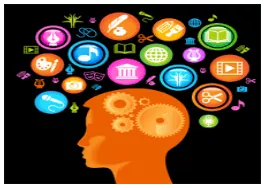
How to be smarter than your brain
Left to its own devices, your brain knows zero about neurons; it has no idea where thought comes from. Because the brain knows nothing about itself, neuroscience began by assuming that the brain is the only privileged object in the known universe that is conscious. This assumption is almost never questioned by any neuroscientist because the everyday work in that field consists of tinkering with the brain's biology. All higher questions about mind, psychology, religion, morals, aesthetics and metaphysics are reduced to biology.
Yet in assuming that the brain is a privileged object, neuroscience contradicts itself. Objects are things; things have working parts; the working parts, when fully understood, define the thing you are studying and want to understand. But there is nothing privileged about the brain's working parts. Its basic chemicals are the same as in the rest of the body. The glucose on which neurons feed isn't smarter than the glucose coursing through the bloodstream everywhere else. Nor is there a point, biologically speaking, where you can say, “Here is where all of this physical stuff learned to think.”
The brain's inability to understand the brain is a profound dilemma that isn't solved through biology. But neu roscientists insist that biology holds the key to everything about the mind. In fact, most of them firmly believe that Brain = Mind. The promise that brain biology is sufficient to explain mind, morality, religion, metaphysics, thinking, feeling, creativity, and so on is empty. So how can we become smarter than our brains? If biology is a dead end, what path to understanding will get past biology? The first step is to acknowledge that the brain isn't a privileged object. It isn't the source of the mind any more than a radio is the source of Mozart and Beethoven. The brain, like a radio, is a receiver. The reason the brain doesn't know that it is a receiver ¬ aside from the fact that it doesn't know anything about itself ¬ is that it is too involved in the reception.When thoughts, feelings, sensations, and images fill our minds, we are creatures of experience, enveloped by those experiences. The second step is to clearly define the question: “How do we know what we know?“ The only viable way to begin to find the correct answers is to concede something very basic: All knowledge comes from experience, and all experience is in consciousness.Neuroscience resists such an answer because it goes beyond biology, yet the subject of the brain always did go beyond biology, into philosophy, psychology, and metaphysics. Trying to fence the mind inside the confines of the brain's apparatus was never valid to begin with. The problem of the mind is a human problem, not a neuroscience problem.
All knowledge comes from experience and all experience is in consciousness. Thoughts, memories and our experience of a universe in space-time are all conscious phenomena. If you agree on this, then to truly understand the mind, you must abandon the brain entirely from its privileged position, demoting it to the lump of atoms and molecules that it actually is. You have now freed the mind from any dependence whatsoever on the brain. Mozart lived before the radio and didn't depend upon it to create music. The mind existed before the brain and isn't dependent upon it to create thoughts. Explaining the mind without the brain is unthinkable in the present context of scientists ¬ but it will happen.

Laughter the very essence of religiousness
Apr 02, 2017





Stay updated with The Hindu Editorial Vocab24 app, your definitive source for breaking news and comprehensive coverage from India and around the globe. Whether it's political developments, business updates, sports highlights, the latest technology trends, or current events, The Hindu brings live, accurate, and reliable news directly to your device.
Don’t fall for sensationalized or fake news shared online. Read and share accurate updates with friends and family through The Hindu Editorial Vocab24 app. Download it today!
News Coverage in The Hindu Editorial Vocab24 App
Breaking News: Receive instant notifications on breaking news stories as they unfold. Stay informed about major events and developments in India and around the world with live blogs, news in shorts videos, and concise articles.
Politics: Get the latest updates on Indian politics, including elections, policy changes, government decisions, and political events that shape the nation.
Business and Economy: Stay ahead in the economic landscape with detailed business news and market analysis. Learn about stock market trends, financial reports, corporate news, and economic developments to make informed investment decisions.
Current Events: Follow stories on social issues, policy changes, global events, and daily current affairs, tailored for UPSC and other competitive exam preparations.
Technology: Keep up with the latest gadgets, innovations, and tech trends. Read expert reviews and analyses in short, concise updates on cutting-edge technology from India and beyond.
Sports: Never miss a moment of your favorite sports. Get live scores, match reports, and expert analysis on cricket, football, tennis, and more.
International News: Stay informed about global events and geopolitical developments, including the Russia-Ukraine war, Israel-Palestine conflict, and other key international stories.
Local News: Stay connected to your community with the latest updates on city events, issues, and local news. Coverage includes hyperlocal updates from cities like Bangalore, Chennai, Delhi, Hyderabad, Mumbai, Kolkata, and more.
Trending Topics: Discover what's trending today with the most talked-about stories and hot topics across India and the world.
Experience journalism that values integrity, accuracy, and reliability. Download The Hindu Editorial Vocab24 app today and stay connected with the world.
Subscribe to our newsletter!







