

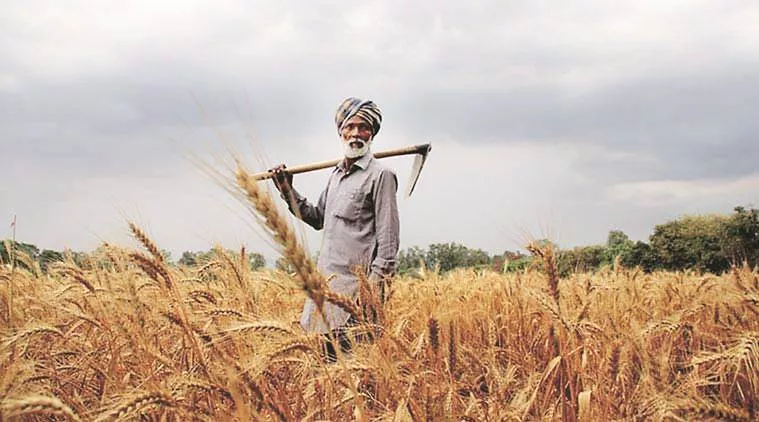
How government can double farmer incomes
Indian agriculture has been relatively untouched by the structural reforms that lifted incomes in other parts of the economy. Low farm productivity meant that governments tried to improve the lot of farmers through price policy. The problem is that engineering a shift in the terms of trade through higher support prices usually leads to generalized inflation—and that is precisely what happened during the tenure of the two governments led by Manmohan Singh.The Narendra Modi government faces a dilemma right now. The collapse of food prices has hurt farmer incomes. Ramesh Chand of the NITI Aayog has estimated that real incomes of farmers have come down by 1.36% a year over the past five years. Pushing up prices could endanger the recent macroeconomic stability—but no democratic government can ignore the obvious pain in rural areas. This is why the focus has to shift to reforms that lift farm productivity.
A recent report by the Ashok Dalwai committee on doubling farmers’ incomes thus deserves attention. The solutions can be categorized into four broad areas: land, access to markets, increase in productivity and diversification towards high-yield crops and non-farm activities.
Starting with land, it is well known that land holdings in India are small and fragmented, 86% of them being smaller than 2 hectares. Holdings are too small for the use of modern implements, farmers have to rely on informal sources of lending and are subject to the vagaries of the weather and volatile prices for their produce. Small farmers, who are already very poor, are forced to bear more risk than they would like.
At the same time, various studies reveal that at any time, 5-10% of the arable land is left fallow because the adverse possession laws discourage leasing. Even when they are leased out, it is usually an oral lease that does not give the lessee legal protection, preventing him from accessing formal credit and discouraging investment in the farm.
The Union government has framed the model agricultural land lease law, 2016 and the draft model contract farming law, 2018 to mitigate these problems by allowing absentee landowners to lease out land without fear of losing title. Similarly, contract farming should help farmers as the sponsoring companies can shield them from their post-harvest anxiety about prices, while farmers can benefit from pooled purchases of inputs at affordable prices and access to machinery and knowledge provided by the sponsoring company.
The key point is that farmers do not have to be experts at growing crops and predicting prices. They should be free to take on either, neither or both of these roles. Indeed, just 1.2% of rural youth aspire to work in agriculture, according to the 2017 Annual Survey of Education Report (Aser) by Pratham. Apart from the limited employment opportunities outside farming, the restrictions on leasing and selling arable land make it difficult for farmers to exit agriculture.
Coming to access to markets, agricultural produce market committees (APMCs) have perpetuated monopolistic intermediaries. The Ashok Dalwai committee notes that farmers’ share in the market price is low, and generally varies from 15-40%. Given the resistance to the model APMC law of 2003, the Union government has introduced a model agricultural produce and livestock marketing (APLM) law, 2017 that is intended to replace the existing APMC Act, and allow a single market within a state, freeing farmers to trade at private wholesale markets, allowing them to sell directly to bulk buyers, and promoting trading on the electronic national agriculture market (eNAM).
Even the international trade policy is used to favour consumers. When prices increase, import tariffs are reduced in order to increase supply while the minimum export price is used to restrict or ban the export of a commodity in reaction to its rising prices for the consumer. These short-term adjustments in tariffs disrupt any planning or relationship building in international trade, adding to the already existing risks and uncertainties. The committee’s report bats for a stable trade regime, structured on predetermined signals that will allow stakeholders to predict the change in policy with the crop forecasts.
Third, productivity of crops in India is low compared to global standards and there is large variation across states, primarily explained by access to irrigation facilities and adoption of improved technology. The per-hectare productivity for all crops in irrigated regions is Rs56, 510, compared to Rs35,352 for rain-fed areas.
For marginal farmers, raising productivity is likely the single most important factor if incomes of this group are to be doubled. This requires public investment in irrigation, seeds, fertilizers and other technology. However, successive governments have preferred to give subsidies rather than invest in rural infrastructure.
Finally, diversification is crucial if farmers’ incomes have to increase. This is because the average productivity of high-value crops, like vegetables and fruits, is more than Rs1.4 lakh per hectare, compared to Rs40,000 for staple crops.
Most of the above reforms are the domain of state governments which often protect the interests of large farmers. NITI Aayog has argued for bringing agriculture into the concurrent list so that the Union government can ensure a national market for agricultural products—that may not be a bad idea.
Courtesy : Livemint Editorial


The non trivial costs of a slow judiciary
Jan 31, 2018
Very important the economic survey an overview
Jan 30, 2018
The conflict between equity and efficiency
Jan 29, 2018
Judicial primacy is not the same as exclusivity
Jan 25, 2018
Global monetary policy enters a decisive phase
Jan 25, 2018





Stay updated with The Hindu Editorial Vocab24 app, your definitive source for breaking news and comprehensive coverage from India and around the globe. Whether it's political developments, business updates, sports highlights, the latest technology trends, or current events, The Hindu brings live, accurate, and reliable news directly to your device.
Don’t fall for sensationalized or fake news shared online. Read and share accurate updates with friends and family through The Hindu Editorial Vocab24 app. Download it today!
News Coverage in The Hindu Editorial Vocab24 App
Breaking News: Receive instant notifications on breaking news stories as they unfold. Stay informed about major events and developments in India and around the world with live blogs, news in shorts videos, and concise articles.
Politics: Get the latest updates on Indian politics, including elections, policy changes, government decisions, and political events that shape the nation.
Business and Economy: Stay ahead in the economic landscape with detailed business news and market analysis. Learn about stock market trends, financial reports, corporate news, and economic developments to make informed investment decisions.
Current Events: Follow stories on social issues, policy changes, global events, and daily current affairs, tailored for UPSC and other competitive exam preparations.
Technology: Keep up with the latest gadgets, innovations, and tech trends. Read expert reviews and analyses in short, concise updates on cutting-edge technology from India and beyond.
Sports: Never miss a moment of your favorite sports. Get live scores, match reports, and expert analysis on cricket, football, tennis, and more.
International News: Stay informed about global events and geopolitical developments, including the Russia-Ukraine war, Israel-Palestine conflict, and other key international stories.
Local News: Stay connected to your community with the latest updates on city events, issues, and local news. Coverage includes hyperlocal updates from cities like Bangalore, Chennai, Delhi, Hyderabad, Mumbai, Kolkata, and more.
Trending Topics: Discover what's trending today with the most talked-about stories and hot topics across India and the world.
Experience journalism that values integrity, accuracy, and reliability. Download The Hindu Editorial Vocab24 app today and stay connected with the world.
Subscribe to our newsletter!







