

How film criticism differs from ‘reviewing’ a movie and how relevant it is today
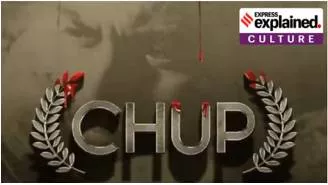
Acclaimed director R Balki’s latest film Chup (2022), which has received mixed reviews, is a commentary on the nature of art, specifically films, and the relationship art shares with its ‘criticism’.The film revolves around a serial killer who exclusively targets film critics, and a cop who is on the killer’s trail. More than just a thriller, the film also tries to take a deeper look at the question of whether a negative review can ‘kill’ a film.
This month, the Tamil Nadu Film Producers Council (TFPC) urged film reviewers to publish negative reviews three days after the film’s release. The Council also asked theatre owners to not allow YouTubers to shoot film reviews inside their premises.
‘Any film has only a three-day window to make a difference at the box office,’ said Dhananjeyan, producer of films like Kaatrin Mozhi and Mr Chandramouli and member of the Council. He added, ‘Even Bollywood star Akshay Kumar has made a similar request before. If there is a bad film, why the urgency to release a negative review? The film will…anyway fail. Why kill it even more?’
The discussions around Chup and the TFPC’s request have brought the spotlight once again on what exactly film criticism and movie reviews are supposed to do, and what is the need for them in the first place. We explain.
What is film criticism?
Film criticism, like criticism of other art forms, is concerned with the analysis and evaluation of cinema. It involves interpretation, a deeper understanding of the context of the film, and a connection to the history of the medium itself.
In his essay ‘The Psychology of the Critic and Psychological Criticism’ (1962), academic Philip Weissman wrote that the critic is ‘minimally required to be a connoisseur’, but ‘the step from connoisseur to critic implies the progression from knowledge to judgement.’
How is a film critique different from a review?
Shubhra Gupta, veteran film critic with The Indian Express, says that the major difference between a film critic and a reviewer is that a critic ‘has in his/her head an arc— he/she has watched the industry grow in a certain way, and is aware of the atmosphere around us. He/she is aware that a piece of art is not created in isolation.
’ One way to understand the difference is to see reviews as more consumer-driven, where the focus is to tell the audience whether or not a film is worth watching. A proper critique leans more towards a comprehensive understanding of the film in a non-fragmentary manner, and is not concerned so much with telling the audience what to watch and what to avoid, but to place it in the proper context of the ecosystem that it has come out of.
To put simply, if someone only reviews films, they are not necessarily critics; however, critics do review films and add more analytical nuances to an audience’s understanding of a film, or even the history of films. ‘I expect a good critic to have knowledge of all art forms, and to be aware of socio-political developments in society,’ Gupta says. She adds, ‘Knowledge has to be knit into the review without being patronising.’
Can critics really ‘kill’ a film?
One of the biggest complaints against film critics is that their unfavourable reviews often discourage audiences from watching the film, resulting in low box office collections and low profits. With the prevalence of social media in every sphere of life, negative reviews also translate into constant trolling and bashing on platforms like Facebook, Twitter, Reddit, Instagram, etc.
However, in a country like India, where star power is seen as a major pull even today, negative reviews alone cannot sink a film. While it is true that the superstar culture seems to be waning, there are many examples of films powering through despite receiving a bad critical response, on the strength of their leading stars alone.
Anees Bazmee’s Bhool Bhulaiyaa 2 emerged as one of Bollywood’s biggest commercial successes this year, despite receiving unenthusiastic reviews. A lot of its success is being attributed to its leading man, Kartik Aaryan, and the fanbase that he has built for himself over the years. Similarly, the Tamil film Beast, which starred Kollywood superstar ‘Thalapathy’ Vijay, managed to do great business at the box office despite reviews criticising its storyline.
Gupta says that there are no easy answers to the question of critics and reviewers ‘killing’ a film. ‘If you had asked me earlier, my answer would have been an unequivocal no,’ she says. ‘But so much has changed in the last 2-3 years… film reviewing now has a lot to do with agendas beyond the film itself. Trolling, particularly the kind that has a particular agenda, and questions of nepotism and boycotting Bollywood are now much more prominent.’
Anyone following the film industry closely would have heard many people involved in it saying that if someone knew the formula to make a successful film, every film would be a hit. What this means, essentially, is that there is no predictability about the success or failure of a particular film. ‘How successful a film will be is pure alchemy,’ says Gupta, adding that there is no way to foresee how a film will capture the cultural zeitgeist (‘zeitgeist’ refers to the defining spirit or mood of a specific period in history) and resonate with audiences.
‘With some films,’ she says, ‘It seems like we were just waiting for them to come. One of the last examples that I can think of is Rang De Basanti (2006).’
What is the role of a professional film critic today, when the Internet provides a space for everyone to come and leave their review?
One important feature of film criticism, which differentiates it from reviewing, is that it implies a certain degree of objectivity. Of course, it is impossible to leave one’s biases completely at home while consuming art, but the very nature of analysing and contextualising a film makes a critique more objective than a review, whose thrust is to recommend or reject a film.
For example, it probably won’t matter to a good critic where the film is coming from, be it the biggest production house or a new venture.
‘Critics are important for films that need a bit of a push,’ says Gupta. ‘That’s what our job is, to cut the clutter, and bring out films that otherwise would not have too much exposure.’












Stay updated with The Hindu Editorial Vocab24 app, your definitive source for breaking news and comprehensive coverage from India and around the globe. Whether it's political developments, business updates, sports highlights, the latest technology trends, or current events, The Hindu brings live, accurate, and reliable news directly to your device.
Don’t fall for sensationalized or fake news shared online. Read and share accurate updates with friends and family through The Hindu Editorial Vocab24 app. Download it today!
News Coverage in The Hindu Editorial Vocab24 App
Breaking News: Receive instant notifications on breaking news stories as they unfold. Stay informed about major events and developments in India and around the world with live blogs, news in shorts videos, and concise articles.
Politics: Get the latest updates on Indian politics, including elections, policy changes, government decisions, and political events that shape the nation.
Business and Economy: Stay ahead in the economic landscape with detailed business news and market analysis. Learn about stock market trends, financial reports, corporate news, and economic developments to make informed investment decisions.
Current Events: Follow stories on social issues, policy changes, global events, and daily current affairs, tailored for UPSC and other competitive exam preparations.
Technology: Keep up with the latest gadgets, innovations, and tech trends. Read expert reviews and analyses in short, concise updates on cutting-edge technology from India and beyond.
Sports: Never miss a moment of your favorite sports. Get live scores, match reports, and expert analysis on cricket, football, tennis, and more.
International News: Stay informed about global events and geopolitical developments, including the Russia-Ukraine war, Israel-Palestine conflict, and other key international stories.
Local News: Stay connected to your community with the latest updates on city events, issues, and local news. Coverage includes hyperlocal updates from cities like Bangalore, Chennai, Delhi, Hyderabad, Mumbai, Kolkata, and more.
Trending Topics: Discover what's trending today with the most talked-about stories and hot topics across India and the world.
Experience journalism that values integrity, accuracy, and reliability. Download The Hindu Editorial Vocab24 app today and stay connected with the world.
Subscribe to our newsletter!







