

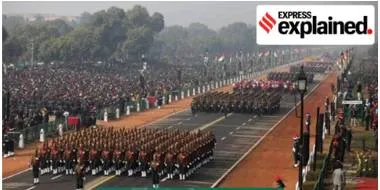
How are india’s republic day chief guests chosen
As Egypt president al-Sisi becomes the first Republic Day Chief Guest after a two-year pandemic-induced hiatus, Indian Express looks at how India chooses its Republic Day chief guests.Who is al-Sisi?
The Chief Guest for the 2023 Republic Day parade, Abdeh Fatah al-Sisi was Egypt’s military chief and defence minister before he took over control from democratically elected Md Morsi after a coup in 2013. He went on to win a subsequent election in 2014 on an economic development plank. His presidency has thus far received mixed responses with critics pointing at Egypt’s current economic distress and violent stifling of opposition voices as causes for concern. When he arrives in January next year, al-Sisi will be the first Egyptian leader to grace the occasion.
Why is being the Chief Guest at India’s Republic Day such a great honour?
While similar to any other state visit by a foreign high dignitary, given the grandiosity and importance of the ceremony involved for India, it is the highest honour that the country accords to a guest in terms of protocol.
The Chief Guest is front and centre in many ceremonial activities which have over time become a part of the fabric of the event and the run-up to it. They are given the ceremonial guard of honour at Rashtrapati Bhavan followed by a reception hosted by the President of India in the evening. They also lay a wreath at Rajghat, to honour Mahatma Gandhi. There is a banquet in their honour, a lunch hosted by the Prime Minister, and calls by the Vice-President and the External Affairs Minister.
Ambassador Manbir Singh, a former Indian Foreign Service officer who served as Chief of Protocol between 1999 and 2002, said that the visit of the Chief Guest is full of symbolism — ‘it portrays the Chief Guest as participating in India’s pride and happiness, and reflects the friendship between the two peoples represented by the President of India and the Chief Guest’. This symbolism becomes a powerful tool to forge and renew ties between India and the nation of its invitee, having greater political and diplomatic significance as well.
How is the Chief Guest chosen?
There is a lot of thought that goes behind the selection of the Chief Guest of the Republic Day parade, with the process commencing nearly six months in advance of the event. Ambassador Manbir Singh had earlier told The Indian Express, all kinds of considerations are taken into account by the Ministry of External Affairs (MEA) before extending the invitation.
The most central consideration is the nature of the relationship between India and the country concerned. Invitation to be the Chief Guest of the Republic Day parade is the ultimate sign of friendship between India and the country of the invitee. Political, commercial, military and economic interests of India are crucial drivers of the decision, with MEA seeking to use the occasion to strengthen ties with the country of the invitee in all these respects.
Another factor that has historically played a role in the choice of the Chief Guest is the association with the Non-Aligned Movement (NAM) which began in the late 1950s, early 1960s. The NAM was an international political movement of newly decolonised nations to stay out of the squabbles of the Cold War and support each other in their nation-building journeys. The first Chief Guest of the parade in 1950 was President Sukarno of Indonesia, one of the five founding members of the NAM alongside Nasser (Egypt), Nkrumah (Ghana), Tito (Yugoslavia) and Nehru (India).
Al-Sisi’s invitation invokes the history of the NAM and the close relationship India and Egypt have shared for 75 years.
What happens after the MEA has zeroed in on its options?
After due consideration, the MEA seeks approval of the Prime Minister and the President on the matter. If the MEA receives clearance to proceed, it then gets to work. Indian ambassadors in the concerned country try to discreetly ascertain the availability of the potential Chief Guest. This is crucial as it is not uncommon for heads of state to have packed schedules and unavoidable prior commitments. This is also a reason why the MEA does not just choose one option but a list of potential candidates. Discretion is of utmost importance as no formal invitation has yet been made by India.
After this process is completed and a candidate is finalised, more official communication between India and the country of the invitee follows. Territorial divisions in the MEA work towards meaningful talks and agreements. The Chief of Protocol works on the details of the programme and logistics. A detailed programme for the trip and the Republic Day ceremonies is shared by the Protocol Chief to his counterpart from the visiting nation. This programme has to be followed with military precision.
The planning of the visit involves the Government of India, state governments which the foreign dignitary might visit, and the government of the concerned country.
Can things go wrong during the visit?
Like any other visit by a high foreign dignitary, there are many moving parts involved during the visit of the Republic Day Chief Guest. Due to this, there is always the possibility of things not going to plan, something that the organisers have to prepare for beforehand. Health issues with the VIP can cause delays. Untimely rain can play spoilsport. Organisers prepare and rehearse contingencies for all kinds of situations so that on the big day, things go smoothly.
However, on rare occasions, complications do arise. Writing for the Indian Express, Ambassador Singh recounted an incident where the ADC of the Republic Day Chief Guest attempted to accompany the Chief Guest for the inspection of the guard of honour. ‘But in our practice, only the commander of the Tri-Services Guard accompanies the visitor, and the insistent ADC had to be physically restrained by officials present at the spot.’
The big picture on the Chief Guest’s visit
Ambassador Singh points out that the Chief Guest for Republic Day is decided on the basis of other countries’ interest and the Guest’s availability — and the natural corollary therefore, is that the visitor should be happy and satisfied with the visit, and that the visit is comfortable.
India is mindful that the media party accompanying the Guest would be reporting in their country on every aspect of the visit. To foster and further grow good relations, it is necessary that the guest’s nation perceives the visit as having been successful, and that their Head of State has been shown all courtesies and given due honour.
In the modern world, visual coverage is of great importance, and the programmes and protocol keep this in view, Ambassador Singh pointed out. He noted that the various Chief Guests and their Ambassadors in New Delhi have been profuse in their praise for India’s ceremonies and the protocol it accords. India’s hospitality reflects its traditions, culture, and history.
The Chief Guest of the Republic day is a ceremonial honour presented to the head of state oc a country but its significance rises beyond purely the ceremonial. Such a visit can open new possibilities and go a long way in furthering India’s interests in the world.
A list of Republic Day Chief Guests
The list includes an impressive list of world leaders, and reflects both India’s foreign policy priorities and the way the world has perceived it over the decades.
1950: President Sukarno, Indonesia
1951: King Tribhuvan Bir Bikram Shah, Nepal
1952 and 1953: No Chief Guest
1954: King Jigme Dorji Wangchuck, Bhutan
1955: Governor General Malik Ghulam Muhammad, Pakistan
1956: Two guests: Chancellor of the Exchequer Rab Butler, United Kingdom; Chief Justice Kotaro Tanaka, Japan
1957: Minister of Defence Georgy Zhukov, Soviet Union
1958: Marshal Ye Jianying, China
1959: Duke of Edinburgh Prince Philip, United Kingdom
1960: Chairman Kliment Voroshilov, Soviet Union
1961: Queen Elizabeth II, United Kingdom
1962: Prime Minister Viggo Kampmann, Denmark
1963: King Norodom Sihanouk, Cambodia
1964: Chief of Defence Staff Lord Louis Mountbatten, United Kingdom
1965: Food and Agriculture Minister Rana Abdul Hamid, Pakistan
1966: No Chief Guest
1967: King Mohammed Zahir Shah, Afghanistan
1968: Two guests: Chairman Alexei Kosygin, Soviet Union; President Josip Broz Tito, Yugoslavia
1969: Prime Minister Todor Zhivkov, Bulgaria
1970: King Baudouin, Belgium
1971: President Julius Nyerere, Tanzania
1972: Prime Minister Seewoosagur Ramgoolam, Mauritius
1973: President Mobutu Sese Seko, Zaire
1974: Two guests: President Josip Broz Tito, Yugoslavia; Prime Minister Sirimavo Bandaranaike, Sri Lanka
1975: President Kenneth Kaunda, Zambia
1976: Prime Minister Jacques Chirac, France
1977: First Secretary Edward Gierek, Poland
1978: President Patrick Hillery, Ireland
1979: Prime Minister Malcolm Fraser, Australia
1980: President Valéry Giscard d’Estaing, France
1981: President Jose Lopez Portillo, Mexico
1982: King Juan Carlos I, Spain
1983: President Shehu Shagari, Nigeria
1984: King Jigme Singye Wangchuck, Bhutan
1985: President Raúl Alfonsín, Argentina
1986: Prime Minister Andreas Papandreou, Greece
1987: President Alan Garcia, Peru
1988: President J. R. Jayewardene, Sri Lanka
1989: General Secretary Nguyen Van Linh, Vietnam
1990: Prime Minister Anerood Jugnauth, Mauritius
1991: President Maumoon Abdul Gayoom, Maldives
1992: President Mário Soares, Portugal
1993: Prime Minister John Major, United Kingdom
1994: Prime Minister Goh Chok Tong, Singapore
1995: President Nelson Mandela, South Africa
1996: President Fernando Henrique Cardoso, Brazil
1997: Prime Minister Basdeo Panday, Trinidad and Tobago
1998: President Jacques Chirac, France
1999: King Birendra Bir Bikram Shah, Nepal
2000: President Olusegun Obasanjo, Nigeria
2001: President Abdelaziz Bouteflika, Algeria
2002: President Cassam Uteem, Mauritius
2003: President Mohammed Khatami, Iran
2004: President Luiz Inácio Lula da Silva, Brazil
2005: King Jigme Singye Wangchuck, Bhutan
2006: King Abdullah bin Abdulaziz al-Saud, Saudi Arabia
2007: President Vladimir Putin, Russia
2008: President Nicolas Sarkozy, France
2009: President Nursultan Nazarbayev, Kazakhstan
2010: President Lee Myung Bak, South Korea
2011: President Susilo Bambang Yudhoyono, Indonesia
2012: Prime Minister Yingluck Shinawatra, Thailand
2013: King Jigme Khesar Namgyel Wangchuck, Bhutan
2014: Prime Minister Shinzo Abe, Japan
2015: President Barack Obama, United States
2016: President François Hollande, France
2017: Crown Prince Mohammed bin Zayed Al Nahyan, United Arab Emirates
2018: Ten Chief Guests, Heads of ASEAN States: Sultan Hassanal Bolkiah, Brunei Prime Minister Hun Sen, Cambodia President Joko Widodo, Indonesia Prime Minister Thongloun Sisoulith, Laos Prime Minister Najib Razak, Malaysia State Counsellor Aung San Suu Kyi, Myanmar President Rodrigo Duterte, Philippines Prime Minister Lee Hsien Loong, Singapore Prime Minister Prayut Chan-o-cha, Thailand Prime Minister Nguy?n Xuân Phúc, Vietnam
2019: President Cyril Ramaphosa, South Africa
2020: President Jair Bolsonaro, Brazil
2023*: President Abdeh Fatah Al-Sisi










Stay updated with The Hindu Editorial Vocab24 app, your definitive source for breaking news and comprehensive coverage from India and around the globe. Whether it's political developments, business updates, sports highlights, the latest technology trends, or current events, The Hindu brings live, accurate, and reliable news directly to your device.
Don’t fall for sensationalized or fake news shared online. Read and share accurate updates with friends and family through The Hindu Editorial Vocab24 app. Download it today!
News Coverage in The Hindu Editorial Vocab24 App
Breaking News: Receive instant notifications on breaking news stories as they unfold. Stay informed about major events and developments in India and around the world with live blogs, news in shorts videos, and concise articles.
Politics: Get the latest updates on Indian politics, including elections, policy changes, government decisions, and political events that shape the nation.
Business and Economy: Stay ahead in the economic landscape with detailed business news and market analysis. Learn about stock market trends, financial reports, corporate news, and economic developments to make informed investment decisions.
Current Events: Follow stories on social issues, policy changes, global events, and daily current affairs, tailored for UPSC and other competitive exam preparations.
Technology: Keep up with the latest gadgets, innovations, and tech trends. Read expert reviews and analyses in short, concise updates on cutting-edge technology from India and beyond.
Sports: Never miss a moment of your favorite sports. Get live scores, match reports, and expert analysis on cricket, football, tennis, and more.
International News: Stay informed about global events and geopolitical developments, including the Russia-Ukraine war, Israel-Palestine conflict, and other key international stories.
Local News: Stay connected to your community with the latest updates on city events, issues, and local news. Coverage includes hyperlocal updates from cities like Bangalore, Chennai, Delhi, Hyderabad, Mumbai, Kolkata, and more.
Trending Topics: Discover what's trending today with the most talked-about stories and hot topics across India and the world.
Experience journalism that values integrity, accuracy, and reliability. Download The Hindu Editorial Vocab24 app today and stay connected with the world.
Subscribe to our newsletter!







