

Heading towards strategic instability
India must be alert as there is a possibility of emerging disruptive technologies prompting inadvertent conflict.In late 2018, the government decided to set up three new agencies — the Defence Cyber Agency, the Defence Space Agency and the Special Operations Division — in order to address the new age challenges to national security. While this is indeed a useful step in the right direction, it is also important to note that the constitution of these agencies is a far cry from the crucial recommendations given by the Naresh Chandra Task Force and the Chiefs of Staff Committee, both of which had suggested the formation of three separate joint commands to deal with new challenges to India’s national security in the cyber, space and special operations domains.
This rather lacklustre response to major ‘futuristic’ challenges to our national security raises a larger question: is India adequately prepared for the new age wars in general or is it still preparing for the last war it fought, and won?
High-tech innovations
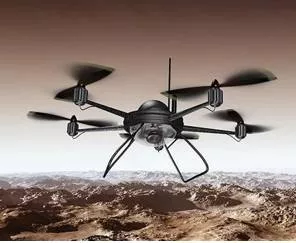
There is a revolution in military affairs that seems to have attracted the attention of strategic analysts and policy planners across the world. The current focus in military thinking across the world is increasingly moving away from traditional heavy-duty military hardware to high-tech innovations such as artificial intelligence (AI), big data analytics, satellite jammers, hypersonic strike technology, advanced cyber capabilities and spectrum denial and high-energy lasers. In the light of the unprecedented capabilities that these systems offer, there is also an increased focus on developing suitable command and control as well as doctrinal concepts to accommodate and calibrate them.
The arrival of these technologies might deeply frustrate strategic stability as we know it given their disruptive nature. Strategic stability in the contemporary international system, especially among the nuclear weapon states, depends on several age-old certainties, the most important being the issue of survivability of a state’s nuclear arsenal and its ability to carry out a second strike after a first attack. Once accuracies get better, hypersonic glide vehicles replace conventional delivery systems, real time tracking and surveillance make major strides, and AI-enabled systems take over, survivability of nuclear arsenal, which lies at the heart of great power stability, could take a severe beating. There was, for instance, an assumption that the naval leg of a nuclear triad is the most survivable part since it is hidden away in the depths of the ocean away from the adversary’s gaze. However, the potential ability of deep-sea drones to detect ballistic-missile armed nuclear submarines or SSBNs may make this assurance a thing of the past thereby frustrating traditional calculations.
Now add the arrival of these new technologies to the emerging strategic competition among great powers. The U.S.’s withdrawal from the Intermediate-Range Nuclear Forces treaty is perhaps an indication of a potential arms race in the offing. In a January 2018 article, the Economist put it succinctly: “Disruptive new technologies, worsening relations between Russia and America and a less cautious Russian leadership than in the cold war have raised fears that a new era of strategic instability may be approaching.”
Fears of conflict
There is an inherent paradox vis-à-vis high technology-enabled military systems. While on the one hand, it is imperative for states to redesign their systems in the light of these new technologies, especially the digital and cyber components, this also makes the cyber- and digital-enabled systems vulnerable to covert cyberattacks. More so, given that such surreptitious attacks might take place in the early stages of a conflict, ensuing confusion and scare might lead to uncontrolled escalation with little time for assessment and judgement.
The biggest fear about these technologies, the implications of which we don’t fully understand yet, is their potential to increase the risks of intentional and inadvertent nuclear use. Such scenarios may be unlikely but not improbable. Here’s what the Economist had to say on precisely such a scenario: “Both China and Russia fear that new American long-range non-nuclear strike capabilities could be used to deliver a disarming attack on a substantial part of their strategic forces or decapitate their nuclear command and control. Although they would still launch their surviving nuclear missiles, improved missile-defence systems of the U.S. would mop up most of the remainder before their warheads could do any damage.”
The fear of a bolt-from-the-blue attack against one’s command and control systems or a disabling strike against strategic arsenal using new technological solutions is likely to dominate the strategic mindspace of great powers in the days ahead, thereby further deepening mistrust and creating instability. Therefore, the possibility of emerging military technologies prompting inadvertent escalation and conflict cannot and should not be ruled out.
Chinese capabilities
China has emerged as a key actor in the field of emerging military technologies. This is something that will concern New Delhi in the days ahead. Some analysts believe that Beijing is in the lead position in emerging technologies with potential military applications such as quantum computing, 3D printing, hypersonic missiles and AI. If indeed, Beijing continues to develop hypersonic systems, for instance, it could potentially target a range of targets in the U.S. While the Chinese focus is evidently on U.S. capabilities, which China interprets as a potential threat, this is not without latent concerns for New Delhi. India might, in turn, consider developing some of these technologies which will create dilemmas for Islamabad. The cascading strategic competition then looks unavoidable at this point, and that is worrisome. And yet, it might be difficult to avoid some of these developments given their dual use.
However, there is a need to ask how survivable India’s naval platforms are given the feverish developments of advanced sensory capability in the neighbourhood. Is it sufficiently prepared to face the new age wars? Has the urgency associated with these technological developments dawned on the security planners in New Delhi?
It is in this context that we must revisit the government’s decision to set up the agencies to address cyber and space challenges. Clearly, this is a timely effort from the government to have finally decided to set them up — though they are not yet in place. It is unfortunate that unlike what was envisioned earlier, these agencies will be reduced in their powers and their standing in the pecking order of defence planning in the country. Moreover, reports indicate that the Space Command will be headed by the Air Force, the Army will head the Special Operations Command, and the Navy will be given the responsibility of the Cyber Command. If indeed that happens, their effectiveness in terms of tri-service synergy will be much less than anticipated. Even more so, given that the higher defence decision-making in the country is still civil services-dominated, despite the recent attempts to correct it, the effectiveness of these agencies will remain weak.




Top court quashes FIRs against Gen Z protesters
Sep 04, 2026







Stay updated with The Hindu Editorial Vocab24 app, your definitive source for breaking news and comprehensive coverage from India and around the globe. Whether it's political developments, business updates, sports highlights, the latest technology trends, or current events, The Hindu brings live, accurate, and reliable news directly to your device.
Don’t fall for sensationalized or fake news shared online. Read and share accurate updates with friends and family through The Hindu Editorial Vocab24 app. Download it today!
News Coverage in The Hindu Editorial Vocab24 App
Breaking News: Receive instant notifications on breaking news stories as they unfold. Stay informed about major events and developments in India and around the world with live blogs, news in shorts videos, and concise articles.
Politics: Get the latest updates on Indian politics, including elections, policy changes, government decisions, and political events that shape the nation.
Business and Economy: Stay ahead in the economic landscape with detailed business news and market analysis. Learn about stock market trends, financial reports, corporate news, and economic developments to make informed investment decisions.
Current Events: Follow stories on social issues, policy changes, global events, and daily current affairs, tailored for UPSC and other competitive exam preparations.
Technology: Keep up with the latest gadgets, innovations, and tech trends. Read expert reviews and analyses in short, concise updates on cutting-edge technology from India and beyond.
Sports: Never miss a moment of your favorite sports. Get live scores, match reports, and expert analysis on cricket, football, tennis, and more.
International News: Stay informed about global events and geopolitical developments, including the Russia-Ukraine war, Israel-Palestine conflict, and other key international stories.
Local News: Stay connected to your community with the latest updates on city events, issues, and local news. Coverage includes hyperlocal updates from cities like Bangalore, Chennai, Delhi, Hyderabad, Mumbai, Kolkata, and more.
Trending Topics: Discover what's trending today with the most talked-about stories and hot topics across India and the world.
Experience journalism that values integrity, accuracy, and reliability. Download The Hindu Editorial Vocab24 app today and stay connected with the world.
Subscribe to our newsletter!







