

Hard truths about india’s labour reforms
The paradigm driving employment and labour policies needs to change for better-quality livelihoods, now and ahead.Independent India was born at the midnight hour on August 15, 1947, 75 years ago, when India’s first Prime Minister Jawaharlal Nehru unfurled the country’s tricolour flag and announced to Parliament that India had made a “tryst with destiny”. India had won its independence after a long, remarkably peaceful struggle for freedom, led by Mahatma Gandhi.
Gandhi had a vision of a country not divided into fragments by religious and communal walls. He envisioned a country in which all Indians, whether rich or poor, would hold their heads high in dignity. India’s “tryst with destiny” was to provide “ poorna swaraj” (i.e., full freedom) to all its citizens: political freedom, social freedom, and economic freedom.
The country’s faultlines
The country’s democratic Constitution created the world’s largest democracy. Sadly, 75 years later, political liberties and freedoms of speech are being curbed in India. Social equality amongst castes has not been achieved. Lower caste citizens continue to live in great indignity. Lower caste poor women live in abject poverty in India’s villages. They are among the most oppressed humans on the planet.
While the numbers of Indian billionaires increased during the COVID-19 pandemic, hundreds of millions of Indians lost their incomes when the country locked down during the pandemic. They struggled to find shelter, food, and even drinking water for their families.
India’s gravest socio-economic problem is the difficulty a vast majority of citizens have in earning good livelihoods. Their problem is not just employment. It is the poor quality of employment: insufficient and uncertain incomes, and poor working conditions, wherever they are employed — in factories, farms, service establishments, or homes.
The dominant ‘theory-in-use’ to increase employment is to improve the ease of doing business, with the expectation that investments in businesses will improve citizens’ ease of earning good livelihoods. In this theory, large and formal enterprises create good jobs, and labour laws must be ‘flexible” to attract investments. Investors say the laws protect labour too much. Reforms were begun by the United Progressive Alliance government. Their principal thrust was to improve administration by simplifying procedures and digitisation. Those improvements were appreciated by employers as well as workers. However, they did not make the labour laws more employer friendly. Therefore, the National Democratic Alliance government became bolder in 2014 and moved to reform the content of the laws.
Impact of reforms
The Government designed a framework for reforms and, since labour is a concurrent subject, it encouraged States to implement changes. First off the blocks was Rajasthan. Other States followed. Economic reforms are a process of learning. The V.V. Giri National Labour Institute’s interim report, “Impact Assessment Study of the Labour Reforms undertaken by the States”, provides insights into the impacts of the reforms so far. Labour laws cover many subjects — payment of wages, safety conditions, social security, terms of employment, and dispute resolution. The proposed national reforms the Government is gearing up to make shortly are the conversion of all these laws into four codes. The report has focused on the reform of the Industrial Disputes Act, which is to raise the limits of applicability of laws relating to terms of service and modes of dispute resolution (roles of unions) to 300 people.
The shaky foundation of the labour law reforms
The report spans the period 2004-05 to 2018-19. It focuses on six States which have implemented reforms: Rajasthan, Maharashtra, Andhra Pradesh, Tamil Nadu, Jharkhand, and Uttar Pradesh. The report reminds readers that labour laws are only one factor affecting business investment decisions. Investors do not go out to hire people just because it has become easy to fire them. An enterprise must have a growing market for its products, and many things must be put together to produce for the market — capital, machinery, materials, land, etc. not just labour. Therefore, it must be worthwhile to employ more people before firing them.
What is clear
Reading through the report, one conclusion is unmistakable. Reforms of labour laws have had little effect on increasing employment in large enterprises. The report says that the effects of labour reforms cannot be revealed immediately: they will take time. Therefore, it is telling that Rajasthan, the first State to implement the reforms, seems to have benefited the least from them.
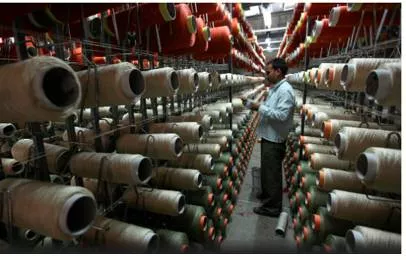
Get these wrinkles out of the South Asian textile story
The overall story is hardly better. The share of employment in plants employing more than 300 people increased from 51.1% to 55.3% between 2010-11 to 2014-15 (the period when the emphasis was on administrative reforms), and then increased less, from 55.3% to 56.3%, in 2017-18, when some States made the bolder reforms favourable for employers. Though overall employment is affected by many factors, the bolder reforms post 2014 were designed to promote larger factories.
This hardly happened because labour reforms that increase the threshold of application of the Industrial Disputes Act are conceptually flawed. They cannot induce creation of large enterprises to whom the laws will continue to apply. In fact, the report says, employment in formal enterprises is becoming more informal. Large investors can afford to use more capital and are also employing increasing numbers of people on short-term contracts, while perversely demanding more flexibility in laws.
The report defines “formal” employment as the grant of paid leave, a written contract, and some “social security”. An enterprise should not have to employ more than 300 people before it provides these benefits. Along with the right to be heard and dignity at work, these are the minimal “essentials” all employers must provide to all those who work for them, whether in small enterprises or domestic help. Increasing the threshold of the laws dilutes the rights of association and representation of workers in small enterprises.
The question the report leaves unanswered is whether the reforms have benefited workers. After all, the primary purpose of labour laws is to protect the rights of workers, not promote the interests of investors. Surely, the benefits of reforms should be assessed from workers’ perspectives too. It is sad that the report includes a long chapter on the views of employer associations about the benefits of the reforms, and nothing about the views of employees and unions. The employers’ associations say the reforms have been beneficial. The question is, beneficial for whom?
A widening gap
Rising above the analysis of numbers and trends of employment in the report to see the big picture again, the conclusion is clear. The gap between where our economy is and where it needs to be is increasing. As seen in the article by Praveen Chakravarty, “Whose GDP is it anyway?” ( The Hindu, July 27, 2022), between 1980 and 1990, every 1% of GDP growth generated roughly two lakh new jobs; between 1990 to 2000, it decreased to one lakh jobs per per cent growth; and from 2000 to 2010, it fell to half a lakh only. Fundamental reforms are required in the theory of economic growth: more GDP does not automatically produce more incomes at the bottom. And the paradigm driving employment and labour policies must also change to enable the generation of better-quality livelihoods for Indian citizens, now and in the future.
To achieve this, fundamental reform is required in the ways policies are made. If the benefit of reforms is supposed to be the improvement of ease of earning, better livelihoods for all citizens and with more dignity, whether they are farmers, factory workers, or service employees, should they not be listened to most of all, within their enterprises, and in the process of shaping policies?
Arun Maira is a former Member, Planning Commission, and the author of ‘Transforming Capitalism: Improving the World for Everyone’.




Top court quashes FIRs against Gen Z protesters
Sep 04, 2026







Stay updated with The Hindu Editorial Vocab24 app, your definitive source for breaking news and comprehensive coverage from India and around the globe. Whether it's political developments, business updates, sports highlights, the latest technology trends, or current events, The Hindu brings live, accurate, and reliable news directly to your device.
Don’t fall for sensationalized or fake news shared online. Read and share accurate updates with friends and family through The Hindu Editorial Vocab24 app. Download it today!
News Coverage in The Hindu Editorial Vocab24 App
Breaking News: Receive instant notifications on breaking news stories as they unfold. Stay informed about major events and developments in India and around the world with live blogs, news in shorts videos, and concise articles.
Politics: Get the latest updates on Indian politics, including elections, policy changes, government decisions, and political events that shape the nation.
Business and Economy: Stay ahead in the economic landscape with detailed business news and market analysis. Learn about stock market trends, financial reports, corporate news, and economic developments to make informed investment decisions.
Current Events: Follow stories on social issues, policy changes, global events, and daily current affairs, tailored for UPSC and other competitive exam preparations.
Technology: Keep up with the latest gadgets, innovations, and tech trends. Read expert reviews and analyses in short, concise updates on cutting-edge technology from India and beyond.
Sports: Never miss a moment of your favorite sports. Get live scores, match reports, and expert analysis on cricket, football, tennis, and more.
International News: Stay informed about global events and geopolitical developments, including the Russia-Ukraine war, Israel-Palestine conflict, and other key international stories.
Local News: Stay connected to your community with the latest updates on city events, issues, and local news. Coverage includes hyperlocal updates from cities like Bangalore, Chennai, Delhi, Hyderabad, Mumbai, Kolkata, and more.
Trending Topics: Discover what's trending today with the most talked-about stories and hot topics across India and the world.
Experience journalism that values integrity, accuracy, and reliability. Download The Hindu Editorial Vocab24 app today and stay connected with the world.
Subscribe to our newsletter!







