

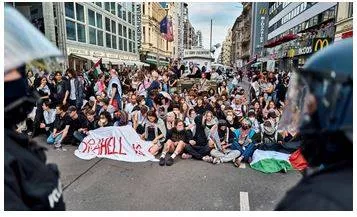
Germany signals policy shift on israel as ‘unjustified’ war on gaza rages on
We cannot supply weapons to a conflict that is being attempted to be resolved exclusively by military means, that can claim hundreds of thousands of lives, says German Chancellor Friedrich Merz; despite criticism of the Israeli government, Germany reaffirms its commitment to ties with Israel.“What the Israeli army is doing in the Gaza Strip, I no longer understand the goal…To harm the civilian population in such a way can no longer be justified as a fight against terrorism,” said German Chancellor Friedrich Merz on May 26. It was the first time since the October 7 attack by Hamas on Israel, that led to the killing of around 1,200 people, that a top German politician had criticised Israeli operations in Gaza. Given Germany’s Second World War history and its historical relations with Israel, this was a noticeable shift in its tone.
The death toll in Gaza is now approaching 62,000. Between May 27 and July 31 this year, over 800 Palestinians have been killed mostly by the Israeli military, while attempting to obtain food as per the United Nations. Human Rights Watch has called this a serious violation of international law and a war crime.
On July 28, Germany announced airlifting humanitarian aid into Gaza with Jordan. As of August 14, Bundeswehr planes had airdropped 192 tonnes of aid via a total of 18 flights.
“It is not very effective, even the German government has acknowledged it. But for the time being, when Israel has blocked all land routes, it is still saving some lives. The larger message being sent is that Germany is ready to invest money to ensure the well-being of Palestinians,” said Dr. Markus Loewe, co-ordinator for research on the Middle East and North Africa at the German Institute of Development and Sustainability (IDOS).
Dr. Muriel Asseburg, Senior Fellow at the German Institute for International and Security Affairs (SWP), calls the airdrops more of a symbolic measure than one to alleviate the situation on the ground in Gaza.
Since October 7, 2023, most Western countries have refrained from criticising the actions of the Israeli government, but the tide seems to have changed over the last few months. Most of the G-7 countries have criticised the Israeli government’s policies, with France, the U.K. and Canada even agreeing to recognise the Palestinian state at the UN General Assembly in September. While Germany has made no such proclamation, it has reiterated its stand on a two-state solution.
‘No more weapons’
On August 8, Mr. Merz announced that Germany would not sell weapons to Israel that could be used in Gaza Strip till further notice. This decision came soon after the Israeli Security Cabinet’s decision to take over Gaza City. Israeli Prime Minister Benjamin Netanyahu claimed it was “the best way to end the war speedily”.
“German policy toward Israel remains unchanged. But we cannot supply weapons to a conflict that is being attempted to be resolved exclusively by military means, that can claim hundreds of thousands of lives,” Mr. Merz said in a TV interview on August 10.
According to Ms. Asseburg, Germany’s critical stance against Israel has been prompted by multiple factors, with the current Israeli government being the most important one.
“The Chancellor and the Foreign Minister have been in close contact with their Israeli counterparts. However, there is a growing sense that these interactions and pleas to address the humanitarian situation and find a way to end the war are not making progress. Using the bilateral relations to change the situation has not worked. Secondly, public opinion in Germany has been demanding a different stance on Israel and Gaza,” Ms. Asseburg said.
As per a recent nationwide Deutschlandtrend survey, 66% of Germans want their government to put more pressure on Israel to change its conduct, 63% believe Israel’s military response has gone too far, and 73% feel Israel’s actions impacting Palestinian civilians are unjustified.
However, Mr. Merz has maintained that his decisions were not influenced by public pressure but prompted more by what he was hearing from experts, including former Israeli intelligence experts who were critical of Israeli government’s decision to conduct military operations in Gaza City.
A recent case in point is Israel’s controversial plan to build 3,400 new settlements in West Bank that was criticised by the Federal Foreign Office.
“The construction of settlements is in violation of international law and of relevant UN Security Council resolutions, making it more difficult to achieve a negotiated two-state solution,” noted a release from the Federal Foreign Office.
Germany-Israel ties
While Germany has been taking an increasingly critical stand against the Israeli government, experts noted that this disagreement will not alter Germany-Israel diplomatic relations. In the TV interview in which Mr, Merz announced the decision to limit weapons delivery to Israel, he also reiterated that the foundational principles of the Israel-Germany relationship have not changed and will remain unchanged.
For Ms. Asseburg, the far-right wing of the Israeli government is the problem.
“The extreme right-wing government in Israel makes it very difficult for Germany to maintain close relations and convincingly balance what is called the historical responsibility towards Israel on the one hand and Germany’s commitment to international law, multi-lateralism and human rights. The contradictions are increasing, making it difficult to maintain the same level of relations that Germany has had with Israel in the past.”






Stay updated with The Hindu Editorial Vocab24 app, your definitive source for breaking news and comprehensive coverage from India and around the globe. Whether it's political developments, business updates, sports highlights, the latest technology trends, or current events, The Hindu brings live, accurate, and reliable news directly to your device.
Don’t fall for sensationalized or fake news shared online. Read and share accurate updates with friends and family through The Hindu Editorial Vocab24 app. Download it today!
News Coverage in The Hindu Editorial Vocab24 App
Breaking News: Receive instant notifications on breaking news stories as they unfold. Stay informed about major events and developments in India and around the world with live blogs, news in shorts videos, and concise articles.
Politics: Get the latest updates on Indian politics, including elections, policy changes, government decisions, and political events that shape the nation.
Business and Economy: Stay ahead in the economic landscape with detailed business news and market analysis. Learn about stock market trends, financial reports, corporate news, and economic developments to make informed investment decisions.
Current Events: Follow stories on social issues, policy changes, global events, and daily current affairs, tailored for UPSC and other competitive exam preparations.
Technology: Keep up with the latest gadgets, innovations, and tech trends. Read expert reviews and analyses in short, concise updates on cutting-edge technology from India and beyond.
Sports: Never miss a moment of your favorite sports. Get live scores, match reports, and expert analysis on cricket, football, tennis, and more.
International News: Stay informed about global events and geopolitical developments, including the Russia-Ukraine war, Israel-Palestine conflict, and other key international stories.
Local News: Stay connected to your community with the latest updates on city events, issues, and local news. Coverage includes hyperlocal updates from cities like Bangalore, Chennai, Delhi, Hyderabad, Mumbai, Kolkata, and more.
Trending Topics: Discover what's trending today with the most talked-about stories and hot topics across India and the world.
Experience journalism that values integrity, accuracy, and reliability. Download The Hindu Editorial Vocab24 app today and stay connected with the world.
Subscribe to our newsletter!







