

Germany is a coal burning gas guzzling climate change hypocrite
The latest round of the United Nations Climate Change Conference, which runs from Nov. 6 to 17, is loaded with symbolism. The conference is being chaired by island nation of Fiji, which is severely affected by rising seas and desertification caused by climate change. The location of the meeting in Bonn, Germany, meanwhile, was intended to underscore the cooperation between those responsible for global warming and those in the path of its destruction. Of all the cities of the industrial world, Bonn was selected not just because it is the seat of the U.N. Climate Change Secretariat, but also because it is in Germany, the industrial giant that has an international reputation as a pioneer and righteous leader in climate protection.Just this summer, German Chancellor Angela Merkel read U.S. President Donald Trump the riot act for pulling out of the Paris climate accord, chiding the United States for ignoring and perpetuating climate change. For years, Germany’s Energiewende, or renewable energy transition, was held up as a best practice for other nations to follow. After all, in just 15 years Europe’s biggest economy turned a third of its electricity generation green by subsidizing investments in solar energy and wind power. In doing so, it added 300,000 jobs to the economy. Even while it was in the process of phasing out nuclear power, Germany managed the transition while its factories hummed along, the economy posting record growth and trade surpluses. Merkel was dubbed “the climate chancellor” for her engagement on behalf of the climate.
Yet Germany’s image as selfless defender of the climate, which was once largely deserved, is now a transparent fiction. Germany has fallen badly behind on its pledges to sink its own greenhouse gas pollutants. In fact, Germany’s carbon emissions haven’t declined for nearly a decade and the German Environment Agency calculated that Germany emitted 906 million tons of CO2 in 2016 — the highest in Europe — compared to 902 million in 2015. And 2017’s interim numbers suggest emissions are going to tick up again this year.
But the biggest problems are ones that German politicians have allowed to linger for years, if not decades: Germany’s prodigious coal production for coal-fired power plants, on the one hand, and its sheltered automobile industry on the other.
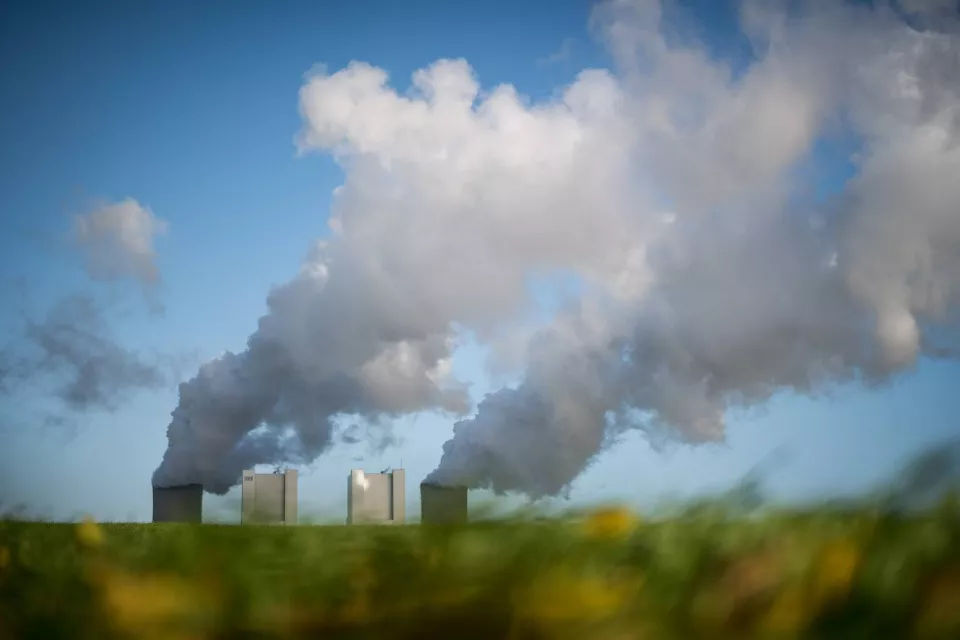
Germany is Europe’s largest producer and burner of coal, which accounted for 40.3 percent of net power production in 2017: 15.5 percent from hard coal and 24.8 percent from lignite, also known as brown coal, among the dirtiest of fossil fuels, which Germany mines more of than any other country in the world. Germany’s electricity sector itself is responsible for more than a third of the country’s CO2 emissions. Even more damning: Germany is still digging new open-cast mine pits — as well as subsidizing the industry as a whole, although it has promised to phase out coal in the indefinite future (hard coal use will end in 2018). Among Europe’s power plants, Germany’s brown coal stations constitute six out of 10 of the worst polluters. The lignite power plants, which run 24/7 year-in, year-out, produce so much power that German utilities sell the surplus abroad.
The reason behind Germany’s commitment to coal is not primarily, as the coal lobby claims, to shoulder the burden left by the nuclear reactors coming offline, or to provide backup for the renewables at times when the sun doesn’t shine and the wind doesn’t blow. Experts say that all of the country’s coal plants could be shut down by 2030 — and German industry wouldn’t feel the pinch. But rather it’s all about the lignite-mining jobs (about 20,000 in total) in the economically hard-hit regions of western Rhineland and eastern Lusatia, which are Social Democratic Party of Germany strongholds, and the powerful clout of the mining and energy lobbies, not least Germany’s third-biggest union: IG Bergbau, Chemie, Energie.
This is why only one political party — the Greens — addressed Germany’s coal industry and climate change in the recent election campaign. It said that the 20 dirtiest coal plants could be shuttered at once. None of the other parties even had climate protection among their top 10 priorities. The Social Democratic candidate Martin Schulz barely mentioned it on the campaign trail. There are voices in the Social Democratic Party, the Left, and the liberal Free Democratic Party that are for calling off the 2020 target of a 40 percent CO2 reduction in order to protect the coal industry.
Meanwhile, other countries are doing what Germany won’t. Seven European Union countries already burn not a nugget of coal, while France, Great Britain, and Finland plan to end coal generation in 10 to 15 years.
The second bugbear is Germany’s transportation sector, which is largely but not exclusively dominated by its storied automobile industry. German car companies long received special treatment by the federal government, ranging from tax benefits and premiums for the disposal of old cars to millions in direct payments for research and development. This is one reason why the transport sector’s carbon footprint has grown continuously since 1990. The culprits are foremost cars and trucks that run on oil-based fuels.
German automakers and parts suppliers are the economy’s largest industrial sector, underwriting over 800,000 jobs in Germany.
Just this week, in fact on the third day of the Bonn conference, information was leaked that scandal-riven Volkswagen as well as Germany’s outgoing foreign minister had lobbied hard for and won last-minute changes to soften the EU’s new CO2 emission standards for conventional cars. The current bill, inspired by Californian climate policy, foresees the European automobile industry cutting the CO2 emissions of its vehicles by 30 percent by 2030. Before the German intervention, violators of the limits would have faced stiff financial sanctions. Austria, Belgium, Ireland, Luxembourg, the Netherlands, Portugal, Slovenia, and Sweden also wrote to the European Commission, urging it to take a tougher line on the automotive sector. But their pleas were ignored.
Germany’s shameful record over the last four years is largely attributable to the governing grand coalition: the Christian Democrats and the Social Democrats pay plenty of lip service to environmental issues, but when push comes to shove they always battle for the interests of the coal and car industries. The presence of the Greens in a possible four-party coalition — the most likely next government, which is presently under negotiation — could reverse Germany’s backsliding. But the going is already tough: In the early stages of coalition talks, the Christian Democrats and liberal Free Democrats forced the Greens to back down from their demand to shut down all of Germany’s coal plants and phase out combustion-engine transportation by 2030. This ensures that Germany won’t be anywhere near the front of the class in combating climate change anytime soon – and that the country’s lingering reputation for environmental leadership will become increasingly tenuous.
Author : Paul Hockenos is a Berlin-based journalist

Pakistan has all the leverage over trump
Jan 07, 2018





Stay updated with The Hindu Editorial Vocab24 app, your definitive source for breaking news and comprehensive coverage from India and around the globe. Whether it's political developments, business updates, sports highlights, the latest technology trends, or current events, The Hindu brings live, accurate, and reliable news directly to your device.
Don’t fall for sensationalized or fake news shared online. Read and share accurate updates with friends and family through The Hindu Editorial Vocab24 app. Download it today!
News Coverage in The Hindu Editorial Vocab24 App
Breaking News: Receive instant notifications on breaking news stories as they unfold. Stay informed about major events and developments in India and around the world with live blogs, news in shorts videos, and concise articles.
Politics: Get the latest updates on Indian politics, including elections, policy changes, government decisions, and political events that shape the nation.
Business and Economy: Stay ahead in the economic landscape with detailed business news and market analysis. Learn about stock market trends, financial reports, corporate news, and economic developments to make informed investment decisions.
Current Events: Follow stories on social issues, policy changes, global events, and daily current affairs, tailored for UPSC and other competitive exam preparations.
Technology: Keep up with the latest gadgets, innovations, and tech trends. Read expert reviews and analyses in short, concise updates on cutting-edge technology from India and beyond.
Sports: Never miss a moment of your favorite sports. Get live scores, match reports, and expert analysis on cricket, football, tennis, and more.
International News: Stay informed about global events and geopolitical developments, including the Russia-Ukraine war, Israel-Palestine conflict, and other key international stories.
Local News: Stay connected to your community with the latest updates on city events, issues, and local news. Coverage includes hyperlocal updates from cities like Bangalore, Chennai, Delhi, Hyderabad, Mumbai, Kolkata, and more.
Trending Topics: Discover what's trending today with the most talked-about stories and hot topics across India and the world.
Experience journalism that values integrity, accuracy, and reliability. Download The Hindu Editorial Vocab24 app today and stay connected with the world.
Subscribe to our newsletter!







