

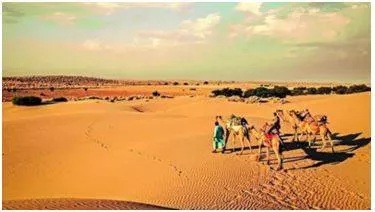
For 20 years thar getting more rain than normal
NEW DELHI: West Rajasthan, land of Thar desert and the driest region in India's plains, was among two subdivisions out of 36 that received excess rainfall during this monsoon. Surprisingly, this was hardly an unusual monsoon for west Rajasthan, which has been getting higher-than-normal rainfall for at least the past two decades in an indication of shifting monsoon patterns in a warming world.As per IMD data analysed by TOI, west Rajasthan has got above-normal or excess monsoons for six years in a row. In last 20 years, June-Sept rain there has been excess/above normal in 12 years, normal in five and deficient in three. On average, monsoon has been 19% above normal during 2005-2024. Just how exceptional this kind of rain is in region can be gauged through a comparison with two contiguous subdivisions, Punjab and Haryana, during this period.
‘With warming climate, Rajasthan to get more rains’
Just how exceptional this kind of rainfall is in the region can be gauged through a comparison with two contiguous subdivisions, Punjab and Haryana, during this period. Punjab registered just one above-normal year, 12 normal years and seven years when monsoon was deficient, that is, 20% or more below normal. On average, the June-Sept rainfall was 13.5% below normal in the state during 2005-2024.
Haryana’s monsoon pattern resembles that of Punjab. Since 2005, it has seen three above-normal years, eight years of normal rainfall and as many years of deficient rains. In addition, monsoon was ‘large deficient’ (or scanty) in one year. On average, monsoon has been 13.3% below normal in these 20 years.
Even in India as a whole, monsoon during this period has on average been 1.5% less than normal. .
However, it must be noted that, being the driest subdivision (SD) in the country, the ‘normal’ rainfall figure for west Rajasthan is significantly lower than that of the other two SDs — 283.6mm at present as compared with 439.8-mm in Punjab and 430.7mm in Haryana.
Yet, the divergence is significant and in several recent years west Rajasthan has received higher rainfall even in absolute terms than either Punjab or Haryana.
“Rainfall over Rajasthan and Punjab-Haryana is decided by the position of the monsoon trough and the westward movement of low-pressure systems in the rainy season. During recent years, we have seen that the monsoon trough was positioned south of its normal position with more westward movement of low-pressure systems. In such situations, Rajasthan gets more rain and Punjab-Haryana less,” explained M Rajeevan, veteran meteorologist and former secretary of the Union earth sciences ministry.
Rajeevan said the region could be drawing rain-bearing clouds towards itself due to changes in soil moisture, land use patterns and, possibly, the addition of water bodies in recent decades, such as the Indira canal.
“Local soil moisture feedback over Rajasthan also helps to tie-up the monsoon trough in that position and attract more low-pressure systems over that region. There is growing evidence of increasing soil moisture in Rajasthan and its interaction with monsoon,” he said.
Finally, more rain over the Thar desert in recent years may just be a sign of things to come in an era of climate change. Said Rajeevan, “Future climate projections suggest Rajasthan and its desert will get more rain in a warming climate.”












Stay updated with The Hindu Editorial Vocab24 app, your definitive source for breaking news and comprehensive coverage from India and around the globe. Whether it's political developments, business updates, sports highlights, the latest technology trends, or current events, The Hindu brings live, accurate, and reliable news directly to your device.
Don’t fall for sensationalized or fake news shared online. Read and share accurate updates with friends and family through The Hindu Editorial Vocab24 app. Download it today!
News Coverage in The Hindu Editorial Vocab24 App
Breaking News: Receive instant notifications on breaking news stories as they unfold. Stay informed about major events and developments in India and around the world with live blogs, news in shorts videos, and concise articles.
Politics: Get the latest updates on Indian politics, including elections, policy changes, government decisions, and political events that shape the nation.
Business and Economy: Stay ahead in the economic landscape with detailed business news and market analysis. Learn about stock market trends, financial reports, corporate news, and economic developments to make informed investment decisions.
Current Events: Follow stories on social issues, policy changes, global events, and daily current affairs, tailored for UPSC and other competitive exam preparations.
Technology: Keep up with the latest gadgets, innovations, and tech trends. Read expert reviews and analyses in short, concise updates on cutting-edge technology from India and beyond.
Sports: Never miss a moment of your favorite sports. Get live scores, match reports, and expert analysis on cricket, football, tennis, and more.
International News: Stay informed about global events and geopolitical developments, including the Russia-Ukraine war, Israel-Palestine conflict, and other key international stories.
Local News: Stay connected to your community with the latest updates on city events, issues, and local news. Coverage includes hyperlocal updates from cities like Bangalore, Chennai, Delhi, Hyderabad, Mumbai, Kolkata, and more.
Trending Topics: Discover what's trending today with the most talked-about stories and hot topics across India and the world.
Experience journalism that values integrity, accuracy, and reliability. Download The Hindu Editorial Vocab24 app today and stay connected with the world.
Subscribe to our newsletter!







