

Finding an equilibrium
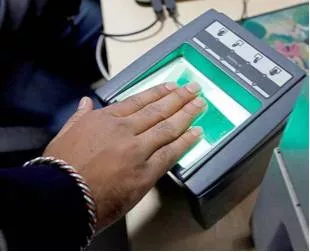
The Supreme Court’s verdict in the Aadhaar case is best read in light of the dissenting opinion.A thicket of Aadhaar litigation has now ended with the decision of a five-judge Supreme Court Bench comprising the Chief Justice of India Dipak Misra and Justices A.K. Sikri, A.M. Khanwilkar, D.Y. Chandrachud and Ashok Bhushan, which had reserved its order on May 10, after a marathon 38-day hearing. The right to privacy was won in K.S. Puttaswamy v. Union of India (2017), but that nine-judge Bench had left open the question of Aadhaar: whether the “national security” perspective (the vital role of surveillance to curb terror and prevent money laundering and crime financing) and “social welfare state” perspective (Aadhaar ensured that subsidies went to the right people) provided constitutional grounds for “reasonable restrictions” (reasonable because non-arbitrary).
Although conceived and executively implemented during the UPA-2 regime, the project got coercive (Relating to or using force or threats) statutory backing only during the NDA regime, in 2016. The Aadhaar Act has now been upheld, and Aadhaar is mandatory for all government benefits, as somewhat narrowly re-crafted by the majority. “[A]nnoyance, despair, ecstasy, euphoria, coupled with rhetoric, (The art or power of speaking or writing in a forceful and convincing way.) [were] exhibited by both sides”, but Justice Sikri rightly stressed the “posture of calmness”; the political fallouts of a decision, even in an election year, cannot be a matter for judicial concern.
The court examined only whether the entire scheme was constitutionally valid under the nine-judge Bench enunciation of the right to privacy and whether the decision of the Speaker of the Lok Sabha to pass the Aadhaar Act as a Money Billwas declared so “final” by the Constitution as to exclude even the jurisdiction of the apex court.
The Money Bill question
Whether this decision disappoints those who had high expectations or remains enigmatic on key aspects is a question which will be debated for long. But clearly the majority disappoints with the lack of constitutional scrutiny on the finality of the Speaker’s decision on what amounts to a Money Bill under Article 110(3) of the Constitution.
No one doubts the high constitutional status of the Speaker, but a very expansive view suggests that any bill which involves recourse to Consolidated Fund of India is a Money Bill and the finality of the Speaker’s decision is virtually unchallengeable. The other view is that the Speaker, like all constitutional functionaries, is bound to exercise the discretion reasonably; purposive as well as strict pragmatic scrutiny carrying “lethal emanations” from Article 14 and 21 must ensue when a large number of bills are tagged with Money Bills. This is dangerous because it removes the rationale for bicameral legislatures, because the Constitution does not foreclose the Rajya Sabha’s collective right to meaningfully deliberate legislative change. The Constitution is not a political tactic, it is not a mere ‘play thing’ of a special majority as Justice M. Hidayatullah said in Sajjan Singh v. State of Rajasthan (1965), laying the foundations of what became the doctrine of basic structure and essential features. Perhaps, T.S. Eliot’s words regarding Shakespeare remain apt for constitutional interpretation: “…if we can never be right, it is better that we should, from time to time, change our way of being wrong”.
But the majority led by Justice Sikri gives a short shrift to the finality argument. Both Justice Chandrachud and Justice Bhushan refer to a set of decisions which subject ‘finality’ to judicial review and even the basic structure but Justice Bhushan while ruling that the decision of the Speaker is not “immuned [sic] from Judicial Review” still takes the view that the Speaker’s decision “does not violate any constitutional provision, hence does not call for any interference in this proceeding”.
Justice Chandrachud fully dissents and holds the law invalid as a “fraud on the Constitution”, that is a colourable exercise of constitutional power. He maintains that the “notion of absolute power” is anathema to the Constitution and that there is need to “liberate its founding principles from its colonial past”. Its purpose cannot be to shield an excess of power from being questioned before the court, nor to clothe a high functionary with utter impunity (Exemption from punishment or freedom from the injurious consequences of an action) .
The ‘ultimate test’
Memorably, he says that the “ultimate test” is whether the ouster of “judicial review is designed to achieve a constitutional purpose” that “meets the test of functionality, assessed in terms of a constitutional necessity”. Pointedly, Justice Chandrachud says: “In the seventh decade of the republic, our interpretation of the Constitution must subserve the need to liberate it from its colonial detritus.” Accordingly, he holds that the decision to give the Aadhaar Bill the status of a Money Bill violates the principle of bicameralism, declared as a part of basic structure, and an aspect of federalism and entails a “debasement (The action of reducing the quality or value of something) of a democratic institution” which “cannot be allowed to pass. Institutions are crucial to democracy. Debasing them can only cause a peril to democratic structures”. Why was the majority not persuaded by the Chandrachud dissent is a question that will for long haunt those who prize democracy and rule of law values as essential for the future of putting the Constitution to work.
The proportionality test
Perhaps, a salient reason for the majority decision is to be found in ‘balancing’ interests under the ‘proportionality test’: simply put, any conflict of interest requires balancing, keeping in view constitutional first principles and its vision, values, and the mission. In Justice Sikri’s dexterous judicial hands, this leads to many welcome invalidations and dilutions of some important sections of the Act (like non-application of the Act to situations where no direct benefits are claimed by beneficiaries, minimal data sharing, prohibitions on corporates from acquiring metadata, of opting out of children when they attain majority, and equality of esteem for other means of identification when Aadhaar is not available). But on the main aspect whether the right to privacy is violated, there is now posited a conflict with privacy and dignity, which only ‘harmonious construction’ may reconcile. Their Lordships also felt that some loss of privacy is constitutionally permissible to achieve the public good to the “marginalised sections of society” and there was a collective right to privacy which may override the individual right.
Apart from the fact that the right to privacy decision foregrounds privacy and regards dignity as an integral aspect of privacy, the majority opinions ignore the message of the great sociological jurist Roscoe Pound, who developed the theory of law as an ad hoc balancing of the interests — sacrificing some, and supporting others for the time being — justified only when interests in conflict are put on the same plane (inter-translatability); the tasks of balancing begin only when all interests are translated as individual, social, or public. True, the “sanctity of privacy lies in its functional relationship with dignity”. But this relationship is “functional” only when “undue intrusion” into the “autonomy on the pretext of conferment of economic benefits” is avoided. Surely, there are other ways to achieve privacy and autonomy save the mandatory and ubiquitous Aadhaar number?
The majority decision offers a harmonious construction, but the dissenting opinion shows why this is not the only or necessarily the best way. Do the ways of upholding the Aadhaar also open the floodgates of being constitutionally nir-aadhaar?




Top court quashes FIRs against Gen Z protesters
Sep 04, 2026







Stay updated with The Hindu Editorial Vocab24 app, your definitive source for breaking news and comprehensive coverage from India and around the globe. Whether it's political developments, business updates, sports highlights, the latest technology trends, or current events, The Hindu brings live, accurate, and reliable news directly to your device.
Don’t fall for sensationalized or fake news shared online. Read and share accurate updates with friends and family through The Hindu Editorial Vocab24 app. Download it today!
News Coverage in The Hindu Editorial Vocab24 App
Breaking News: Receive instant notifications on breaking news stories as they unfold. Stay informed about major events and developments in India and around the world with live blogs, news in shorts videos, and concise articles.
Politics: Get the latest updates on Indian politics, including elections, policy changes, government decisions, and political events that shape the nation.
Business and Economy: Stay ahead in the economic landscape with detailed business news and market analysis. Learn about stock market trends, financial reports, corporate news, and economic developments to make informed investment decisions.
Current Events: Follow stories on social issues, policy changes, global events, and daily current affairs, tailored for UPSC and other competitive exam preparations.
Technology: Keep up with the latest gadgets, innovations, and tech trends. Read expert reviews and analyses in short, concise updates on cutting-edge technology from India and beyond.
Sports: Never miss a moment of your favorite sports. Get live scores, match reports, and expert analysis on cricket, football, tennis, and more.
International News: Stay informed about global events and geopolitical developments, including the Russia-Ukraine war, Israel-Palestine conflict, and other key international stories.
Local News: Stay connected to your community with the latest updates on city events, issues, and local news. Coverage includes hyperlocal updates from cities like Bangalore, Chennai, Delhi, Hyderabad, Mumbai, Kolkata, and more.
Trending Topics: Discover what's trending today with the most talked-about stories and hot topics across India and the world.
Experience journalism that values integrity, accuracy, and reliability. Download The Hindu Editorial Vocab24 app today and stay connected with the world.
Subscribe to our newsletter!







