

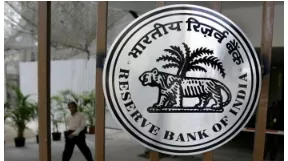
Finally action on bad loans
After nearly three years of dithering (The state of being indecisiveness) on the part of the National Democratic Alliance government, there is hope now that we will see action in respect of Indian banks’ bad loans. The Finance Ministry and the Reserve Bank of India (RBI) have recently sent out signals to the effect that they are determined to take the bull by its horns. If they follow through, it will brighten the prospects of India’s growth rate moving to 8% in the medium term. Bad loans — or non-performing assets (NPAs) — were 9% of total loans of all Indian banks in September 2016. At public sector banks (PSBs), bad loans were 12% of all advances. Another 3% of loans in the aggregate (and 4% at PSBs) have been restructured. The Economic Survey (2016-17) quotes market analysts as saying that 4-5% of loans are bad loans that have not been recognised as such. Thus, total stressed assets — NPAs, restructured loans and unrecognised bad loans — would amount to a staggering 16% of all loans and nearly 20% of loans at PSBs. The lending boom Today’s bad loan problem has arisen from the lending boom that India’s banks embarked on (शुरुआत करना) in the period 2004-08, a period that saw economic growth reach the 9-10% range. However, that by itself did not create a problem of the current magnitude. NPAs, which are 9% of all loans today, were only half that level a year before. It is the failure to resolve the bad loan problem over the past several years that has exacerbated (बिगाड़ना) the problem. Why has the bad loan problem remained unresolved for so long? Put it down to bad luck and serious policy errors. The best solution to a bad loan problem is to simply grow your way out of it. This can happen in two ways. One, banks keep financing projects that are not making repayments in full and would qualify as NPAs. They do so in the hope that, once growth revives, cash flows in the projects will improve. Two, banks grow their loan portfolio at a brisk rate. As the denominator in the ratio of bad loans to total loans grows, the bad loan problem automatically diminishes in significance. That’s how India’s banking sector came out of the bad loan problem in the early 2000s. Rapid growth in the world economy and the Indian economy provided a painless solution. This time around, however, luck has not favoured the Indian banking system. The global economy has been in a prolonged slump (गिरावट आना) consequent to the financial crisis of 2007-08. The “financing” strategy of continuing to make loans to unviable projects has come unstuck. Serious policy errors have compounded the problem. The big policy error was the belief among policymakers that bad governance, bad management and even corruption at PSBs were primarily responsible for the problem. A committee appointed by the RBI and headed by P.J. Nayak argued as much in a report it submitted in late 2014. The committee seemed to think that majority government ownership of PSBs was the root cause of the bad loan problem as it meant political and bureaucratic interference with commercial decisions. Such an inference, which has been duly echoed by the media, is patently incorrect. As the Economic Surveyof 2016-17 point outs, the bad loan problem is “an economic problem, not a morality play… the vast bulk of the problem has been caused by unexpected changes in the economic environment: timetables, exchange rates, and growth rate assumptions going wrong.” In other words, factors extraneous (असंगत/असम्बद्ध) to bank management and governance are primarily responsible for the problem. Plodding towards a solution How the bad loan problem is understood has crucial implications for policy. If you believe that majority ownership by the government is the primary cause, you would focus on reducing government ownership in banks to below 50%. You would seek to distance the government from making appointments to PSBs, as proposed by the Nayak committee. You would decide that some PSBs were hopelessly weak and seek to merge them with healthier ones. You would judge that PSBs were incapable of resolving bad loans on their own and set up a “bad bank” to which bad loans would be moved. These proposals are all politically difficult to handle, time-consuming or (as in the case of a “bad bank”) make impossible demands on financial and human resources. The NDA government seemed to have bought the faulty diagnosis but could not act on most of the prescriptions that followed. It chose to muddle along. The government appointed a Bank Board Bureau (BBB) as suggested by the Nayak committee and tasked it with appointing Chairmen and Managing Directors of PSBs. The BBB was also assigned the role of advising banks on restructuring and raising capital. The BBB has made little headway (उन्नति/प्रगति) . Very few top appointments have happened. The bad loan problem and recapitalisation of PSBs remain unaddressed. This was only to be expected. The government cannot distance itself from key decisions on PSBs while being accountable for their performance. Creating the BBB has only added another layer to decision-making and slowed it down. Had the view now propagated by the Economic Survey (and articulated much earlier by the writer) prevailed, the government might have acted swiftly to resolve bad loans, provide the necessary capital to PSBs and strengthen governance at PSBs by revamping their boards. It would have judged that corrections must be made within the existing framework, not by overturning it. Realisation that the bad loan problem is not the result of some special villainy (बेईमानी/बदमाशी) at PSBs but a matter of factors extraneous to management has finally dawned, if somewhat late in the day. The initiative has moved away from the BBB and back to the Finance Ministry and the RBI where it rightly belongs. Empowerment and oversight There is clarity now that banks must be empowered to resolve the relatively small number of bad loans that account for a big chunk of the total in terms of value. In many cases, this would mean that banks write off a portion of the loans owed to them. Managements at PSBs have been reluctant (अनिच्छुक) to do so for fear of inviting action from the Chief Vigilance Commissioner, the Comptroller and Auditor General, the Central Bureau of Investigation and other bodies. To stiffen their spine, we need to put in place an authority that will vet (जाँचना) loan settlement proposals put up to it. The BBB has constituted a two-person oversight (निगरानी) committee but reports suggest that the committee will not take a view on write-offs. This is not helpful at all. We need a larger oversight committee or, as the Finance Ministry has proposed, multiple oversight (निगरानी) committees to speedily vet loan write-offs. It makes sense to constitute a Loan Resolution Authority by an Act of Parliament. This must be complemented with other measures. Banks must develop the discipline of keeping thorough minutes of the proceedings related to resolution of bad loans. The rationale (तर्काधार) for particular decisions along with the pros and cons must be properly articulated. This will serve to give bank management a measure of protection. The government must provide adequate capital to the banks to cover write-offs (a cancellation from an account of a bad debt or worthless asset.) and also facilitate fresh loan growth. It must end the delays in appointing Chairmen and Managing Directors of various PSBs. It must also revamp (give new and improved form, structure, or appearance to.) the boards of PSBs by bringing in independent directors of high quality. The solutions should have been clear enough long back. It is the misplaced condemnation (An action or expression of very strong and definite disapproval) of PSBs that has held up resolution of the bad loan problem. Doing away with majority ownership of government, mergers, creation of a bad bank — all these are non-starters. The way forward is to empower management and strengthen governance at PSBs.
A nudge to borrowers
Jan 04, 2017
Managing risk in banks
Jan 01, 2017





Stay updated with The Hindu Editorial Vocab24 app, your definitive source for breaking news and comprehensive coverage from India and around the globe. Whether it's political developments, business updates, sports highlights, the latest technology trends, or current events, The Hindu brings live, accurate, and reliable news directly to your device.
Don’t fall for sensationalized or fake news shared online. Read and share accurate updates with friends and family through The Hindu Editorial Vocab24 app. Download it today!
News Coverage in The Hindu Editorial Vocab24 App
Breaking News: Receive instant notifications on breaking news stories as they unfold. Stay informed about major events and developments in India and around the world with live blogs, news in shorts videos, and concise articles.
Politics: Get the latest updates on Indian politics, including elections, policy changes, government decisions, and political events that shape the nation.
Business and Economy: Stay ahead in the economic landscape with detailed business news and market analysis. Learn about stock market trends, financial reports, corporate news, and economic developments to make informed investment decisions.
Current Events: Follow stories on social issues, policy changes, global events, and daily current affairs, tailored for UPSC and other competitive exam preparations.
Technology: Keep up with the latest gadgets, innovations, and tech trends. Read expert reviews and analyses in short, concise updates on cutting-edge technology from India and beyond.
Sports: Never miss a moment of your favorite sports. Get live scores, match reports, and expert analysis on cricket, football, tennis, and more.
International News: Stay informed about global events and geopolitical developments, including the Russia-Ukraine war, Israel-Palestine conflict, and other key international stories.
Local News: Stay connected to your community with the latest updates on city events, issues, and local news. Coverage includes hyperlocal updates from cities like Bangalore, Chennai, Delhi, Hyderabad, Mumbai, Kolkata, and more.
Trending Topics: Discover what's trending today with the most talked-about stories and hot topics across India and the world.
Experience journalism that values integrity, accuracy, and reliability. Download The Hindu Editorial Vocab24 app today and stay connected with the world.
Subscribe to our newsletter!







