

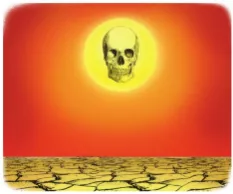
Fight the summer blaze
Heat waves are getting worse, but preparedness and simple measures can save many lives. I grew up close to the tropics, in a north Indian city. During harsh summers the incandescent (प्रकाशमान) sun ¬ the largest nuclear fusion reactor in the entire solar system ¬ is unforgiving, and heat waves bake the ground and all that's on it. Amidst power cuts, a searing hot wind blows. The feeling cannot be described or forgotten: of being restless and trapped. There is no relief from that humidity, sweat and exhaustion. It is burning, always and everywhere. We try to live through the day, to survive, but many are not so lucky. As climate change intensifies, such extreme heat waves will get worse. Globally, 16 of the 17 hottest years on record have been since 2000, and heat waves have taken a mounting toll. Heat wave deaths happen everywhere. In the US, they cause more deaths than all other natural disasters combined. Normally cool Europe lost 70,000 people in 2003 and snowy Russia lost 56,000 in 2010. In developing countries, heat waves are even more insidious (भयानक/ खतरनाक) . The frail (कमजोर) , the elderly, children, women, migrants, the sick and people without access to simple ways to cool themselves in summer are at greatest risk, and yet most of these deaths are preventable, even under the harshest of conditions. That is why governments of developing countries must plan now for the heat waves of the future, or face a mounting death toll among society's most vulnerable (जो सहज में घायल हो सके) people. India, where one out of every five people on this planet lives, is particularly vulnerable. In the summer of 2015 a heat wave with temperatures reaching 48°C left more than 2,330 people dead. Last year, 1,100 died and millions were put at risk. And these were likely underestimates because many deaths during heat waves are attributed to other causes. However, over the years, heat wave deaths have been steadily increasing. Developing countries are not only at risk because many are closer to the equator or lack air conditioning, which research shows, has the single largest impact in reducing heat deaths. Nutritional status also plays a role. Half of India's children are undernourished, increasing their susceptibility (संवेदनशीलता) . Further, half of all young women are anemic and therefore already in a weakened state. Lack of access to affordable healthcare is another factor. The situation is so bad that catastrophic (विपत्तिपूर्ण) expenditure on healthcare is now the leading cause of falling into poverty, replacing dowry. Given these high expenses people think twice before seeking care, even in emergencies. 58% of India's total population lives on less than Rs 200 per day. And when heat waves strike, poverty has consequences. An estimated 53% of households don't have water available at home, 42% don't have bathing facilities, more than half don't have an indoor toilet. Just two cities in the entire country have uninterrupted water supply. This summer is shaping up to be especially bad in India. Satellite images show large areas in the western and northern parts of the country having dried up from lack of underground water. Without access to water, heat waves become particularly deadly .A third of India's population lacks electricity, precluding (रोकना) the use of fans and air conditioning. But heat deaths are preventable and simple measures could save many lives. Just three main actions would make an enormous difference. First, we need to raise awareness. Just an awareness of heat as a threat reduces the likelihood of falling sick from a heat wave. When aware, people are more likely to stay hydrated and indoors, away from the scorching (झुलसाने वाला) sun. Government and media must work together to raise awareness of the dangers of heat waves, and the simple measures that can save lives. Second, we need to develop city and state heat preparedness (तैयारी) plans. One plan for Ahmadabad, a city of 5.5 million, built public awareness about heat health risks through community outreach, initiated a weather forecast-based early warning system of impending heat waves, and organised staff trainings for concerned departments. It also ensured that there were ample supplies of ice packs, water coolers, beds and medicines to bring relief from the rising summer heat. These programmes have been shown to be effective in saving lives. Finally, in rural areas we must build social safety nets and increase the availability of health services. Diet, clothing, housing designs, green neighbourhoods, ensuring availability of water and power are commonsense measures of protection that save lives. Simply checking in on our neighbours, the elderly and the sick can reduce their risk. To be sure heat waves are not the only fatal (dangerous) natural disaster, and preparing for them costs money. But they deserve our attention. Costs of simple preparation measures are negligible compared to the benefits of saved lives. India has learnt through tragic experience the devastation (विनाश) of heat waves. But with climate change making summer even hotter than those of my childhood, we need to do more. We must learn to mitigate (घटाना) their impacts even as temperatures soar. The country must now apply these lessons in every major city and across the vast rural areas where most poor populations’ reside. Other countries can also learn from this experience, and develop their own corresponding actions. Summer is here; there is truly no time to waste.Incandescent (adjective)
Emitting light as a result of being heated. प्रकाशमान/ उद्दीप्त
Synonyms: Radiant, Luminous, Shining, Beaming
Example: The incandescent light lamp is a source of electric light that works by incandescence, which is the emission of light caused by heating the filament
Insidious (adjective)
Proceeding in a gradual, subtle way, but with very harmful effects खतरनाक
Synonyms: Dangerous, Deceitful, Perilous, Subtle, Snaky
Example: Sexual harassment is a serious and insidious problem.
Frail (adjective)
Weak and delicate कमजोर
Synonyms: Weak, Lean, Feeble, slim, Vulnerable, Sickly
Example: As he started to leave, he turned towards the frail woman who was searching something to eat.
Susceptibility (noun)
A person's feelings, typically considered as being easily hurt. संवेदनशीलता
Synonyms: Sensitivity, Perceptivity, Susceptivity
Example: Lack of exercise increases susceptibility to disease.
Catastrophic (adjective)
Involving or causing sudden great damage or suffering विपत्तिपूर्ण
Synonyms: Calamitous, Fatal, Ruinous, Tragic, Disastrous, Adverse
Example: A catastrophic earthquake caused a large destruction of buildings.
Precluding (verb)
Prevent from happening; make impossible. बंद करना
Synonyms: Discontinue, avert, Hinder, Cease, Prevent
Example: The secret nature of spy precluded him from recognition.
Scorching (adjective)
Very hot. झुलसाने वाला
Synonyms: Burning, Blistering, Searing
Example: The temperature in July soars very high due to scorching sun.
Preparedness (noun)
A state of readiness, especially for war. तैयारी
Synonyms: Preparation, Alertness, Readiness
Example: A high state of military preparedness of any one state obliges all the others to endeavour to be prepared on the same level.
Devastation (noun)
Great destruction or damage विनाश
Synonyms: Ruin, Havoc, Demolition
Example: The floods caused widespread devastation.
Mitigate (verb)
Make (something bad) less severe, serious, or painful. घटाना
Synonyms: Reduce, Lessen, Decrease, Diminish
Example: Morphine may be given hypodermically to mitigate the pain.












Stay updated with The Hindu Editorial Vocab24 app, your definitive source for breaking news and comprehensive coverage from India and around the globe. Whether it's political developments, business updates, sports highlights, the latest technology trends, or current events, The Hindu brings live, accurate, and reliable news directly to your device.
Don’t fall for sensationalized or fake news shared online. Read and share accurate updates with friends and family through The Hindu Editorial Vocab24 app. Download it today!
News Coverage in The Hindu Editorial Vocab24 App
Breaking News: Receive instant notifications on breaking news stories as they unfold. Stay informed about major events and developments in India and around the world with live blogs, news in shorts videos, and concise articles.
Politics: Get the latest updates on Indian politics, including elections, policy changes, government decisions, and political events that shape the nation.
Business and Economy: Stay ahead in the economic landscape with detailed business news and market analysis. Learn about stock market trends, financial reports, corporate news, and economic developments to make informed investment decisions.
Current Events: Follow stories on social issues, policy changes, global events, and daily current affairs, tailored for UPSC and other competitive exam preparations.
Technology: Keep up with the latest gadgets, innovations, and tech trends. Read expert reviews and analyses in short, concise updates on cutting-edge technology from India and beyond.
Sports: Never miss a moment of your favorite sports. Get live scores, match reports, and expert analysis on cricket, football, tennis, and more.
International News: Stay informed about global events and geopolitical developments, including the Russia-Ukraine war, Israel-Palestine conflict, and other key international stories.
Local News: Stay connected to your community with the latest updates on city events, issues, and local news. Coverage includes hyperlocal updates from cities like Bangalore, Chennai, Delhi, Hyderabad, Mumbai, Kolkata, and more.
Trending Topics: Discover what's trending today with the most talked-about stories and hot topics across India and the world.
Experience journalism that values integrity, accuracy, and reliability. Download The Hindu Editorial Vocab24 app today and stay connected with the world.
Subscribe to our newsletter!







