

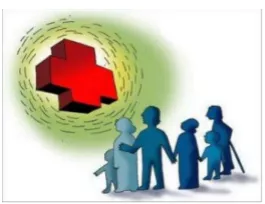
Falling off the health care radar
The National Health Policy (NHP), 2017 is unable to see the wood for the trees. Life and death questions are dealt with perfunctorily (not carefully) or simply overlooked. For example, it overlooks the rapid rise in the share of the old (60 years or more), and associated morbidities (the condition of being diseased.), especially sharply rising non-communicable diseases (NCDs) and disabilities. With rising age, numerous physiological changes occur and the risk of chronic diseases rises. The co-occurrence of chronic diseases and disability elevates the risk of mortality.Another, more recent report, “Caring for Our Elders: Early Responses, India Ageing Report – 2017 (UNFPA)”, complements the NHP by focussing on the vulnerability of the aged to NCDs, recent policy initiatives and the role of non-governmental organisations in building self-help groups and other community networks. While all this is valuable, it fails to make a distinction between the aged in general and those suffering from chronic conditions. It matters as many suffering from chronic conditions and disabilities may find it harder to participate in such networks. Nor are the important questions of the impact of these networks and their replicability discussed except in a piece-meal manner.
The health system is ill-equipped to deal with surging NCDs; nor is the staff well trained to treat/advise the aged suffering from dementia (a chronic or persistent disorder of the mental processes caused by brain disease or injury and marked by memory disorders, personality changes, and impaired reasoning.) or frailty (the condition of being weak and delicate.), and for early diagnosis and management of conditions such as hypertension. The quality of medical care is abysmal (extremely bad; appalling.), and hospitalisation costs are exorbitant (unreasonably high.) and impoverishing. Health insurance covers a fraction of medical expenses incurred. However, many of these chronic conditions such as hypertension can be prevented or delayed by engaging in healthy behaviours. Supportive families and community networks often make a significant difference.
Based on the India Human Development Survey (IHDS) 2015, among aged males and females (over 60 years) the proportions of those suffering from NCDs nearly doubled during 2005-12, accounting for about a third of the respective populations in 2012. More females than males suffered from these diseases. The proportions were higher among those over 70, and these doubled in the age groups 60-70 years and over 70.
A vast majority of those with NCDs had access to medical advice and treatment and the proportion remained unchanged during 2005-12. As there is considerable heterogeneity in providers of medical help — from qualified doctors to faith healers and quacks (a person who dishonestly claims to have special knowledge and skill in some field, typically medicine.) — and a sharp deterioration in the quality of medical services, it is not surprising that the proportions suffering from NCDs have shot up despite high access. Access to government health insurance nearly doubled but remained low as barriers for the aged remain pervasive (spreading widely throughout an area or a group of people.) In any case, the proportion of medical expenses covered was measly (ridiculously small or few.).
Loneliness and immunity
Loneliness is a perceived isolation that manifests in the distressing feeling that accompanies discrepancies between one’s desired and actual social relationships. The link between loneliness and mortality is mediated by unhealthy behaviours and morbidity. Research shows that loneliness increases vascular resistance and diminishes immunity.
Whether related to or unrelated to loneliness, a high risk factor for NCDs is daily consumption of alcohol, especially local brews. Daily consumption of alcohol among the aged with NCDs rose more than twice over the period 2005-2012.
Networking as support
Another measure is the proportion of those married and widowed. However, children often play an important role in elderly support with the caveat (a warning or proviso of specific stipulations, conditions, or limitations.) that filial piety (a virtue of respect for one's parents, elders, and ancestors.) shows signs of diminishing. An important point is that today, ‘women are increasingly filling other roles, which provides them with greater security in older age. But these shifts also limit the capacity of women and families to provide care for older people who need it’.
That social networks are effective in providing support to the aged is far from axiomatic (self-evident or unquestionable.) as there are questions of size of a network, whether it is proximal (located toward the center of something) or non-proximal and whether there is social harmony. If social networks are instrumental in bonding together in periods of personal crises, this could compensate for a lack of family support, e.g. widows living alone, and help alleviate morbidity.
The IHDS also provides data on inter-caste and village conflicts, with the proportion of those suffering from NCDs living in villages that experienced inter-caste or other conflicts more than doubling during 2005-2012. Lack of social harmony induces helplessness, disruption of medical supplies and network support.
The World Report on Ageing and Health 2015 (WHO) is emphatic about what is known as ageing in place, that is the ability of older people to live in their own home and community safely, independently, and comfortably, regardless of age, income or level of intrinsic capacity. This reinforces the case that solutions to those with chronic diseases lie within but also outside health systems.
From a policy perspective, health systems have to be configured to deal with not one NCD but multiple NCDs to manage them better. The impact of multi-morbidity on an old person’s capacity, health-care utilisation and the costs of care are significantly larger than the summed effects of each. Besides, the reconfigured medical system must be complemented by stronger family ties and social networks. This is not as Utopian as it may seem as examples of such complementarities abound.



Top court quashes FIRs against Gen Z protesters
Sep 04, 2026






Stay updated with The Hindu Editorial Vocab24 app, your definitive source for breaking news and comprehensive coverage from India and around the globe. Whether it's political developments, business updates, sports highlights, the latest technology trends, or current events, The Hindu brings live, accurate, and reliable news directly to your device.
Don’t fall for sensationalized or fake news shared online. Read and share accurate updates with friends and family through The Hindu Editorial Vocab24 app. Download it today!
News Coverage in The Hindu Editorial Vocab24 App
Breaking News: Receive instant notifications on breaking news stories as they unfold. Stay informed about major events and developments in India and around the world with live blogs, news in shorts videos, and concise articles.
Politics: Get the latest updates on Indian politics, including elections, policy changes, government decisions, and political events that shape the nation.
Business and Economy: Stay ahead in the economic landscape with detailed business news and market analysis. Learn about stock market trends, financial reports, corporate news, and economic developments to make informed investment decisions.
Current Events: Follow stories on social issues, policy changes, global events, and daily current affairs, tailored for UPSC and other competitive exam preparations.
Technology: Keep up with the latest gadgets, innovations, and tech trends. Read expert reviews and analyses in short, concise updates on cutting-edge technology from India and beyond.
Sports: Never miss a moment of your favorite sports. Get live scores, match reports, and expert analysis on cricket, football, tennis, and more.
International News: Stay informed about global events and geopolitical developments, including the Russia-Ukraine war, Israel-Palestine conflict, and other key international stories.
Local News: Stay connected to your community with the latest updates on city events, issues, and local news. Coverage includes hyperlocal updates from cities like Bangalore, Chennai, Delhi, Hyderabad, Mumbai, Kolkata, and more.
Trending Topics: Discover what's trending today with the most talked-about stories and hot topics across India and the world.
Experience journalism that values integrity, accuracy, and reliability. Download The Hindu Editorial Vocab24 app today and stay connected with the world.
Subscribe to our newsletter!







